The second full week of February is recognized as National Secondhand Wardrobe Week. The intent of this observance is dedicated to encouraging people to shop secondhand and donate, or sell, old clothing rather than throw it away. The reasons behind this initiative are to support local thrift stores while helping people reduce the estimated 92 MILLION tons of textiles that end up in landfills every year. These are worthy goals by themselves, but I’d like to encourage you to observe this week for a different reason. I’m hoping you’ll clean out your closets for National Secondhand Wardrobe Week 2023 to help support the future of skilled trades.

Why Support the Skilled Trades

The skilled trades have opportunities for everybody in America. Regardless of your skills or experience, we have a professional home just waiting for you somewhere in construction, agriculture, or manufacturing. But these careers can go hand in hand with real barriers to entry. We’re most familiar hearing about these barriers when people talk about the skills gap that exists in our worldwide workforce today. However, things much simpler than skills can often prevent a person from pursuing work in the skilled trades. Most commonly, these areas include tools, boots, or specialty clothing required for employment.

Where to Donate

There are many groups and organizations that will collect donated clothing for specific purposes like cold weather (Salvation Army Coat Drives) or job interviews (Dress for Success). These are fantastic programs that do a lot of good, but they rarely focus on, or benefit, people in and around the trades. A number of programs are operating with a focus on shoes (Soles4Souls) and other footwear, (Samaritan’s Feet) while other organizations will provide new work boots (Charitable Union) to qualified applicants. Unfortunately, none of these options put a true emphasis on used work clothing or footwear aimed at people trying to get into the trades.

How You Can Help

By now you’re saying, “This is all great to know, but how can I help support the trades with my used work boots and clothes?” I’m so glad you asked because I have a solution!

I’d like you to consider the example of Darnel Royal and Work Boot Ministry. Darnel had an opportunity to give away a pair of work boots and went to social media to make it happen. In doing so, he uncovered a huge need and a mission. In about 4 years, Royal and his colleagues have donated 567 pairs of boots to support 567 different trades careers.

You can do the same thing, and you don’t have to be a local social media influencer like Darnel! My challenge to you is simple and can be accomplished in four easy steps.

  • Go through your closet and find any old clothes, boots, gloves, hats, outerwear, or specialty items that are fit for trades work (and still in good enough condition to donate).
  • Do a mental inventory of your network. Who do you know that’s connected to training programs, technical schools, shelters, workforce development centers, relevant employers, etc. (Hint: if the answer is nobody, a quick Google search and a phone call or two will change that quickly!)
  • Schedule a drop off and let them take things from there.
  • Repeat annually.

Pro-tip: If you’re willing to put up a post on social media and handle follow-up / delivery yourself, you can cut these four steps down to three.

Make a Difference In Your Community

Here at FlexTrades, it’s our intention to make a difference every day, in every way that we can. This is reflected in every one of our core values. It’s my sincere hope that this article inspires you to try to make a difference in your own community today while making it a little easier for you to do so too.

Would you like to read about other ways we try to make a difference? Check out our blog page today! Do you have ideas on how we can help? Send them to our Writing Team, and you might be reading about your idea in our next blog article.

Robots Aren’t Coming for Your Jobs

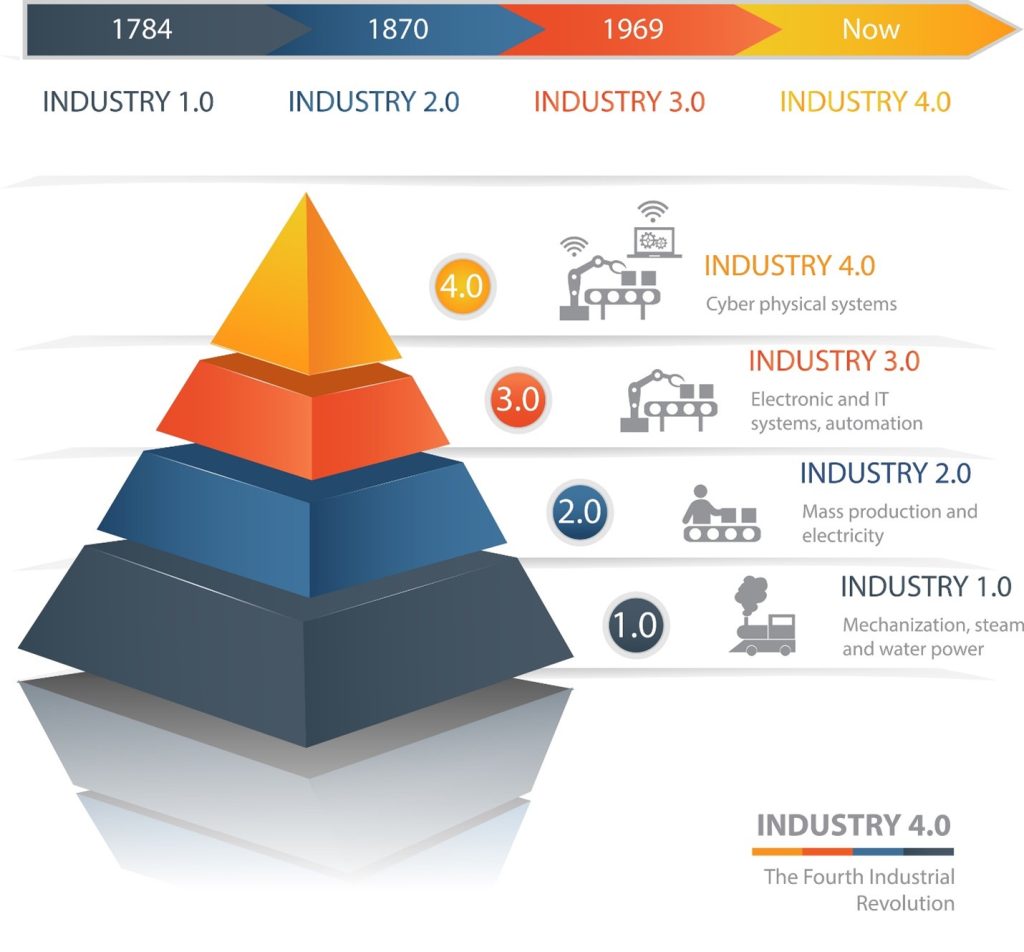
Have you heard about Industry 4.0? It’s the fourth industrial revolution. The first was about mechanization and happened in the 18th century. The second occurred during the 19th century and centered around electrification. The 20th century saw the third, which was all about computers. Now we’re in the 21st century and smack dab in the middle of the fourth industrial revolution. This revolution is about what are called cyber-physical systems – the convergence of machine and computer. Industry 4.0 is evidenced by automation, robotics, the Industrial Internet of Things (IIoT), and the ongoing move towards “lights out” manufacturing.

Most of you have heard about Industry 4.0, you just don’t realize it. This is because most of what you’ve heard has been misrepresented. In general, talk about the fourth industrial revolution starts with, “The robots are coming to take our jobs!” Does that ring a bell? I’m here to tell you, that isn’t going to happen.

Industry 4.0

133 million Jobs Expected to be Created

We expect technology (like robots and larger automation processes) to eliminate a lot of jobs around the world. According to a oft-cited study conducted jointly by Hays and Oxford Economics, it can be expected that technology will “cull” 75 million jobs globally by the end of this decade. That’s an undeniably huge number, so why am I saying that the worries about robots taking jobs are being misrepresented? Because an even larger number mentioned in that same study never seems to get the same amount of attention. That number is 133 million, and it’s mentioned in reference to the number of jobs we expect to be CREATED by technology during that same time frame. That’s an almost 2:1 ratio and means that robots and technology are expected to create 100% more jobs than they eliminate worldwide!

Why People are Worried

Why, then, is everybody so worried about robots? In my opinion, it’s mostly because people inherently dislike change. Technology’s biggest benefit to industry (whether manufacturing, finance, retail, etc.) is to move the variable (in most cases, that’s the human element – you) further and further from where machine (mill, lathe, pen, phone call, point of sale, etc.) and material (metal, wood, receipt, service, etc.) meet. This is because that intersection is where errors, inefficiencies, and injuries happen most often. By moving that wild card (you), technology can help deliver better results while simultaneously making jobs safer.

Technology will Change Today’s Jobs

There’s a silver lining – technology is making our human jobs easier, safer, and more secure every day. So, what’s the bad news? It’s that technology will cause those same jobs to change continuously and consistently throughout a career. And that’s not going to change. This is also why a skills gap exists today. We have the jobs. We have the people to fill them. But those people don’t currently possess the skills needed to fill those jobs. The skills gap has led to a hiring shortfall of over 2 million people in American manufacturing alone!

Opportunities for Employers

What does this mean for you? If you’re an employer, it means that your workforce headaches aren’t going away anytime soon. FlexTrades can help with that, if needed. Visit our website to learn more about our manufacturing solutions.

Opportunities for Employees

If you’re an employee, this means that the robots are making more employment opportunities for you than ever before. McKinsey expects somewhere between 75 million and 375 million workers will eventually be “displaced” by technology. The sheer scale of opportunity for career advancement for workers worldwide is mind boggling when you think about it. You just need to keep growing your knowledge and skills, along with the technological advances of your industry, to ensure that you can benefit.

Already in manufacturing or the skilled trades? We could be a good employment option for you! Browse our jobs and bookmark our blog page.

Do you have a topic you’d like to learn more about? Send it to our Writing Team and we’ll try to cover it in a future blog.

We’re kicking off the New Year with a new challenge in hopes of inspiring you to get moving, at your own pace, with a team around you to support your success. 

Your mission, should you choose to accept it, is to walk / run the Pan-American Highway together. 

The Pan-American Highway is a network of roads that stretch from North America to South America. It spans 14 countries in total. As one of the longest roads in the world, we’ll be walking almost 19,000 miles; starting in Prudhoe Bay, Alaska, before heading towards Ushuaia, Argentina. 

Each Monday, until we collectively reach our destination, we are hoping that you will share your weekly steps / mileage with our Human Resources team. There is a shared document internal employees can access, and Technicians are welcome to email their steps to techbenefits@flextrades.com. We will then add all of the entries together each week to determine how far we’ve traveled while exploring some of the key places that we’ve seen along the way. 

For the fun and spirit of a little friendly competition, I’d like to propose a race: Corporate FlexTrades’ Employees vs. FlexTrades Technicians who are actively out on assignment. With this, our corporate employees will be walking / running side by side against our Technicians to see who can get to our destination faster. In the end, participants from either team who cross the finish line first will be entered into a drawing for some truly incredible prizes. 

Get your walking sneakers ready… our journey has begun! This means that you will submit your first week’s mileage / steps on Monday, January 9th. Do you have any questions? Let me know, and I will be more than happy to help. 

Are you looking for your next career at an organization that cares about its culture and employees’ wellbeing? Browse our jobs board online, and see if FlexTrades could be a good fit for you!

Manufacturing Associations That Make a Difference

By now, you’re likely well aware that FlexTrades is committed to manufacturing. But we’re not the only ones. There are many other industry leaders, promoters, nonprofits, and for profits that are committed to ensuring the manufacturing industry is the best it can be and gets the credit it deserves. Below is a short list of some of these leaders.

National Association of Manufacturers (NAM)

NAM has been supporting manufacturing since 1895! They’ve done everything from advocate for the creation of the U.S. Department of Commerce to developing the National Manufacturing Institute.

The Manufacturing Institute (MI)

The MI is all about changing antiquated ideas of manufacturing careers, providing various support initiatives for American manufacturing workers, and acting as an adviser to U.S. manufacturers.

American National Standards Institute (ANSI)

ANSI has been a private, non-profit organization since 1918 and always with the same goal in mind – identify and develop standards for manufacturing on a national and global scale.

The Association for Manufacturing Excellence (AME)

AME is a not-for-profit of 4,000+ members consisting of anyone from middle management to executive status who are focused on productivity, performance, and continuous education.

The Association for Manufacturing Technology (AMT)

The name says it all. AMT is all about technology in manufacturing, a hot topic right now due to Industry 4.0.

Fabricators & Manufacturers Association, International (FMA)

FMA is all about Metal Fabrication – advancements, training, the future – and it has been for over 50 years.

Manufacturers Alliance/MAPI

The main goal of MAPI is diversity in the manufacturing industry. This includes diversity in skills, experiences, people, and voices.

National Council for Advanced Manufacturing (NAFCAM)

NAFCAM is focused on manufacturing in Washington, DC – how to revitalize and maintain the United States manufacturing sector at a policy level with Congress and the Executive Branch (among many other things).

SME

This nonprofit is one of the biggest promoters of the manufacturing industry with a mission to promote manufacturing technology. It also focuses on developing a workforce of skilled professionals ready to advance manufacturing into the future.

Want more cool insights about manufacturing? Check out our FabTech 2022 Highlights Recap for more information about automation, safety, 3D Printing, and more!

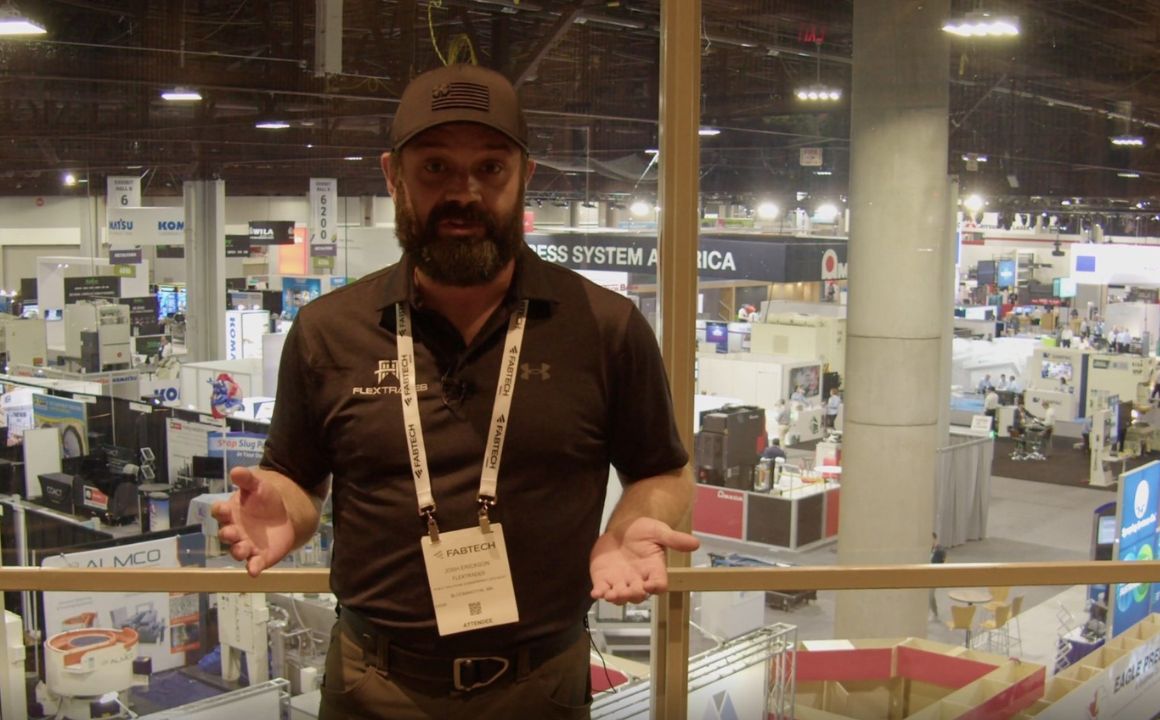
FABTECH is the North American metal fabricating industry’s premier event every year. It is run in partnership by some of the biggest trade associations in the sector. The intent of the show is to bring buyers and sellers into a convenient venue to conduct business, make connections, share ideas, AND learn. The event occurs annually in the US rotating between Chicago, Atlanta, and Las Vegas. An identical event takes place in Mexico annually on a rotation between Monterrey and Mexico City. FABTECH Canada is a biennial event exclusive to Toronto. You can learn more about FABTECH at your convenience. FlexTrades was in Atlanta for the entire event last week. We wanted to share some of our biggest takeaways with you. 


Automation 

Lead times were such a giant part of so many conversations at FABTECH 2022 that they almost got their own place on this list. The concern with how to deal with long lead times from suppliers and reduce lead times for customers is one of many primary drivers for the prevalence of automation at FABTECH this year. From reducing injuries to improving workflows to increasing efficiency, it seems most exhibitors and attendees consider a robot or cobot to be at least a partial solution for their problems. Automation of every kind was on abundant display. This great highlight video does a fantastic job of showing you as many of them as possible in 90 seconds! 


Sustainability 

It’s no secret that consumer taste is changing. No longer is it enough to deliver the best product or the best price. The market has evolved. Manufacturers still need to deliver on quality and price point, but people buy for the story now too. At least part of that story has become focused on sustainability. Mainly, end users want to know how you’re improving the environment of your facility for employees and how you’re maintaining the environment for your communities and consumers. FABTECH 2022 taught us that producers who don’t already have a focus on sustainability need to develop one quickly or they’ll be left behind. Meanwhile, companies who have been early adopters of processes with an ESG and sustainability focus are already reaping the benefits. 


Safety 

We’ve been saying for years that today’s facilities are no longer our fathers factories. The image of the dark, dirty, dangerous facility that news reels from the 50s and 60s accustomed us to are just no longer accurate. That doesn’t mean our current workforce doesn’t want manufacturers to continue to move the line forward regarding safety. Filtration systems to improve air quality, lighting advances to improve visibility, lift assist systems of all kinds, and even drones to inspect confined spaces were evident in displays or conversations at FABTECH this year. This prevalence indicates that an improved safety focus is something that all generations currently represented in the workforce agree upon. COVID protocols and practices brought safety front of mind for all of us (finally), and that’s here to stay. 


3D Printing 

Recent studies tell us that a full third of manufacturers are putting additive manufacturing on their short lists for investment. FABTECH 2022 echoed these findings in a big way. Additive was everywhere across this year’s expo. There were new powders to create metals, new machines to layer them, and everything in between. This expo made a point of teaching the industry that additive processes are much more than just 3D printing these days. 


Workforce 

The lack of available talent in the skilled trades pipeline to manufacturing was as big a topic as it has been in recent years. That has traditionally been a huge driver for interest in automation. This year, especially among keynote speaker panels, we’ve heard a bigger emphasis placed on the role we play as employers in developing the workforce. These presentations are intended to make deciders across the industry aware that younger employees want the same things previous generations wanted. Millennial and Gen Z jobseekers are just willing to ask for it up front, and they’re capable of doing their own research to know if your competition is offering it. Panelist Will Healy III put it best when he said, “If you’re hiring a welder for $15 base rate and you offer full benefits but McDonalds down the street is hiring people for $15 base rate and full benefits AND a free cheeseburger at lunch – what you’re really competing with is a cheeseburger. You need to think differently and bring more to the table than the competition if you want to win.” 


Next FABTECH 

The next FABTECH happens in Mexico this coming March. But we don’t want you to wait until then to see and learn more! If you found this content interesting and informative, we put out new industry content all the time. Check out our YouTube page for yet to be released interviews we captured in Atlanta. You can always follow FlexTrades on your social media platform of choice or check out our blog page to make sure you don’t miss out. And, of course, if you have other ideas for topics you’d like to know more about, or questions for FlexTrades, just send them to our Writing Team and we’ll be happy to cover them in a future article or video.

There are a lot of things made in America and FlexTrades helps make them. FlexTrades has a presence in many, many states across the United States. We work with manufacturers of all types, and we employ many talented engineers and skilled trades personnel. American manufacturing is important to us and we’re doing what we can to power manufacturing nationwide. As a result, we thought we’d share some great products manufactured here in the United States! Go American Made. 


Please keep in mind, according to the Federal Trade Commission, the term “Made in the USA” means “all or virtually all” products are made in the USA. As a result, some of these companies may outsource materials or some components but the actual product is made here in the United States of America.  


Alabama – Cougar Claw Tree Stands 

Cougar Claw Tree Stands are made in Foley, Alabama. This company not only makes the product in Alabama, but they also extract the aluminum needed to make the product from northern Alabama.  


Alaska – Bambino’s Baby Food 

Manufacturing in Alaska can be hard to do since most products are exported and that requires additional costs. However, Bambino’s Baby Food has found a way to do it. Bambino’s uses certified organic produce from Alaska farms as well as sustainable Alaskan seafood to produce their product. All products are manufactured in Anchorage, Alaska. 


Arizona – Nest Bedding 

Nest Bedding manufactures their products in Phoenix, Arizona. Not only does Nest Bedding manufacture in the US, but they also use USA sourced materials.  


Arkansas – Allied Cycle Works 

Allied Cycle Works is 100% made in America in Rogers, Arkansas. They not only manufacture and assemble in America, but they also design and source raw materials from the USA. Check them out! They care not only about their product, but also about the people who make their product.  


California – American Giant 

American Giant makes high quality, durable (not disposable, as they say) clothing, in the United States. 


Colorado – Bell Mason Jars 

Ball Mason Jars has been manufacturing glass jars in Broomfield, Colorado for 130 years!  


Connecticut – Atlas Cutting Tools 

Atlas Cutting Tools has 40+ years of experience manufacturing high quality cutting tools for CNC machining. They’re manufacturing in the United States for American manufacturers. Atlas Cutting Tools is located in Waterbury, Connecticut. 


Delaware – James Thompson & Co Inc.  

James Thompson & Co. Inc. was established in 1860 making their presence in the textile industry a long one (162 years to be exact). Check out the link to read the history of this company – it’s very interesting! The Dying and Finishing operations are located in Greenwood, Delaware. 


Florida – Beard & Company 

Beard & Company makes high quality beard, skin, and haircare products in Apopka, Florida. All products are handmade!  


Georgia – All American Khakis 

All American Khakis are made in Thomson, Georgia. This is a family-owned company with the goal to bring apparel manufacturing back to the United States. 


Hawaii – Island Slipper 

Similar to Alaska, manufacturing in Hawaii is difficult because of export costs and logistics. However, in Oahu, there is one company making slippers (in other words, sandals) by hand. Since 1946, Island Slipper has been making slippers out of green and healthy materials and production techniques. 


Idaho – Buck Knives 

Buck Knives has a great story that dates back to 1902 and is currently operated by a fourth-generation family member. Buck Knives are manufactured in Post Falls, Idaho. 


Illinois – First-Light USA 

First-Light USA makes high performance tactical flashlights in their facility in Seymour, Illinois. 

90% of the materials and components used in the flashlights are sourced within the United States. 


Indiana – Suns Out 

Suns Out manufactures their puzzles in Marion, Indiana. Originally outsourced to other U.S. manufacturers, Suns Out most recently invested in their own facility, and started in-house production of their puzzles in 2020. 


Iowa – Jon Kammerer 

In a town with a population of just over 9,000 residents, you can find a craftsman like no other. Jon Kammerer hand makes acoustic and electric guitars. What a skill! 


Kansas – Yoder Smokers 

Yoder Smokers are American made grills and smokers. All of these are handcrafted in Hutchinson, Kansas, which many consider to be one the most famous states for BBQ. 


Kentucky – Briggs & Stratton 

85% of small engines produced by Briggs & Stratton are made in the United States. This plant opened in 1985 and manufactured their 85 millionth (yes, millionth) engine in 2017. 


Louisiana – Zapp’s Potato Chips 

Zapp’s Potato Chips have quite the origin story and flavor options. These delicious snacks are made in Gramercy, Louisiana. 


Maine – Pride Golf Tee 

John Lloyd Wright, son of famous architect Frank Lloyd Wright is the founder of Logs. After nearly 60 years of being made in China, Lincoln Logs are now made in Burnham, Maine (a state known for its lumber industry) by a wooden golf-tee manufacturer,  Pride Golf Tee. 


Maryland – Poze Candle Co.  

Poze Candle Co. handcrafts and hand pours luxury soy candles (with wooden wicks) in Laurel, MD. Soy wax contains nothing artificial like paraffin wax, making it non-toxic and better for the environment. 


Massachusetts – Randolph USA 

In a family-owned and operated factory in Randolph, Massachusetts, Randolph USA makes superb sunglasses. It all started in 1973, when a former Royal Air Force navigator and machinist immigrated to America and opened doors to a factory to produce an eyewear (sunglass) company. The company built the machines that make the glasses with one goal in mind- make a product for the toughest of tough: Aviator sunglasses for the US military and the US Department of Defense. 


Michigan – American Plastic Toys 

American Plastic Toys produce just that- plastic (but safe) toys and have been doing so since 1932.Although Michigan is not the only state this company manufactures in, it should be noted that all plastic and colorants are purchased domestically (within the US). Less than 4% of toy content is imported (mostly sound components and fasteners) and only 9% of total products have imported components. Wow! 


Minnesota – Duluth Pack 

Duluth Pack is THE oldest canvas and leather bag and pack manufacturer in the United States. Since 1882, this company has been making high-quality, hand crafted canvas and leather gear. As you might have guessed, this company is based out of Duluth, Minnesota.  


Mississippi – C&W Companies 

C&W Companies is a woman-owned enterprise since 1990 and is located in Rienzi, MS. C&W is one of the largest contract embroidery firms in the US and operates in the screen print industry. 


Missouri – Red Wing Shoe Company 

Technically, the family-owned Red Wing Shoe Company has two locations – Red Wing, Minnesota as well as Potosi, Missouri. Since their inception in 1905, every pair of Red Wing boots has been handcrafted. All the tanning, cutting, fitting, lasting, bottoming and finishing is done by hand, and in total, it takes 230 different steps to make them complete! 


Montana – Fisher Blacksmithing 

Fisher Blacksmithing is a rare find these days. Owner Tule Fisher is a blacksmith who hand forges gardening tools in Bozeman, Montana. You’ve got to check these out. They look useful and they’re pieces of art!  


Nebraska – Accu-Strike  

Accu-Strike weld helmets are made in America in Ord, Nebraska. A welder made these helmets, so you know they’ve got to be good. This producer guarantees that not only is the Accu-Strike helmet dark before the arc is struck, it’s also a clear lens to view through when grinding and/or positioning parts. A very useful tool for all welder fabricators. 


Nevada – American Barbell 

American Barbell has been making gym equipment for over 40 years. You can find them in commercial gyms, military bases, and strength conditioning facilities domestically and internally. It’s located in Las Vegas, Nevada. 


New Hampshire – New Hampshire Clocks 

The title is in the name. New Hampshire Clocks are high-end clocks made in Franklin, New Hampshire. Although not all components come from American suppliers, it’s New Hampshire Clock’s goal to get there. The US region of New England mills, handcrafts, and finishes the wood. The glass comes from New York and the handles come from Michigan. Additional parts come from Wisconsin, California, and Massachusetts. 


New Jersey – WeatherWool 

WeatherWool is a small family company making great outerwear out of their own home. They operate out of South Orange, New Jersey. 100% of their processing operations are American including the ranchers, the shearers, the truckers, the engineers, the dying, scouring, and milling. It even includes those who supply threads, buttons, zippers, etc. What an accomplishment! 


New Mexico – Golightly Cashmere 

Golightly Cashmere is craft knitted in Santa Fe, New Mexico by true artisans. Not only is Golightly Cashmere proud of their product, but they are also very proud of their ability to sustainably source ethically produced cashmere in the United States. 


New York – Cutco 

Cutco is the largest manufacturer of kitchen cutlery in North America. They have been manufacturing for over 70 years in their Olean, New York factory. Cutco is proud of their American-made product, they have a “Forever Guarantee.” If for any reason their customer is not happy with the knives, correction is always taken (sometimes replacement). They do free sharpening as well! 


North Carolina – American Giant 

American Giant makes high quality, durable (not disposable, as they say) clothing in the United States. Much of the company’s supply chain sources and manufacturing is in North Carolina with additional manufacturing and sourcing in California and South Carolina. I will enthusiastically endorse American Giant. They have GREAT clothing, and I highly recommend you check them out! 


North Dakota – Dot’s Homestyle Pretzels  

Dot’s Homestyle Pretzels has a great story. I can’t leave them out even though they have bakeries in two states now. Dot’s started with Dorothy Henke. Dorothy lived in North Dakota, but she spent winters in Arizona. A cousin of Dorothy’s husband asked if Dorothy could bring 30-40 bags of seasoned pretzels as gifts for her clients. Over the course of time, and even more interesting stories, Dot was able to grow the business into what it is today.  


Ohio – American Mug & Stein Company 

American Mug & Stein Company is located in East Liverpool, Ohio where they hand cast and glaze coffee mugs, steins, and other customized items. It makes sense that American Mug & Stein Company is located there. It was once considered the “Pottery Capital of the World.” 


Oklahoma – Cookshack 

Cookshack is a company making headway in the world of grills and smokers. Located in Ponca City, Oklahoma Cookshack connected with a Kansas BBQ entrepreneur called Fast Eddy. Between the years and experience, they created a “Fast Eddy” grill, now one of their most common units. 


Oregon – Leatherman 

I am not surprised one of the most versatile tools comes from Portland, Oregon. Even though the Leatherman brand and multi-tools are used all over the world, they have always been made in Portland. 


Pennsylvania – Slinky 

Every Slinky in the world is made in Hollidaysburg, Pennsylvania. Check out the story of the Slinky here! 


Rhode Island – Seaside Casual 

Seaside Casual has been making outdoor furniture for over 25 years from Coventry, Rhode Island. This company is a big believer in US manufacturing, so they do their best to source from US partners. If they can’t, they clearly let you know what furniture components they haven’t yet found a US partner to produce. 


South Carolina – Kentwool 

Kentwool socks are made in Pickens, South Carolina from Merino Wool. It all started during a game of golf. The vision for better socks, a need for better socks. Now, PGA Tour caddies and players favor these socks. 


South Dakota – The James Valley Co. 

The product line at The James Valley Co. makes sense considering its location in Mellette, South Dakota. Although a unique blend of products, they really tie together. The first products for the hunter in you are scents (deer, elk, moose, bear). Got a favorite dog you like to hunt with? James Valley Co. has treats. And after a long day out tracking, cook up something tasty with the James Valley Co. barbeque sauce. 


Tennessee – Lodge Cast Iron 

Lodge Cast Iron in South Pittsburg, Tennessee has been making cookware and cookware accessories since 1896. To make this classic, timeless, sturdy cookware, Lodge operates two foundries in this small town (population just over 3,000). 


Texas – Stetson 

Stetson hats have quite the history on how they came to be. What they are now is iconic. From 1865 until now, Stetson hats have been a part of the American image. At their factory in Garland, TX there are 200 workers and roughly one million felt and straw hats produced every year, with a typical hat requiring 100 sets of hands for making and shaping. The felting process occurs in Longview, Texas. 


Utah – Liberty Safe 

Liberty Safe in Payton, Utah is the #1 producer of gun safes, fire safes, commercial safes, and home safes – all since it was first founded in 1988. 95% of Liberty Safe’s products are made in the United States and all materials are American made steel. On top of that, Liberty Safe has an environmentally safe paint system AND recycles the overspray from their powder coating booth.  


Vermont – Cobble Mountain Hammock 

In a world of automation, it is quite rare to see handmade items. However, Cobble Mountain Hammock, in East Corinth, Vermont, still makes all their products in just that way. Production occurs in a century old bobbin mill with local employees. Additionally, the oak used for the hammocks is harvested from sustainable forests and the rope comes from Tennessee.  


Virginia – American Merchant 

American Merchant is located in Bristol, Virginia where they weave, dye, and finish raw yarn into premium bath towels. Every towel uses 100% US grown cotton. (Note: America is one of the largest producers of cotton in the world). 


Washington – Hammerless Impact Technology 

Hammerless Impact Technology (H.I.T) makes just that – hammerless nail sets, pin punches, and roll pins. They are based out of Spokane, WA. 


West Virginia – Fiesta Tableware 

Fiesta Tableware in Newell, West Virginia has been manufacturing its very popular dinnerware since 1871! Fun fact – the factory is so old (19th century old), manufacturing workers have made claims reporting ghostly phenomena. Reports include everything from hearing footsteps, experiencing tugs on their hair, and ghostly figures showing their presence. 


Wisconsin – Sussex Injection Molding 

Sussex Injection Molding has been headquartered and manufacturing in Sussex, Wisconsin for over 40 years. They serve the medical plastic injection molding industry among many others. Sussex does everything from engineering to molding to post-molding value add. 


Wyoming – Marc Taggart & Co. 

If you’re looking for unique furniture pieces, go no further than Marc Taggart & Co. They are based in Cody, Wyoming. This company makes their product from ethically sourced material in the American heartland. 

Candy Corn, that’s right, let’s talk about it. 

The sweet treat that divides the nation remains a mystery to the masses. Today, we’re going to tackle a few questions and figure out what candy corn is, how it’s created, and most importantly – where it goes after Halloween. 

Candy Corn Ingredients 

Candy corn has four main ingredients: 

  1. A “slurry” (as they call it) is similar to a buttercream. This is created with vanilla and sugars. 
  2. Food coloring is used to individually color each layer with yellow and red dyes. 
  3. The surprise ingredient – (and my personal favorite) marshmallow! Marshmallows are broken down into the slurry to create the light and fluffy texture of the candy corn itself. 
  4. Lastly, the confectioner’s glaze. This is made of honey, gelatin, sesame oil, sugar and salt. 

The Process 

The slurry is taken from a large industrial mixer and placed into three different containers; each container holds a designated layer of the candy corn: yellow, orange, and white.  This container continues to mix the solution so that the slurry maintains the same consistency.  

Wooden trays are dusted with dry cornstarch and then loaded onto the belt where each layer then fills the candy corn imprints. Due to the liquid nature of the material, there is no wait time in-between. Each layer is immediately placed on top of the other to dry. 

Each wooden tray holds 1300 corn pieces, and the machinery can produce 25 boards per minute! 

Once this process is complete and the candy corn is fully formed, they’re tossed into a rotating bin. In this rotating bin, technicians then toss the confectioner’s glaze onto the candy corn pieces until they’re evenly coated. The drying and coating process can take 4-5 days to complete.

Alright, so where does it go? 

Whether you love candy corn and are eager to find it year-round, or you can’t wait for candy corn to leave the shelves, you must wonder where the leftovers go. 


Last year, 35 million pounds of candy corn was produced across the United States. Only 70% of all candy corn is effectively sold before Halloween. Where does it all go then? 


We did some digging. 

Despite popular belief, “the trash” isn’t the main answer. 

In fact, the answer may surprise you. 


Once Halloween concludes, candy corn sales resume. The day after Halloween, candy corn is wiped from the shelves for highly discounted prices, and resellers will snatch up the leftovers. 


Candy corn stays fresh, if unopened, for around nine months! In fact, you can find candy corn year-round with online retailers like Amazon.  


Well, there you have it! This sweet treat has many layers – from its creation in the 1880s to mimic corn kernels for industrial times, to secret ingredients like marshmallows folded in to guarantee its shape. While candy corn is consumed by many year-round, Halloween is simply the best time to grab them in-store! 

I’m a big advocate for the skilled trades in general, and manufacturing specifically. I spend a lot of time and energy to get in front of the next generation of our workforce at high schools, technical colleges, military reintegration units, and other vocational training programs around America. Whenever I’m lucky enough to be granted access to such a program, I obviously spend some time speaking about the opportunities to work at FlexTrades and passing along the tribal knowledge I’ve picked up over the decades that I’ve found to be critical to success in any industry. But I’m always surprised how much time I spend answering questions about the skilled trades themselves.  

It reinforces to me how poorly those of us within the trades have marketed ourselves over the past half-century. But these questions are also an important reminder for me to remember that people outside of our industries don’t have the knowledge that insiders do. Because of this, it’s important to be able to speak to the basics – especially when talking to younger audiences. With this in mind, I’d like to share 10 of the questions I most commonly get about the trades (and how I answer them) with all of you. 


1) I’m not mechanically inclined or into working with my hands. Is there an opportunity for me to work in the skilled trades? 

There is an opportunity in the trades for everyone, regardless of what their natural aptitudes may be. First, being mechanically inclined is important but the continuing development of tools and technology make that less of a necessity every day. To be clear, you’ll still need to use tools to work in a hands-on position. I’m just saying those tools get easier to use well and require less expertise to do so all the time. This means the industry is trying to make itself more welcoming for all skill levels. But let’s say you are one of those people that just isn’t capable of that kind of work. There’s still a home for you in the trades! From sales to HR to project management to design to administration, trades-oriented companies need all the peripheral and support skills that any other company needs. Don’t ever forget that! 


2) Do I need to go to college to work in the trades? 

Plain and simple, no. This doesn’t mean you can’t, or shouldn’t, just that it’s not a requirement. Whether working in construction, agriculture, or manufacturing, I have worked with individuals who followed all possible paths to success. They may look different, but they lead to the same place. If school isn’t for you and you need to get to work, starting in an entry-level position with a company that provides lots of on-the-job training and plentiful advancement opportunities can be a great way to grow your career. If you have a passion for a particular trade or a firm idea of what path into trades work you want to follow, going to the right local vocational program can be a wonderful option to start. Maybe a four-year degree experience is what you want. That doesn’t mean we don’t need you in the trades! Business, communications, engineering, design, and management majors are just a few of the degree paths that are still much in demand at companies across the trades. 


3) What is the best program to take to get a job in the trades? 

The best program to take is the one that fits your interests, skills, and schedule the best. That’s the easy answer. The more complex answer is that it depends on where you’re from and where you’re going. This means that the same school can have programs that are much different when it comes to the quality of their training or the quality of their network. The network can be just as important as the training, because even the best training doesn’t do you much good if nobody is trying to hire graduates from your program. You should also keep this thought in mind when considering local demand for talent. If a school has a great welding program but your desired geographical area has few welding or fabrication shops, you may still struggle to get hired even with excellent skills. All of this means the more homework you do before selecting a program, the less hustling you’ll have to do to get hired after completing it. 


4) I want to be an entrepreneur and run my own business. How does a goal like that fit in the trades? 

In short, perfectly! There are well over 250,000 manufacturers, and close to 500,000 construction companies, in just the United States. The vast majority (well over 75% in any given year) are considered to be mid- or small-sized companies. More than half of them employ 20 people or less. This means that most companies employing tradespeople are technically small startups owned and operated by entrepreneurs, and most of them came to that place by starting in bottom rung roles not by pursuing a degree in entrepreneurship or significant amounts of venture capital first. All these numbers add up to one inescapable fact, there isn’t an industry that is more inclined to upward mobility or entrepreneurial growth than the skilled trades. 


5) I don’t have many tools. How does a person start a skilled trade career without their own tools? 

By working for a company that doesn’t require you to provide them. This may sound simple but that’s because it is. There are barriers to employment in any industry. The expense of tools can be a big one in the trades. But not every company requires you to provide your own and many that do will provide assistance with your purchases. Tools can be a complicator, but the right research can make sure they’re not a deal breaker. 


6) I come from a small town without a lot of employment opportunities locally. How do I get started in the skilled trades? 

Maybe you start your own company. Maybe you temporarily relocate to begin your career so you can start building experience. Or maybe you come work for FlexTrades. We have projects all around America where your skills are in demand. Whether you’re just starting your career, or well along your career path, we have opportunities for you. Almost all of our work requires travel, but you’ll never have to permanently relocate, and you can homebase from anywhere across the country. If this sounds like you, check out our available openings now! 


7) Is it hard to start a career in the skilled trades? 

No. People interested in starting are very much in demand and there are many ways in which they can begin. Entry level work with a local company, apprenticeship programs through companies or unions, associates degrees from vocational schools, condensed training programs, military service – all these paths can lead you to a successful career in the trades. You just need to pick the one that’s right for you and then stay on it! 


8) Are there opportunities to grow my career once I get started in the trades? 

Of course! Just like any company, there are many ways you can job up. Seniority can get you better pay or more responsibility at some companies. Continuing education or ongoing certification can help you advance at others. Experience alone can help push you up the ladder since knowing the ins and outs of a company often gives internal candidates a leg up on the competition when it comes to new openings and advancement opportunities. The only thing that really can hold your career growth back in the skilled trades is your personal ambition or creativity. 


9) Will I make as much money as a “white collar” job? 

Most likely? Yes! While top earners in any one trade may not make what top earners in certain “white collar” fields make (think surgeons compared to great welders) when talking about the “average” worker it’s not even close. There is too much variation in annual average and median incomes, based on location, for me to start quoting them now. What I’ll say is that, wherever you live around the US, do a quick internet search using these phrases “median (insert skilled trade of choice, such as Welder) income for (insert your local zip code) compared to other occupations”. I promise your results will be surprising. 


10) What trade is most in-demand? 

That answer varies significantly with geography. For example, injection-mold operators are a lot more likely to be in demand somewhere that has many aviation or automotive manufacturers because they do a lot of injection-molding. However, I tend to encourage people to pursue maintenance careers when they know they want to work in the trades but aren’t sure which trade. Why? Because no matter what changes occur with equipment we use or how we use it, somebody will always be needed to troubleshoot, maintain, and repair that equipment. Maintenance is a great trades career for a lot of reasons but job security like that is one of the big ones. 


More FAQs 

I hope you found value in this list and that you’re more prepared to advocate for careers in the skilled trades in the future. If you’d like more answers, check out our blog page to see other questions we’ve covered in the past. Got a question or answer of your own to share? We’d love to help you do that! Send them to our Writing Team and we’ll be happy to share them in a future blog.

Ten years ago, in 2012, the Fabricators and Manufacturers’ Association (FMA) founded Manufacturing Day (MFG Day). MFG Day is a national movement to show the public (students, parents, and all others) just what modern manufacturing is all about, because as they say, “It’s not your father’s machine shop anymore”.  MFG Day is always the first Friday in October. This year we are celebrating all things manufacturing on October 7th, 2022. In addition to MFG Day, many states and manufacturing associations (including the International Trade Administration) consider the first week in October National Manufacturing Week or the entire month of October Manufacturing Month. But it doesn’t stop there for FlexTrades. We celebrate manufacturing all year long and hope you will too. Below are ways in which you can do so!  


  1. Open your manufacturing doors to the public. You can find tips and tricks to do here. 
  2. If you’re an employee, encourage your employer to open their doors!  
  3. Partake in trade shows as a visitor or manufacturer. Here’s a list of 2022/2023 tradeshows to get you started!  
  4. Visit or participate in a tour (or two) of manufacturing facilities. Find events to attend or ways to host an event at mfgday.com  
  5. Know the industrial revolutions to see how manufacturing has changed and why it’s so great!  
  6. Talk to the kids you know and tell them what it’s like, share your knowledge of manufacturing and discuss the vast opportunities within a manufacturing career. Show them some of these great How It’s Made videos so they get time on their electronics and they’re learning!   
  7. Share positive messages about manufacturing to your social media accounts. 
  8. Follow and reshare positive messages from manufacturers and those in manufacturing on your social media accounts.  
  9. Shop and buy American made products. 
  10. Donate or volunteer to the Nuts and Bolts Foundation (also known as Nuts, Bolts & Thingamajigs ® – NBT). NBT is on a mission to bridge the skills gap in manufacturing, keep American manufacturing alive and strong, and provide students the opportunity to learn how they can do great things by working in manufacturing.  
  11. Donate your time and knowledge by visiting technical or trade schools to spread awareness about manufacturing and opportunities in manufacturing. Bring brochures with you (here’s an example). 
  12. Encourage your coworkers or employees to share their own stories with each other.  
  13. Curate an Employee Appreciation Day – managers can genuinely thank their workforce, provide pizza for lunch, or organize a cookout, send thank you cards, give gift cards, sponsor a team outing, or film a video of thanks.  


And as you celebrate, keep in mind the words of Alan Mulally, an American aerospace engineer and manufacturing executive, former executive vice president of Boeing, CEO of Boeing Commercial Airplanes and former President and Chief Executive Office of the Ford Motor Company, Alan is well versed in manufacturing and once said:   


“No country is very successful in the long term…without a really strong and vibrant manufacturing base”.  


Happy MFG Day (or week or month)! 

The International Manufacturing Technology Show (IMTS) occurs in Chicago every two years. It is normally one of the biggest events worldwide in all of manufacturing but, after a 4-year gap due to COVID concerns in 2020, this year was even bigger. IMTS 2022 didn’t just represent a symbolic return to “normal” for our industry or a chance to reconnect with friends and colleagues. Rather, it was a celebration of all we’ve missed in the last couple years AND everything new we get to look forward to in the years to come. FlexTrades was there last week, and we had so many amazing experiences, interactions, and takeaways that we can’t possibly share them all. However, we do have some highlights we want to make sure you didn’t miss. 

By the numbers 

IMTS, even for veteran attendees, is overwhelming. It takes up all McCormick Place, the largest convention center in North America, and an entire week of the calendar. The raw size and scale of the venue and exhibits creates a sense of shock and awe for first time attendees. Meanwhile, the sheer number of people creates not just a crowd but an energy that can be felt physically. A great way to start wrapping your mind around IMTS is to begin with the numbers. 


  • 2.6 million Square feet of exhibit space utilized by vendors and conferences 
  • 1.3 million Square feet taken up by display booths alone 
  • 86,307 Total individuals who attended at least one day this year 
  • 33 Number of times IMTS has been held in Chicago 
  • 2,000+ Total exhibitors displaying products and solutions 
  • 117 Number of countries with exhibitors or visitors in attendance 
  • 57 million Total weight (in pounds) of equipment and material on display 
  • 9 Number of pavilions featuring displays (each a trade show unto itself) for different specialties 
  • 12 Total conferences occurring during the week 
  • 9 Specialty attractions, including a demo of a JET SUIT! 
  • Countless Number of demonstrations, conversations, and ideas that occurred 


By the images 

Words can say a lot about IMTS, but pictures and videos say even more. Here are links to some from the Association of Manufacturing Technology (AMT), the host of IMTS, and FlexTrades. 


T-minus two years 

The star of IMTS 2022 was all of us, our excitement to reconnect, and our hunger to tell the stories of our industry like never before. The increase in media and content creators in attendance was noticeable this year. We expect that number to grow even more by the time IMTS 2024 arrives. But we don’t want you to wait years to see and learn more! If you found this content interesting and informative, we put out new industry content all the time. Follow FlexTrades on your social media platform of choice or check out our blog page to make sure you don’t miss out. And, of course, if you have other ideas for topics you’d like to know more about, or questions for FlexTrades, just send them to our Writing Team and we’ll be happy to cover them in a future article or video.