Manufacturing doesn’t slow down when your workforce comes up short.

Orders still need to ship. Quality still needs to hold. Deadlines don’t care if you’re understaffed.

That’s where FlexTrades steps in.

We provide highly skilled tradespeople who integrate quickly, work safely, and produce at a high level from day one. The result is simple. Less downtime. Fewer bottlenecks. More control over your operation when demand spikes or labor gets tight.

Across the United States, manufacturers rely on FlexTrades to close critical labor gaps without compromising quality or culture.

Most of our clients operate in core manufacturing sectors, including:

  • Primary Metal Manufacturing
  • Fabricated Metal Product Manufacturing
  • Machinery Manufacturing
  • Computer and Electronic Product Manufacturing
  • Electrical Equipment, Appliance, and Component Manufacturing
  • Transportation Equipment Manufacturing

But that’s only part of the story.

Beyond Traditional Manufacturing Sectors

Modern manufacturing is more complex than ever. Supply chains shift. Demand fluctuates. Skilled labor is harder to find and even harder to keep.

FlexTrades was built for that reality.

Our technicians bring diverse experience across a wide range of industries, allowing us to support operations that extend well beyond traditional manufacturing categories.

We regularly support production teams in:

  • Food Manufacturing
  • Beverage and Tobacco Production
  • Textile Mills and Textile Product Manufacturing
  • Apparel and Leather Goods Manufacturing
  • Wood Product Manufacturing
  • Printing and Related Support Activities
  • Petroleum and Coal Products Manufacturing
  • Nonmetallic Mineral Product Manufacturing
  • Furniture and Related Product Manufacturing
  • Merchant Wholesalers, Durable and Non-Durable Goods

If your operation relies on skilled labor to keep production moving, we can support it.

A Real-World Example: Scaling Production in a Rural Facility

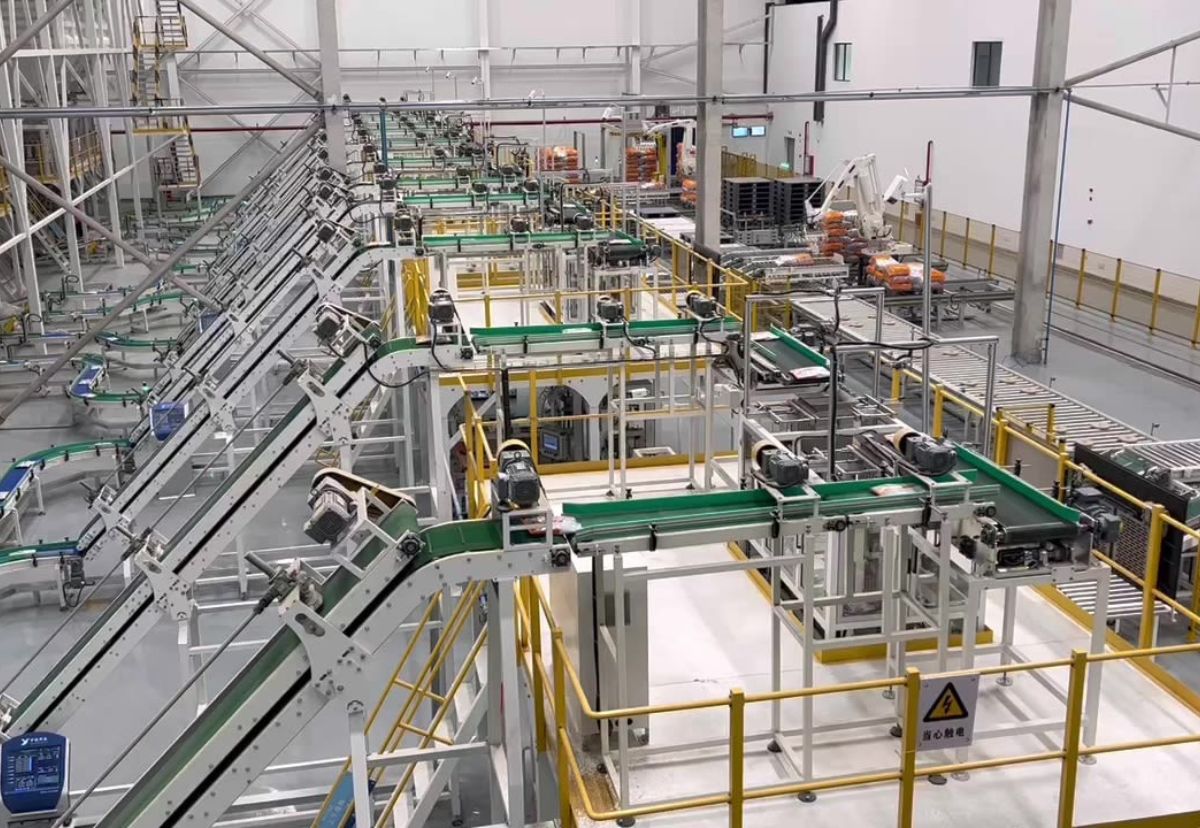
One of our clients, a large rice manufacturer, faced a familiar problem.

Demand was rising fast as harvest season approached. Production needed to scale. But the facility was located in a rural area where hiring locally at speed simply wasn’t realistic.

They needed skilled workers. They needed them quickly. And they needed them to perform.

FlexTrades delivered.

Our technicians deployed to the site and stepped into critical roles across the operation, including:

  • Scale Attendants
  • Heavy Equipment Operators
  • Machine and Line Operators
  • Sanitation Technicians
  • Maintenance Technicians
  • Control Room Operators
  • Lab Technicians
  • Packaging Operators
  • Material Handlers

They didn’t just fill seats. They produced.

With the right people in place, the facility maintained output, protected product quality, and kept shipments moving during one of the most demanding periods of the year.

No shortcuts. No drop in standards. No chaos.

Just execution.

Built for Manufacturers Who Can’t Afford to Slow Down

Labor shortages aren’t going away.

If anything, they’re getting more unpredictable.

The manufacturers who win are the ones who can adapt quickly without sacrificing quality, safety, or their workforce culture.

That’s the role FlexTrades plays.

We give you access to skilled tradespeople when and where you need them so you can scale production, stabilize operations, and keep moving forward.

Let’s Get to Work

If you’re a manufacturer dealing with workforce gaps, production backlogs, or shifting demand, we’re ready to help.

Schedule a call with FlexTrades and take control of your workforce strategy.

If you’re a skilled tradesperson looking for your next opportunity, explore our open positions and get to work.

In highly regulated industries, precision isn’t optional. It’s required.

At Mesa Labs, precision is at the heart of everything they manufacture. Their calibration and quality control instruments support industries like healthcare and laboratory science by ensuring critical systems operate safely and accurately.

For the team at their Calibration Solutions business unit in Lakewood, Colorado, that mission carries real responsibility.

“These products provide the measurement and calibration that other devices rely on in lifesaving or life-supporting fields,” says Jasmine Stone, Director of Operations. “When you have products that maintain people’s livelihood, you have to be delivering on time.”

As demand grew and operations evolved toward a more responsive, just-in-time model, Mesa Labs faced a familiar challenge in modern manufacturing: how to scale quickly without compromising quality, culture, or the well-being of their team.

Their solution came through a workforce partnership with FlexTrades.

A Lean Team Focused on Quality

Mesa Labs operates with a deliberately lean production team where efficiency and consistency are equally important.

“I’m most proud of our team’s ability to deliver quality product on time,” Stone says. “We’ve built the capability to turn around products within days, sometimes less, from when the order is placed.”

That level of responsiveness has taken years of operational improvement.

“It required a lot of willingness to change and try new things,” she says. “But our team has shown an incredible ability to flex and sprint when needed to get our customers solutions.”

The challenge is that growth in a manual assembly environment requires more than new equipment. It requires skilled people to perform the work.

“When demand increases quickly, it’s a huge commercial win,” Stone says. “But operationally, it creates moments where you have to pivot very fast.”

And those moments can put pressure on internal teams.

“I really like my people, and I want to keep them happy,” she says. “There’s only so much you can ask outside the normal expectation before you risk burnout.”

Workforce Flexibility Without Sacrificing Culture

For Stone and her team, FlexTrades provided a way to respond quickly without overloading their workforce.

“I might know I need people tomorrow, but I don’t know what next month looks like yet,” she says. “Having that partnership means I can support a burst of demand without burning out my existing team and still deliver products on time.”

Workforce flexibility has also helped Mesa Labs maintain its goal of being an employer of choice.

“With us being very lean, we also offer strong benefits like PTO and family leave,” Stone explains. “But when every role is essential, that can create operational challenges.”

The partnership with FlexTrades helps close those gaps.

“I don’t want someone taking leave to care for a family member to impact whether a person receives dialysis treatment,” she says. “Knowing I can get someone here quickly, sometimes within a week, has been massive.”

Turning a Production Challenge into a Breakthrough

One of the biggest operational transformations came during a difficult period on one product line.

At the time, low first-pass yields meant additional labor was needed to ensure quality products still reached customers.

“I needed to throw as much labor at it as possible so we could mitigate that and still get good product out,” Stone explains.

FlexTrades technicians stepped in quickly.

“Within a month, we had five or six employees integrated with the team.”

The results were dramatic.

“We quadrupled our output,” she says.

More importantly, the additional capacity bought time to improve their underlying process. Today, that same product line has improved from an 84-day turnaround time to just four days.

“Short-term pain for long-term gain,” Stone says. “We could not have done it without FlexTrades.”

Raising the Bar for the Entire Team

For Seth Walker, Mesa Labs’ Warehouse and BGI Manager, the partnership also reshaped how he thinks about temporary labor.

“Working with FlexTrades completely changed my view on temp work,” Walker says. “They bring people who already have experience and just need to learn ‘the Mesa way.’”

That preparation makes an immediate impact on the floor.

“It’s like magically beaming someone into the warehouse who already knows what they’re doing,” he says. “That gives us time to focus on improving other parts of the operation.”

The technicians don’t just help with workload. They elevate expectations.

“The FlexTrades employees we’ve had have leveled up the individuals around them,” Stone says. “They show what coming up to speed quickly can look like.”

Walker agrees.

“They’ve done a great job finding people who want to be here,” he says. “They care. They’re engaged. They have a good nose for decent people.”

Supporting Growth Without Chaos

As the partnership evolved, Mesa Labs began using FlexTrades more proactively.

During one forecasted surge in demand, Stone staffed additional technicians across production, quality, and warehouse teams ahead of time.

“The team kept waiting for the train to hit,” she says. “But it never did.”

Why?

“We had staffed for it.”

Instead of scrambling to react, the team stayed focused and productive.

“For the first time, we weren’t getting hit by the train,” Stone says.

Protecting Customers and the People Behind the Work

For Stone, the value of the partnership ultimately comes down to two priorities: protecting customers and protecting employees.

“When your workforce is burnt out, quality suffers,” she explains. “And when you’re desperate for people, you risk hiring someone who isn’t right for the role.”

FlexTrades helped eliminate that compromise.

“We don’t have to bring in just a warm body,” she says. “We get skilled technicians who can perform the work the right way.”

That allows Mesa Labs to maintain their standards while supporting their workforce.

“Our partnership has allowed us to remain an employer of choice,” Stone says. “We can keep the benefits that matter to our employees while still delivering the quality products our customers depend on.”

A Partnership Built for the Future

Looking ahead, Mesa Labs expects continued growth.

“We have exciting products and a strong roadmap,” Stone says.

But growth rarely follows a predictable path.

“With FlexTrades, I can tell our commercial team, ‘Bring it. If you think you can sell it, we’ll make it.’”

Even if the workforce isn’t in place yet.

“I know we can get the skilled labor we need quickly,” she says. “That gives us the ability to pivot, grow, and still deliver quality products.”

When asked to summarize the partnership in one sentence, Stone put it simply:

“FlexTrades has helped Mesa Labs protect the vulnerable, while also protecting our people.”

Walker summed it up even more directly.

“Success.”

Walk any manufacturing trade show floor today and you will hear the same two letters repeated over and over again.

AI.

Artificial intelligence has quickly moved from theory to application. Predictive maintenance platforms analyze machine data in real time. Computer vision systems inspect parts faster than the human eye. Generative design software helps engineers build lighter, stronger components in minutes instead of weeks.

But amid all the excitement, one truth often gets lost.

AI is only as effective as the people guiding it.

For manufacturing leaders, the real shift is not just adopting artificial intelligence. It is learning how to work with it. The companies that figure this out first will move faster, solve problems earlier, and operate more efficiently than those still treating AI like a novelty.

This is where AI literacy begins.

What AI Literacy Actually Means

A few years ago, people talked about “prompt engineering.” The phrase sounded technical and intimidating, as if it belonged to programmers and data scientists.

In reality, the idea is much simpler.

AI literacy is the ability to communicate clearly with AI systems so they produce useful, actionable results. It is the skill of framing problems, asking better questions, and interpreting the answers AI generates.

Think of it the same way you would think about any advanced manufacturing tool.

A CNC machine does not create precision parts on its own. A skilled machinist programs it, guides it, and adjusts it based on experience and context.

AI works the same way.

It is powerful. But it still requires human judgment to produce meaningful outcomes.

Where AI Is Already Changing Manufacturing

The shift toward AI assisted operations is already underway across the manufacturing landscape. And the use cases are becoming more practical every year.

Predictive Maintenance

Modern manufacturing equipment generates enormous amounts of operational data. AI systems can analyze that data to identify patterns that signal potential failures before they happen. Instead of reacting to breakdowns, manufacturers can schedule maintenance proactively, reducing downtime and protecting production schedules.

Computer Vision for Quality Inspection

Traditional inspection processes rely heavily on human eyes and manual measurement. AI powered vision systems now scan components in real time, detecting surface defects, dimensional inconsistencies, and material anomalies with remarkable precision.

The result is faster inspections and more consistent quality control.

Generative Design and Engineering

Engineering teams are also using AI tools to explore design possibilities that would be nearly impossible to model manually. By defining constraints such as material strength, weight limits, and manufacturing methods, engineers can generate thousands of optimized design options in minutes.

Many of the most advanced aerospace and automotive components being produced today are the result of this type of collaboration between human engineers and AI systems.

Supply Chain Forecasting

AI is also reshaping how manufacturers manage inventory and supplier networks. Machine learning models can analyze historical demand patterns, supplier performance data, and global market signals to improve forecasting accuracy and reduce supply chain disruptions.

In an era of volatile global logistics, that capability matters.

The Leadership Challenge No One Talks About

Despite all of this progress, many manufacturing organizations are still approaching AI the wrong way.

They treat it like software.

Install the platform. Train the staff. Expect results.

But AI does not behave like traditional software systems. It behaves more like a partner in the problem solving process.

If leaders ask vague questions, they receive vague insights. If teams lack context or direction, the AI models they rely on will produce generic recommendations.

This is why AI literacy is quickly becoming a leadership skill.

Manufacturing leaders must learn how to frame operational problems clearly, interpret AI generated insights critically, and guide teams in using these tools effectively. Without that human layer of understanding, even the most advanced systems struggle to produce meaningful value.

AI Will Not Replace Skilled Workers

A common fear surrounding artificial intelligence is that it will replace human workers on the factory floor.

That fear misunderstands the moment we are in.

AI excels at analyzing patterns, processing large datasets, and identifying statistical anomalies. But it does not understand nuance, operational context, or the countless small decisions that experienced technicians and engineers make every day.

In reality, AI will not replace skilled manufacturing professionals.

It will amplify them.

A maintenance technician who can interpret AI generated equipment diagnostics will diagnose issues faster. A production manager who understands how to query AI driven analytics will identify bottlenecks earlier. An engineer who knows how to guide generative design tools will unlock entirely new design possibilities.

The workforce does not disappear.

It evolves.

The Manufacturing Leaders Who Win

Manufacturing has always been defined by the ability to adopt new tools.

From the introduction of CNC machining to the rise of robotics and advanced automation, each technological shift has rewarded the organizations willing to adapt first.

Artificial intelligence is simply the next chapter in that story.

The companies that succeed will not be the ones that simply purchase AI platforms. They will be the ones that build organizations capable of thinking alongside them.

That means investing in training. Encouraging experimentation. And helping teams develop the ability to ask better questions of the systems now shaping their operations.

Because the future of manufacturing will not belong to AI alone.

It will belong to the people who know how to use it.

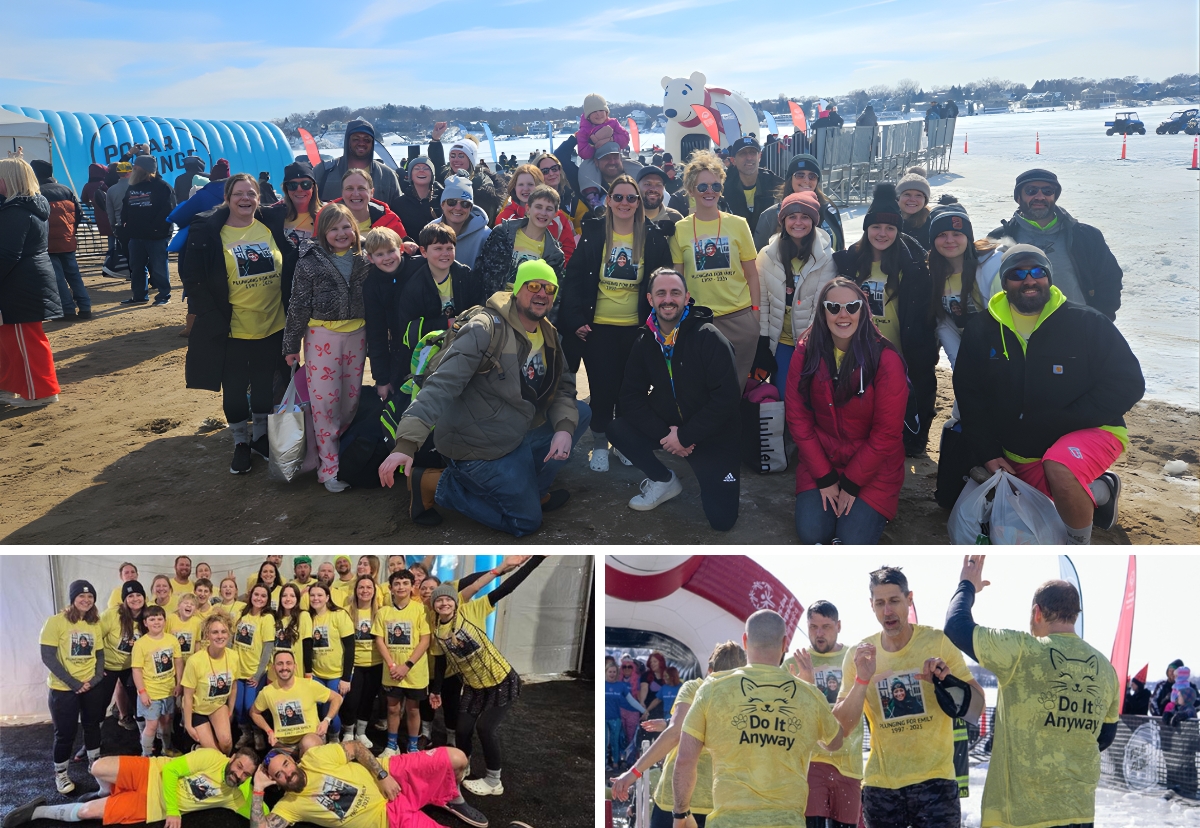
On February 21, 2026, the FlexTrades team gathered at the Polar Plunge event site in Prior Lake, Minnesota, for our ninth consecutive year supporting Special Olympics Minnesota.

And this year, we made our biggest splash yet.

  • 35 fundraisers registered, an all-time high
  • 30 participants took the physical plunge, another record
  • $11,244.00 raised, our second-highest single-year total ever

Since our first plunge as Team FlexTrades in 2018, we’ve now raised $54,749.23 to support Special Olympics athletes across Minnesota. That total brings our yearly fundraising average to more than $6,000.

The numbers are exciting. But the real story is the impact behind them.

Making a Difference That Matters

The Polar Plunge isn’t just a winter tradition. It’s one of the largest fundraising efforts supporting Special Olympics programs across the country and the biggest for Special Olympics Minnesota. Funds raised provide year-round sports training, competitions, equipment, and inclusive opportunities for thousands of athletes with intellectual disabilities statewide, all at no cost to them or their families.

At every plunge event, athletes and their delegations are present. They’re cheering, high-fiving, and smiling while encouraging plungers. If you’ve ever locked eyes with an athlete on the shoreline before jumping or running into freezing water, you understand quickly: this isn’t about the cold.

It’s about community. It’s about inclusion and belonging. It’s about creating opportunities.

The difference this organization makes in local communities is bigger than most people realize. Being even a small part of an impact like that is something we’re proud of, so proud that we’ve made it part of our corporate Core Values.

A Core Value in Action: Give Back

At FlexTrades, one of our Core Values is Give Back.

Our Give Back Committee exists to empower our employees to make a difference in the communities where we live and work. The committee takes that mission seriously and works diligently to create meaningful opportunities for our team to live that value beyond words. The FlexTrades Polar Plunge Team has become one of our most visible and consistent expressions of that commitment.

From six plungers in 2018 to 30 this year, participation has grown because our people believe in what we’re doing. Employees, friends, and family members show up year after year not because they have to, but because they want to.

Nine consecutive years of participation says something about culture. It says we don’t treat community involvement as a one-time event. It says we’re willing to get uncomfortable for a cause that matters. It says our Core Values guide action, not just conversation.

This year’s record-setting participation is proof of that.

Perfect Conditions. Record Energy.

This year, Prior Lake delivered perfect plunge conditions. It was warm, a balmy 10 degrees Fahrenheit, and windless enough to comfortably gather on the shoreline for a team picture and to watch other plunge teams. Luckily, despite a recent warm streak, we still had “good ice” for the plunge itself. That always means less time spent in freezing water and spares plungers from having to run through cold water to a buoy before returning the same way to the beach and heated changing tents.

We were the final group to enter the water that afternoon. The energy was high. The anticipation was real. And for our many first-time plungers, both kids and adults, the nerves were noticeable.

But afterward, the reviews were unanimous: “It wasn’t even close to as bad as I expected.”

Experienced plungers know that the anticipation is always worse than the plunge itself. They also know that the camaraderie, the laughter, and the athletes’ encouragement are what keep people coming back.

Several first-timers have already committed to returning next year. That’s how traditions become culture. And that’s why FlexTrades will always Give Back.

Why We Keep Showing Up

I’ve had the privilege of serving as team captain for all nine FlexTrades Polar Plunge teams and have personally plunged nearly 20 times over the years. Every plunge is special. Every year makes a difference.

But this one stood out. From the athletes to the volunteers to our growing group of plungers, everything aligned this year. And then there was one more layer that made it uniquely meaningful.

“Do It Anyway”

This year, our bright yellow plunge shirts carried a simple message on the back:

Do it anyway.

Those words came from a former member of our Marketing Team who worked with us for over six years and was a devoted member of all our previous plunge teams. She was known for being kind, helpful, and quietly impactful in the way she supported others. Her name was Emily, and she had a tattoo on her arm that read, “Do it anyway.”

After Emily passed away unexpectedly in December 2025, we knew we wanted to honor her in a way that reflected her positive, determined, and encouraging spirit. How? By plunging with her memory and her motto in support of something bigger than all of us.

Four members of her family, two aunts and two cousins, joined our team as plungers this year, three for their first plunge. Afterward, they shared that they could feel her spirit with us and were grateful to experience something that meant so much to her.

When the emcee announced that we were “Plunging for Emily” and proudly embracing the message to “Do it anyway,” it didn’t feel mournful. It felt strong, cathartic, and focused on the good.

It felt exactly like what Emily would have wanted.

Looking Ahead to Year 10

Nine consecutive years.

Nearly $55,000 raised.

Record participation in 2026.

What started small has grown into something that reflects who we are as a company.

To everyone who fundraised, donated, plunged, cheered, or supported from a distance, thank you. The impact extends far beyond a single event at a frozen beach on a winter afternoon.

And if you’ve ever considered joining us, Year 10 is coming. The water will be cold, but the cause will be worth it.

And we’ll do it anyway.