
In manufacturing, productivity matters. Quality matters. Deadlines matter. But none of those priorities should ever come at the expense of worker safety.

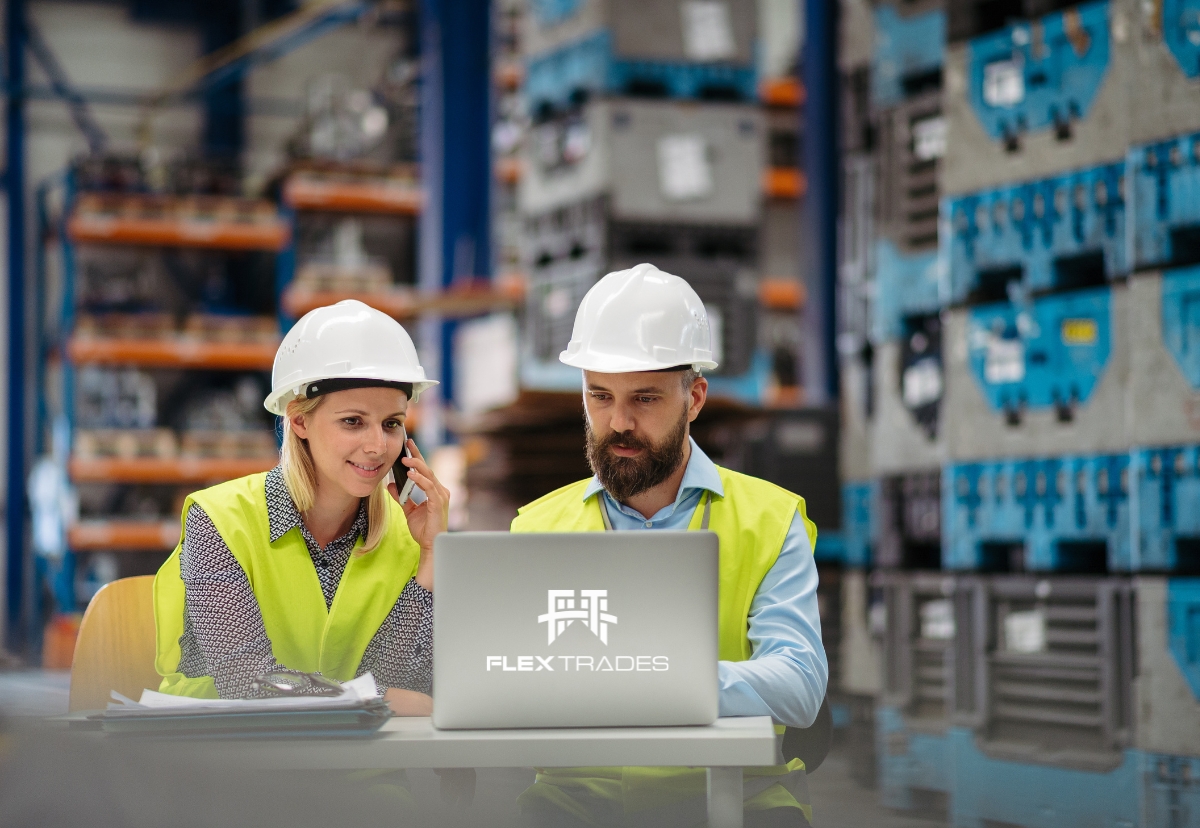
For manufacturers relying on flexible labor strategies, safety training is one of the most important factors in building a productive and dependable workforce. Whether workers are supporting a shutdown, filling a skilled labor gap, or helping scale production, every technician who enters your facility should be equipped to perform safely from day one.

That is why safety training is not simply a compliance checkbox for workforce solutions providers. It is a critical business function that protects people, supports operational continuity, and strengthens partnerships across the manufacturing industry.

Safety Is a Shared Responsibility

When manufacturers partner with workforce solutions companies, safety ownership should never be unclear.

The host employer understands the facility, equipment, processes, and site-specific risks. The workforce partner is responsible for preparing technicians, reinforcing safe behaviors, and ensuring workers understand expectations before stepping onto the floor.

The strongest outcomes happen when both sides treat safety as a shared responsibility.

When that collaboration exists, manufacturers gain workers who are better prepared, technicians gain confidence in their environment, and everyone benefits from a stronger safety culture.

Why Manufacturing Environments Require More Than Basic Orientation

Manufacturing settings are dynamic. Even highly skilled trades professionals may be entering a new plant layout, operating around unfamiliar machinery, or adapting to different lockout and tagout procedures, PPE requirements, traffic flow, or reporting structures.

Without clear training and communication, avoidable risks increase.

That is especially true in industries where downtime is costly and production schedules move quickly. Rushing workers into a facility without proper preparation can create setbacks that far outweigh the time saved.

Effective safety training helps close that gap by ensuring technicians understand not only how to perform the work, but how to perform it safely within that specific environment.

What Manufacturers Should Expect from a Workforce Partner

Not all staffing companies and workforce solutions providers approach safety the same way. Manufacturers should expect more than candidate placement alone.

A strong partner should bring a proactive safety mindset that includes:

  • Pre-assignment training on common workplace hazards
  • PPE expectations and safe work practices
  • Clear injury and incident reporting procedures
  • Ongoing communication with placed technicians
  • Documentation of training completion
  • Collaboration on site-specific orientation needs
  • Follow-up support throughout the assignment

When these systems are in place, manufacturers reduce onboarding friction while improving readiness and accountability.

Why Safety Training Matters to Skilled Trades Technicians

Top tradespeople want to work where safety is taken seriously.

Electricians, welders, machinists, programmers, maintenance technicians, pipefitters, engineers, and other skilled professionals know that safety standards often reflect broader operational standards. Clean processes, clear expectations, organized leadership, and strong communication usually accompany safer worksites.

That means a company’s commitment to safety can directly impact its ability to attract and retain quality talent.

Technicians are more likely to return to assignments where they feel respected, protected, and properly prepared.

The Business Impact of Strong Safety Programs

Safety training is often discussed through the lens of compliance, but its business value reaches much further.

Strong safety programs can help manufacturers and workforce partners improve:

  • Productivity through fewer disruptions
  • Attendance and reliability
  • Worker confidence and morale
  • Client vendor trust
  • Reduced injury-related costs
  • Reputation in a competitive labor market

In short, safer environments often become stronger-performing environments.

Building a Better Workforce Partnership

Manufacturing leaders should view safety conversations as an essential part of selecting any workforce solutions provider.

Ask questions such as:

  • How are workers trained before arriving onsite?
  • How do you communicate safety expectations?
  • What is your incident response process?
  • How do you partner with clients on site-specific risks?
  • How do you reinforce safety during assignments?

The answers can reveal whether a provider is simply filling openings or actively helping protect your operation.

Every Worker Home Safe

At FlexTrades, we believe workforce solutions should create confidence, not added risk. That starts with placing skilled tradespeople who are prepared to contribute safely, professionally, and productively.

Because no production goal, project milestone, or staffing shortage is more important than the people doing the work.

Every worker should go home safe. Every single day.
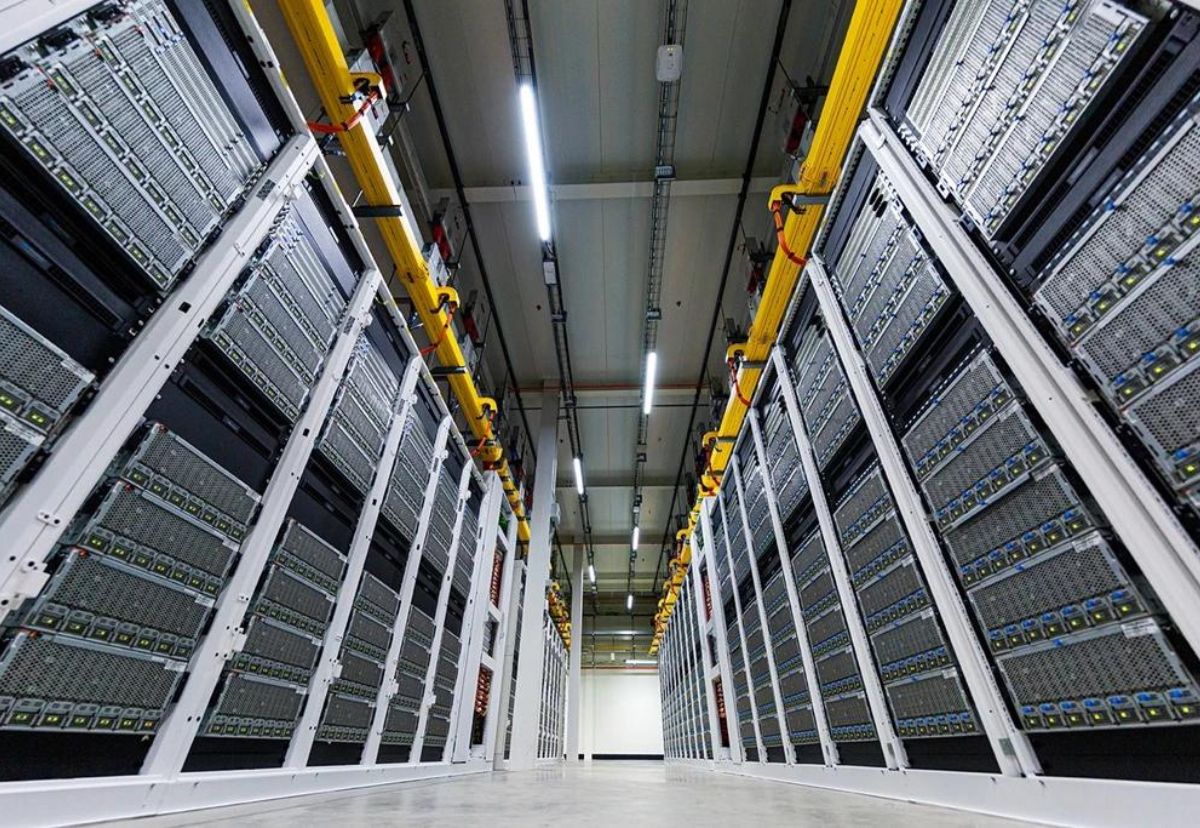
Five years ago, delivering a large-scale data center project was already complex. Today, general contractors are executing builds that are larger, more technical, and bound by non-negotiable Ready-for-Service (RFS) deadlines.

Welcome to the Gigawatt Era.

In 2026, capital is no longer the constraint. Demand for AI infrastructure and hyperscale capacity has ensured funding is available and timelines are compressed. But while capital has scaled, one critical factor has not: access to highly specialized technical talent.

And that gap is where risk lives.

The Countdown You Can’t Miss

For general contractors, the RFS date isn’t just a milestone. It’s a contractual obligation.

Liquidated damages clauses, often ranging from $50,000 to $250,000 per day, have made schedule adherence a financial imperative. A delay of even a few days can erode margins. A delay of weeks can turn a strong project into a liability.

But the impact goes beyond penalties.

Missed deadlines delay revenue for the end client, disrupt commissioning timelines, and strain long-term relationships. In a market where repeat business is driven by certainty, the ability to hit a date is often what determines who wins the next project.

Bigger Builds, Smaller Talent Pools

The scale of modern data center construction has outpaced the traditional workforce model.

Projects are increasingly located in power-rich regions that lack deep, specialized labor markets. At the same time, demand for skilled technicians and engineers continues to surge, creating intense competition for talent.

The result is a clear mismatch:

  • Projects are larger and more complex
  • Timelines are shorter
  • Local labor pools are not deeper

Relying solely on local hiring is no longer a strategy. It’s a constraint that, in many cases, is becoming a liability.

The Difference Between Skilled and Mission-Critical Ready

Not all labor is created equal, especially in data center construction.

Hyperscale environments demand a level of precision where errors aren’t just costly but unacceptable. Mission-critical fluent technicians and engineers understand the complexity of high-density power environments, liquid cooling systems, and zero-error execution during installation and commissioning.

They don’t just complete tasks. They understand how their work impacts the entire system.

And they’re in short supply.

This is where many projects encounter their greatest execution gap, not in planning or funding, but in consistently deploying the right expertise at the right time.

Why the Old Model Breaks Down

Traditional workforce strategies were built for a different era. One defined by predictable timelines and stable labor markets.

They rely on local pipelines, extended hiring cycles, and gradual scaling. That model can’t keep pace with the demands of the Gigawatt Era.

When projects require large numbers of specialized workers on-site within days, not months, the margin for error disappears.

The question is no longer how do you find talent?

It’s become how do you guarantee it shows up on time, ready to perform?

Introducing Schedule Insurance

To meet today’s demands, leading general contractors are rethinking workforce strategy. They’re beginning to look at it not as a support function, but as a form of risk mitigation.

This is the idea behind Schedule Insurance.

Schedule Insurance isn’t a policy. It’s a proactive approach to eliminating the single greatest threat to project timelines: workforce uncertainty.

It’s built on three pillars:

  • Speed: Rapid deployment of skilled technicians and engineers
  • Expertise: Access to mission-critical fluent professionals
  • Reliability: Confidence in consistent, high-level execution

In an environment where delays can cost hundreds of thousands per day, Schedule Insurance becomes essential.

Closing the Execution Gap

This is where FlexTrades comes in.

FlexTrades was built to bridge the gap between project demand and workforce availability. Instead of relying on local labor markets, we deploy a mobile, national workforce of vetted technicians and engineers. They are ready to go where the work is, no matter how remote the location.

Our teams are:

  • Mission-Critical Fluent
  • Liquid-Cooling Ready
  • Rapidly Deployable

This approach removes one of the most unpredictable variables in any project: whether the right people will be there when you need them.

With FlexTrades, workforce becomes a certainty, not a question mark.

Protecting Margins. Preserving Relationships.

Schedule Insurance isn’t just about avoiding penalties. It’s about protecting the full value of the project.

When the right workforce is in place:

  • Timelines stay intact
  • Quality remains high
  • Client expectations are met

And just as importantly, trust is reinforced.

In a competitive market, the ability to consistently deliver on time isn’t just an advantage, it’s a differentiator.

Winning the AI Infrastructure Race

The race to build AI infrastructure is accelerating. Success isn’t defined by who can build the biggest. It’s defined by who can deliver with certainty.

The general contractors who win in 2026 and beyond will be those who can commit to a date and meet it.

That requires more than planning. It requires a workforce strategy built for the realities of the Gigawatt Era.

It requires Schedule Insurance.

No Doubts. Just Doers.

FlexTrades is ready to deliver schedule certainty to your data center projects. Contact us now to schedule a consultation.

Mergers and acquisitions (M&As) in the manufacturing sector are often driven by clear financial and operational objectives such as expanding capacity, increasing funding, entering new markets, improving margins, or optimizing production footprints.

But while balance sheets and company alignments are what you see in the headlines, there is one much more important factor that really determines the success or failure of an M&A. That’s the people.

Unlike some other industries, M&As have an immediate impact on operations. Demand often increases after an M&A, and production needs to increase as well. There are consolidated or expanded production lines, products being transitioned from one facility to another, and equipment that needs to be running. Companies often end up asking more from their workforce while also trying to hire new talent. In doing so, they see burnout from current employees and soon realize there is a lack of skilled talent in the local market, requiring heavy training.

Talent as a Strategic Asset

So while M&As in the manufacturing sector are often about acquiring assets, they are not considered successful, nor can they be successful, without the most important assets: the skills and experience of the skilled trades, engineers, and technicians working hard every day to meet goals.

Workforce Planning

Workforce planning would ideally happen before any merger or acquisition is completed. However, that’s not usually the case. It’s not until the merger is completed that a company identifies skill gaps on the shop floor, the upskilling and training required, and the increased hiring needs. By then, it can feel too late because production and demand do not stop.

And that’s where FlexTrades comes in.

Leveraging External Workforce Support

In many cases, companies benefit from supplementing their internal teams with external talent. FlexTrades professionals bring expertise, flexibility, and additional capacity during a resource-intensive period.

A blended workforce model allows organizations to scale quickly, meet demand, and train new hires.

Contact FlexTrades

If you’re facing an upcoming M&A or are currently in the midst or aftermath of one, contact us. Our skilled team spans a wide range of experience and can provide exactly what you need, from Material Handlers to Quality Inspectors, Engineers, Supervisors, and even Trainers.

At FlexTrades, we’ve always believed that the strength of our impact in American manufacturing starts with the strength of our people. That’s why we’re proud to share that Staffing Industry Analysts has named FlexTrades a 2026 Best Staffing Firm to Work For in North America, an honor driven by the voices and experiences of our own team.

This marks our first time being recognized as an honoree, making it an especially meaningful milestone for our organization.

A Recognition Earned from Within

What makes this honor unique is how it’s determined.

The Best Staffing Firms to Work For awards are based largely on direct employee feedback, measuring engagement, satisfaction, and alignment across participating organizations.

In other words, this recognition reflects what our people have to say about working at FlexTrades every day. That’s something we don’t take lightly, because culture isn’t defined by what’s written, it’s defined by what’s experienced.

Celebrating the Moment Together

In recognition of this achievement, members of our leadership team attended the SIA Executive Forum North America in Austin for the official announcement of honorees and grand prize winners.

Their presence wasn’t just about industry recognition. It was about representing the people who made it possible and how we move the line for our clients and technicians. This honor belongs to every individual across FlexTrades who contributes to the environment we’re proud to be a part of.

A Reflection of Our Core Values in Action

Our core values are more than guiding principles. They shape how we show up for each other, for our manufacturing partners, and for our technicians.

Being named an honoree is a direct reflection of those values in action:

  • The collaboration and trust shared across our internal teams
  • The pride and professionalism our skilled technicians and engineers bring to every assignment
  • The shared commitment to doing what’s right and providing workforce solutions that truly make a difference

This alignment turns culture into something real, something people can feel no matter where they are.

Driven by Purpose

Our mission is to make a difference by redefining what’s possible in workforce solutions. This requires more than technical expertise. It requires people who are engaged, supported, and connected to a larger purpose.

This recognition reinforces that when our people feel valued and supported, they’re empowered to make an even greater impact. That impact shows up in how our clients solve business challenges with certainty and how our technicians build meaningful careers.

A Shared Achievement

While we’re proud to be recognized, this milestone is ultimately about appreciation.

We’re grateful for:

  • Our internal team members who create consistency and connection across the organization
  • Our traveling technicians who represent FlexTrades with excellence in the field and deliver value to our clients
  • Our clients who trust us to support their most critical workforce needs

Together, this is what makes FlexTrades a place people are proud to be part of and a mission they’re proud to support. Because being a great place to work isn’t about recognition alone. It’s about the people who make it possible every day and who push to make tomorrow better than today.

When most people talk about manufacturing or warehouse work, they tend to focus on skills, complex tools, or efficiency. But spend a little time on a shop floor or in a warehouse, and something else becomes obvious pretty quickly. It’s not just what someone can do, it’s how they show up while doing it.

That’s where technicians like Brandon J. stand out.

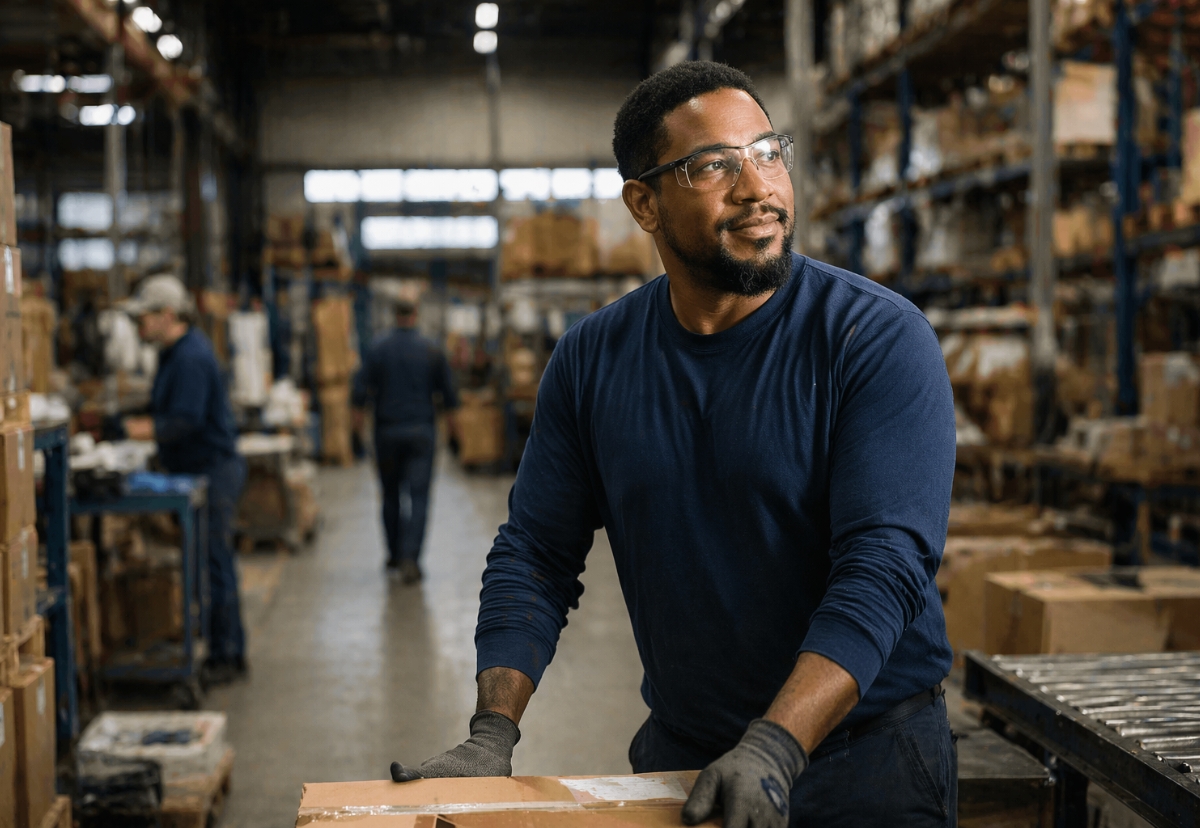
Brandon is an Inventory Control Technician with FlexTrades who is currently on assignment at Mesa Labs in Colorado. We had the pleasure of interviewing him on-site. His technical abilities are impressive, but what really stands out to clients has little to do with a checklist of skills. It’s his mindset, positive attitude, and the way he approaches nearly every interaction.

A man who “Just gets to work”

Brandon’s background is rooted in hands-on manufacturing experience, including years of foundry work and other traveling roles. He’s done the kind of work where precision matters and consistency isn’t optional.

What defines his approach, though, is far less technical. Brandon told us that he is “persistent and eager to learn. Willing to get in there, roll my sleeves up, and get to work.” He goes on to say, “I come in with the mindset that, hey, I’m here to do what I gotta do, and I’ll make it happen.”

That mindset is on display in how he approaches assignments at Mesa Labs, particularly in supporting warehouse functions, where flexibility and dependability matter just as much as technical skills.

For Brandon, the expectation is straightforward. Show up to work, stay engaged, and keep things moving.

No drama. No hesitation. Just effort.

Presence you can feel

When we hear about Brandon from Mesa Labs leadership, they don’t start with output metrics or the tasks he’s completed.

They start with how he makes them and their team feel.

When Mesa Labs provided a write-up for Brandon to be recognized for our Technician of the Quarter Award, which he won in Q4 2025, they said, “Brandon is always kind. He’s a team player who meshes well with everyone. Brandon always has a smile on his face and makes me want to smile too.”

We had the chance to speak with Jasmine Stone, Director of Operations for Mesa Labs. She added, “Brandon’s smile brightens the mood of everyone just by walking in the door.”

That might sound simple, but in a manufacturing environment where pressure, deadlines, and shifting priorities are constant, that kind of presence matters more than most people realize.

People like Brandon change the tone of a shift and influence how teams move through the day together.

Attitude that turns into productivity

Brandon’s technical role at Mesa Labs is straightforward. He pulls work orders, stages materials, and supports warehouse flow across different departments. What makes him valuable in this role isn’t just execution, but his willingness to go above and beyond.

Brandon told us about a time when his main duties slowed down, so he said to his manager, “I can’t just sit here. What else can I do?” His manager had a project in mind. “I dang near moved half the warehouse around to stay busy,” Brandon said.

That attitude led him to regularly jump into adjacent tasks, support other teams and departments, and help keep work moving across the facility. As his manager put it, “We’ve done a lot of the ‘groundskeeping’ things that get pushed aside. We’ve been able to reshape the warehouse, making sure that we are the best possible warehouse we can be for our customers.”

That willingness to stay active, flexible, and engaged is exactly what clients notice about technicians from FlexTrades.

The client perspective: Trust, Consistency, and fit

For many facilities, staffing challenges aren’t just about filling roles. They’re about finding the right people quickly, without sacrificing quality.

Stone emphasized consistency and clarity. “What separates FlexTrades from other agencies is transparency on pricing and competencies.” More importantly, “There has not been an individual where I was expecting X and got Y. FlexTrades says what we’ll do, and we do what we said.”

Seth Walker, Warehouse and BGI Manager at Mesa Labs, echoed a similar message about trust and fit. “You guys vet your people ahead of time. If we’re getting somebody from you, they’re a great person.”

When you combine that client expectation with the reality of technicians like Brandon, the full picture comes into focus. It’s not just staffing. It’s alignment.

The bigger picture: Why mindset scales

It’s easy to assume that productivity in manufacturing comes down to skills, complex tools, or efficiency. But Brandon’s story highlights something more. When technicians bring the right mindset, everything else works better.

  • Teams communicate more smoothly
  • Workflows stay flexible instead of breaking under pressure
  • Clients trust the people on-site faster
  • Facilities recover more quickly when priorities shift

That’s the multiplier effect of attitude. Not loud or complicated. Just consistent.

Conclusion

Brandon doesn’t describe himself as exceptional, because he doesn’t need to. His work, his attitude, and feedback from clients like Mesa Labs make that clear.

His advice to anyone going into the trades is simple. “Put your feelings aside and go in there with hard work. If you put forth the effort, usually it pays off.”

For clients like Mesa Labs, that mindset shows up every day. Not just in what gets done, but in how it feels to get it done.

In the end, technical skill gets the job started. Mindset is what keeps everything moving.

Traveling for work offers many opportunities, like strong pay, gaining professional experience, and seeing new places all over the country. But life on assignment also comes with the unique challenge of being far from home.

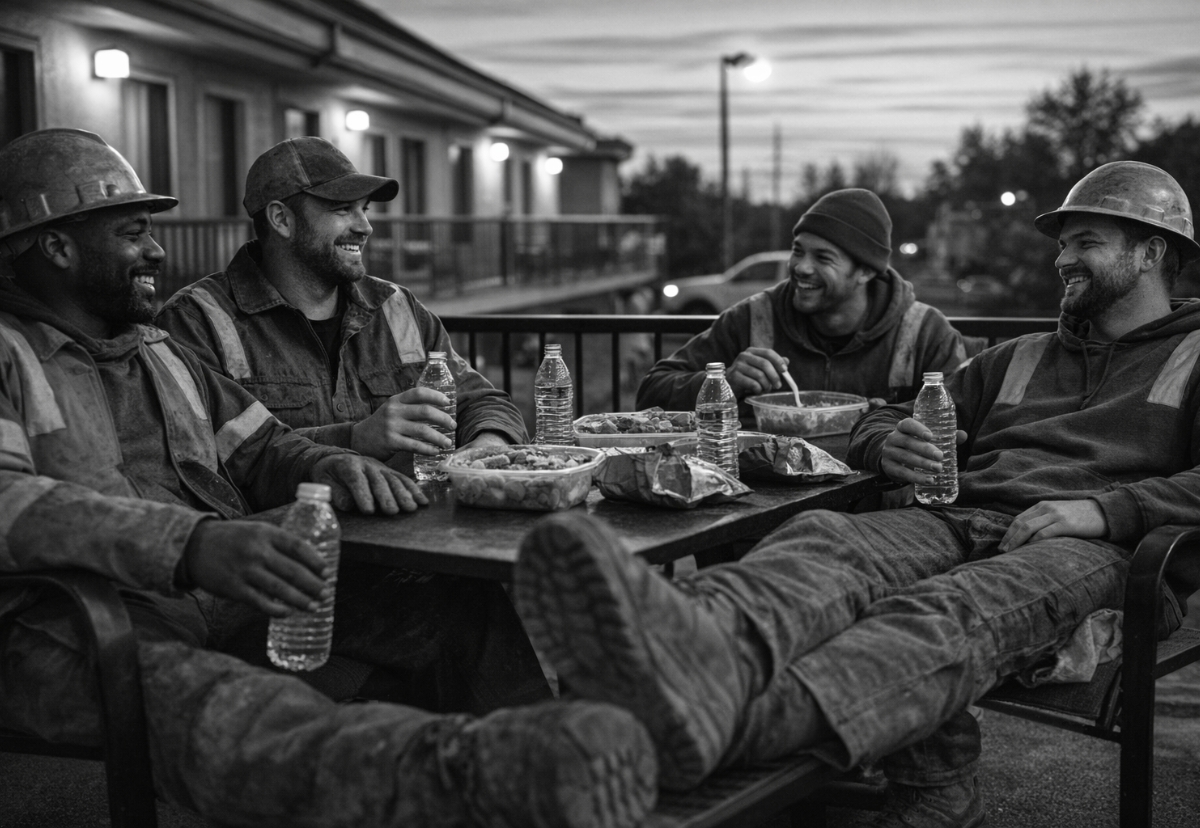
When you’re working hundreds, or even thousands, of miles away from family and friends, the sense of community you build on the road becomes incredibly important. The people you meet along the way often become the ones you share meals with, celebrate holidays with, and lean on when you’re navigating a new place.

I spoke with one of our experienced technicians, “John” (name changed at his request), about how he approaches life on assignment. As an introvert, he’s naturally a quiet person, but over time, he has learned that building connections with other technicians makes life on the road far more rewarding. What often starts as a quick conversation can grow into friendships that last long after an assignment ends.

Here are a few simple ways John builds community while traveling for work.

Pay Attention to Your Routine

One of the easiest ways to connect with people is simply by paying attention to the routines around you.

When you’re leaving for work in the morning or coming back at the end of the day, take note of who else might be doing the same thing. Someone carrying a lunchbox or still wearing PPE might be working nearby. They may even be with FlexTrades.

Creating a few routines outside of work can also help. Running errands, going for a walk, or visiting the gym at the same time each day helps you start recognizing familiar faces. Over time, those small interactions can turn into casual conversations and eventually friendships.

Start with Simple Conversations

Breaking the ice doesn’t have to be complicated.

If you think someone might be in the trades, John says one of the easiest questions to ask is simply, “Are you with FlexTrades?” Sometimes the answer is confusion. Sometimes it’s a surprised, “How’d you know?” Either way, the conversation has started.

If they’re with FlexTrades, you can also ask who their recruiter is as an easy follow-up. Shared connections instantly create common ground.

Even if they’re not in the trades, being new to an area gives you plenty to talk about. Asking where the best grocery store is or what restaurants they recommend can quickly lead to a good conversation.

Listen More Than You Talk

As the saying goes, “We have two ears and one mouth so that we can listen twice as much as we speak.”

For John, being an introvert actually became an advantage when it comes to meeting people. Instead of feeling pressure to do all the talking, he focuses on listening. Asking a few questions and showing genuine interest encourages others to share more about themselves.

When you’re a good listener, you don’t need to be the most outgoing person to make meaningful connections.

Pets Can Help Break the Ice

If you’re able to bring a dog with you on assignment, it can naturally create opportunities to meet people.

Walking a dog helps establish a routine and often leads to casual conversations with others in the area. People tend to ask about the dog, which makes starting a conversation feel easy and natural.

John also mentioned that having a dog around can help take the pressure off during those quiet moments in a conversation. If things pause for a moment, attention can shift to the dog rather than the silence.

Of course, bringing a pet isn’t always possible for some people. But when it is, it can be a great way to break the ice.

Turn Conversations into Shared Activities

Once you’ve broken the ice, the next step is building the relationship.

John likes to look for simple opportunities to spend time together. If the hotel has a grill, he might invite a few people over for a casual BBQ after work. Around holidays, he’s found small ways to celebrate, like hanging candy on people’s doors during Halloween.

Shared hobbies are another great way to build connections. Watching football on Sundays, finding a local fishing spot, or exploring the area together can turn acquaintances into real friendships.

Just like relationships back home, connections on the road grow through shared experiences.

Staying Connected After the Assignment

Eventually, every assignment comes to an end. Technicians head home or move on to the next project. But the relationships built along the way don’t have to end there.

John keeps in touch with many of the people he’s met while traveling. Some have invited him to weddings. Others exchange messages during the holidays. He’s hosted friends in his hometown and visited others when passing through their city.

For some technicians, the community built on assignment becomes one of the most rewarding parts of the traveling lifestyle.

Community Makes the Road Feel Smaller

Working on the road can feel isolating at first, especially when you first arrive somewhere new.

But as John has learned, building connections with new people can quickly change that experience. A conversation in the parking lot, a shared meal after work, or a weekend activity together can turn a temporary assignment into a place where you feel welcome.

Over time, those relationships often stretch far beyond a single job site. They become a community stretching across the country. Friends you can visit, call, or reconnect with years down the road.

And in a career built around travel, that sense of community can make the road feel a lot more like home.

FlexTrades is currently seeking a CNC Machinist to join a high-performance manufacturing environment where nothing ever goes wrong… until it does. Repeatedly. Usually all at once.

This role is ideal for someone who enjoys solving problems they didn’t create, fixing machines that were “just serviced,” and being the only person in the building who knows what’s actually happening.

Responsibilities:

  • Set up and operate CNC machines while keeping a respectful eye on the other three that are “running fine”
  • Interpret blueprints, including the parts that don’t make sense and the parts that were changed but never updated
  • Adjust offsets, speeds, and feeds based on material, tooling, machine condition, and whatever today decides to throw at you
  • Troubleshoot issues that only appear when production is behind and management is watching
  • Maintain tight tolerances while everything around you slowly drifts out of them
  • Fix problems before they’re documented, reported, or believed
  • Communicate with engineering about why something won’t work, then make it work anyway
  • Train new hires who will ask great questions for three days and then disappear forever
  • Keep production moving, even when the schedule stopped making sense two hours ago
  • Nod confidently when someone says “this should be a quick run”

Requirements:

  • 3 to 5 years of experience, or enough scar tissue to count as 10
  • Ability to stay calm when five different people need five different things immediately
  • Strong attention to detail, especially when the details are changing
  • Willingness to stay late, come in early, and explain what happened in a meeting later
  • Deep understanding of machines, materials, tooling, and how all of them behave when they’re having a bad day
  • Ability to hear “we’ve never had this issue before” and know exactly how the next eight hours are going to go
  • Comfortable being the unofficial final quality check, whether that’s your job or not

Preferred Qualifications:

  • Telepathy, specifically for understanding what someone meant instead of what they said
  • Time manipulation for when setups take longer than the schedule allows
  • The ability to locate missing tools that were “just here a second ago”
  • A sixth sense for when a machine is about to make a very expensive decision
  • The confidence to say “no” and the experience to know when it won’t matter

What We Offer:

  • Competitive pay that reflects the importance of the role and occasional chaos around it
  • A fast-paced environment where no two days are the same
  • Opportunities for growth, development, and becoming the person everyone looks for when something goes wrong
  • A team that will rely on you heavily and thank you occasionally
  • Support, depending on timing, workload, and whether anyone can find them

A Typical Day Might Include:

  • Walking in to find out the job you set up yesterday has changed
  • Being told something is urgent, then being told something else is more urgent
  • Fixing a problem in ten minutes that was discussed for two hours
  • Watching a machine run perfectly after you adjusted something no one else noticed
  • Explaining that the issue is not the operator, the program, or the material… and still being asked if you checked all three
  • Hearing “it’s been doing that all week” for the first time

Final Note:

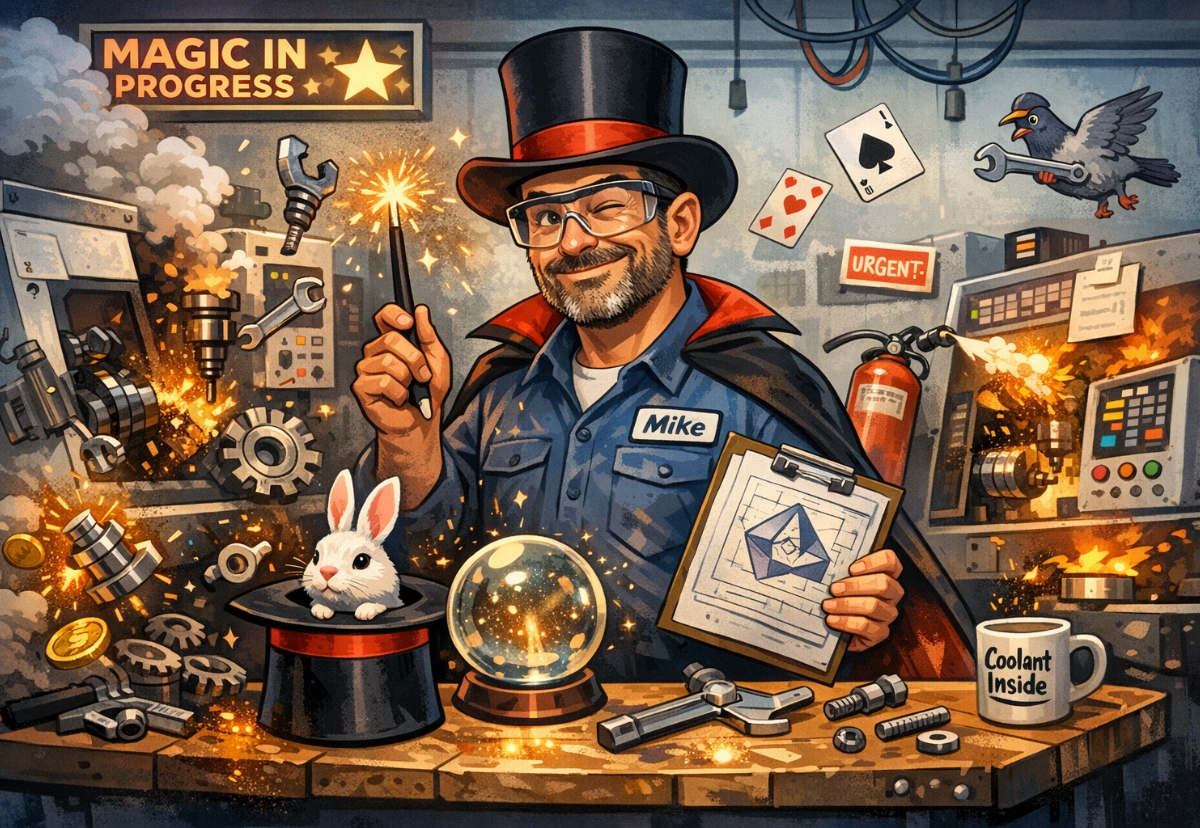
No, this isn’t a real job posting.

It’s a joke.

But the expectations behind it? Those are real. And they’re exactly why so many shops are still short on the people they actually need.

The truth is, the best tradespeople aren’t magicians. They’re not fixing everything alone. They’re just really, really good at what they do.

And when you find the right ones, everything changes.

That’s where FlexTrades comes in.

We find the people who can step in, make an impact, and keep production moving. Then we back them with everything we have so our clients don’t have to worry about shortages slowing them down.

Happy April Fools’ Day, everyone. Thanks for laughing it out with us.