September has always been associated with going back to school.

For some people, that means buying school supplies, packing lunches, and getting the kids back into a routine. For others, it brings back memories of classrooms, homework, tests, and counting down the days until summer.

But for skilled trades professionals, going back to school doesn’t have to happen in September. In fact, if you’re serious about building your career, you may never really stop learning.

You might not be sitting in a classroom. There may not be a textbook, a test, or a teacher standing at the front of the room. But every new machine, process, facility, and challenge can teach you something. And those experiences add up.

Because when it comes to building a career, experience isn’t just measured in years. It’s also measured in exposure.

What equipment have you worked on? What problems have you solved? What industries have you seen? How many different ways have you seen the job done?

Those experiences can be just as important as the number of years listed next to your job title.

Your Career Is Still Your Classroom

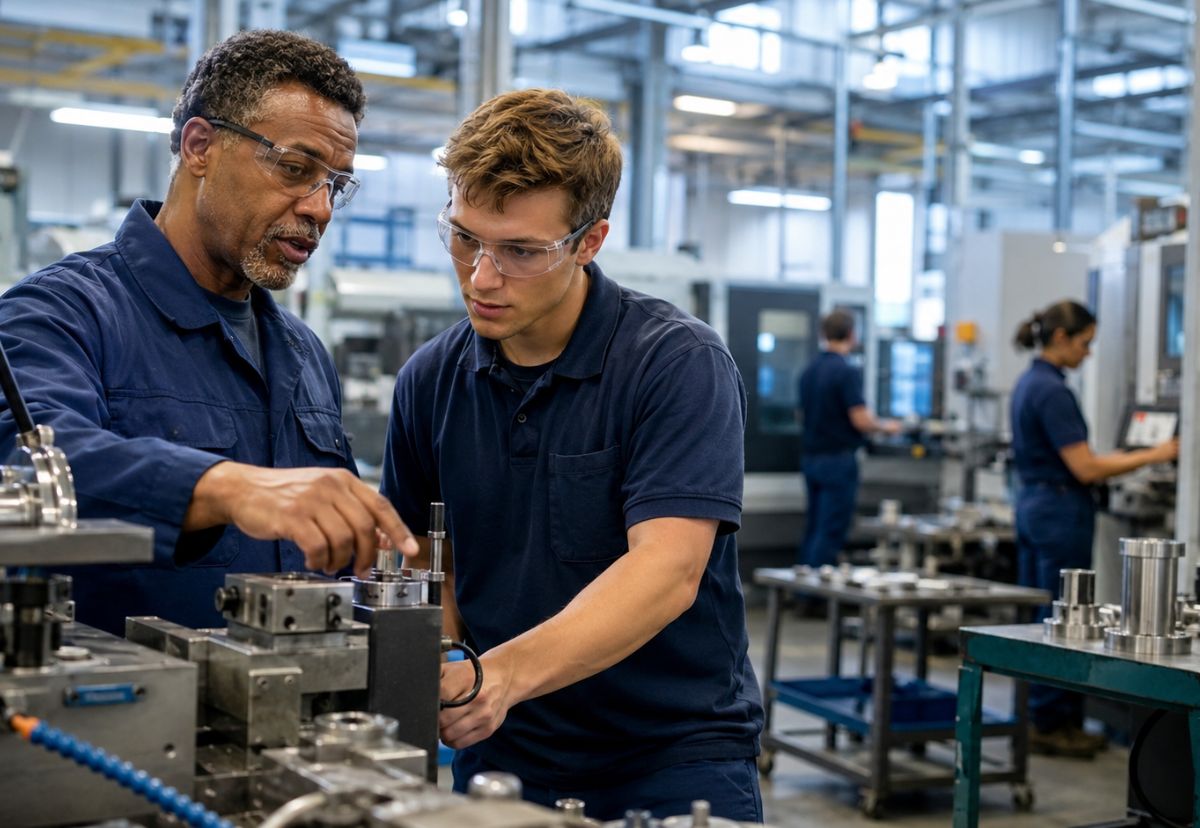
Most skilled trades professionals understand that learning doesn’t stop when formal education ends. You can go to technical school, earn certifications, or attend training programs. All of those things can help build a foundation for your career.

But eventually, somebody has to put you in front of the machine. They have to hand you the tools. They have to give you a problem that doesn’t come with step-by-step instructions.

That’s where another kind of education begins.

A machinist may start by learning to operate a machine before moving into setups, programming, tooling, troubleshooting, or more complex equipment.

A maintenance technician might begin with mechanical work before gaining experience with electrical systems, PLCs, robotics, or automation.

A welder, brazer, or fabricator may discover that the techniques they learned on one job don’t necessarily prepare them for every material, application, or process they’ll encounter throughout their career.

Every new challenge adds something to your toolbox.

Sometimes that growth happens through formal training. Just as often, it happens because someone gives you an opportunity to work on something you’ve never worked on before. And, after you’ve done it once, you know a little more than you did before.

Do that enough times, and you start to build something that can’t always be measured simply by counting the years you’ve been on the job.

Ten Years of Experience Can Mean Different Things

Two technicians can both have 10 years of experience and have had very different careers.

One may have spent 10 years becoming an expert on a specific machine, process, or production environment. They know that operation inside and out, and there is tremendous value in that kind of expertise.

Another technician may have spent those same 10 years working with different equipment, in different facilities, with different teams, and across multiple industries. Along the way, they’ve encountered a wider variety of challenges and learned to solve problems in different environments.

Neither path is automatically better. But they are different. And that’s why years of experience don’t always tell the whole story. Exposure matters too.

The more you see, the more opportunities you have to learn. The more problems you encounter, the more problems you may be prepared to solve in the future.

The more equipment, processes, and environments you experience, the more tools you can add to your professional toolbox.

That’s one of the reasons it can be valuable to occasionally step outside of what you already know.

Sometimes a New Environment Is the Best Place to Learn

Starting somewhere new can be uncomfortable.

Even when you know your trade, a new facility can come with a learning curve. The equipment may be different. The processes may be different. The terminology may be different. The way one company approaches maintenance, quality, production, or troubleshooting may be completely different from what you’re used to.

But that’s also where the opportunity is. Every time you walk into a new environment, you’re exposed to another way of doing things.

Maybe you’ll learn a better process. Maybe you’ll discover a different approach to troubleshooting. Maybe you’ll work alongside someone with years of experience on equipment you’ve never touched before.

Or maybe you’ll be the experienced one. The person who has seen something similar somewhere else and knows how to approach the problem. That’s the value of exposure.

You don’t just learn from the jobs that go perfectly. You learn from the unfamiliar ones, the difficult ones, and the situations where you have to figure something out. Those experiences stay with you. And you can take them into the next opportunity.

Traveling Can Accelerate That Exposure

There are a lot of ways to build experience throughout a career. You can grow within one company. You can cross-train, take classes, earn certifications, and learn from experienced coworkers.

And for some technicians, traveling can be another way to accelerate that growth. Working in different facilities can expose you to different equipment, processes, industries, and ways of solving problems.

Traveling isn’t automatically the right career path for everyone. Some people find exactly what they’re looking for with one great employer and build an incredible career there.

But if you’re someone who enjoys new challenges, there is value in putting yourself in environments where you have something new to learn.

When you move from one assignment to another, you aren’t just adding another company name to your resume. You’re adding experiences.

Maybe you worked on equipment you hadn’t seen before. Maybe you learned a new control system. Maybe you gained experience in an industry that wasn’t previously on your resume. Maybe you worked alongside technicians who taught you something you can use for the rest of your career.

Those experiences compound over time. Eventually, your resume begins to tell a story that goes beyond job titles and years of experience. It tells people what you’ve actually done.

Don’t Let Your Career Development Happen by Accident

One of the best things you can do for your career is occasionally stop and ask yourself:

What do I want to learn next?

Maybe there’s a machine you’ve always wanted experience with. Maybe you want to become stronger in electrical troubleshooting. Maybe you want to learn PLCs, robotics, programming, or automation. Maybe there’s an experienced technician around you who knows something you don’t.

Or maybe you’re simply ready to step into an environment that will challenge you in a new way. The important thing is to take some ownership over your own development. Don’t assume that experience automatically equals growth.

You can spend years doing the same thing without necessarily expanding what you’re capable of doing. On the other hand, a single opportunity that pushes you outside your comfort zone can sometimes teach you more than months of doing what you’ve already mastered.

That doesn’t mean you should chase every new opportunity just because it’s new. It means you should be intentional about the experiences you collect along the way.

Build More Than Years. Build Experience.

The next time you think about your career, don’t just ask yourself how long you’ve been doing what you do. Ask yourself what you’ve been exposed to.

What equipment have you worked on?

What skills have you developed?

What types of problems have you learned to solve?

What industries have you experienced?

What can you do today that you couldn’t do a year ago?

Those answers may tell you more about where your career is headed than the number of years you’ve spent in a particular role. The good news is that learning doesn’t always require going back to a classroom.

Sometimes your next lesson is waiting on the next machine.

Sometimes it’s sitting across the shop floor.

Sometimes it’s the technician working beside you.

And sometimes, it’s waiting on an opportunity that takes you somewhere you’ve never been before.

So, What’s Next on Your Curriculum?

September may be back-to-school season, but your career doesn’t have to follow an academic calendar. You don’t have to wait until January to decide you want to learn something new. You don’t have to wait until you’re unhappy in your current role to think about where your career is going.

And you don’t have to have your entire future mapped out before taking the next step. Just keep learning.

Learn the next machine. Take on the next challenge. Ask questions. Learn from the people around you.

Look for opportunities that expand your experience. Because your career isn’t just built one year at a time. It’s built one experience at a time.

And while the number of years you’ve spent in your trade will always matter, experience isn’t just measured in years. It’s also measured in exposure.

At FlexTrades, we’ve seen how new environments and new challenges can help technicians build skills and experiences that stay with them throughout their careers. Traveling isn’t the only way to grow, and it isn’t the right path for everyone.

But for technicians who want to see more, learn more, and continue adding to their professional toolbox, every new assignment can be more than just another job.

It can be another opportunity to learn. And, when it comes to building a career, that’s an education that doesn’t have to end.
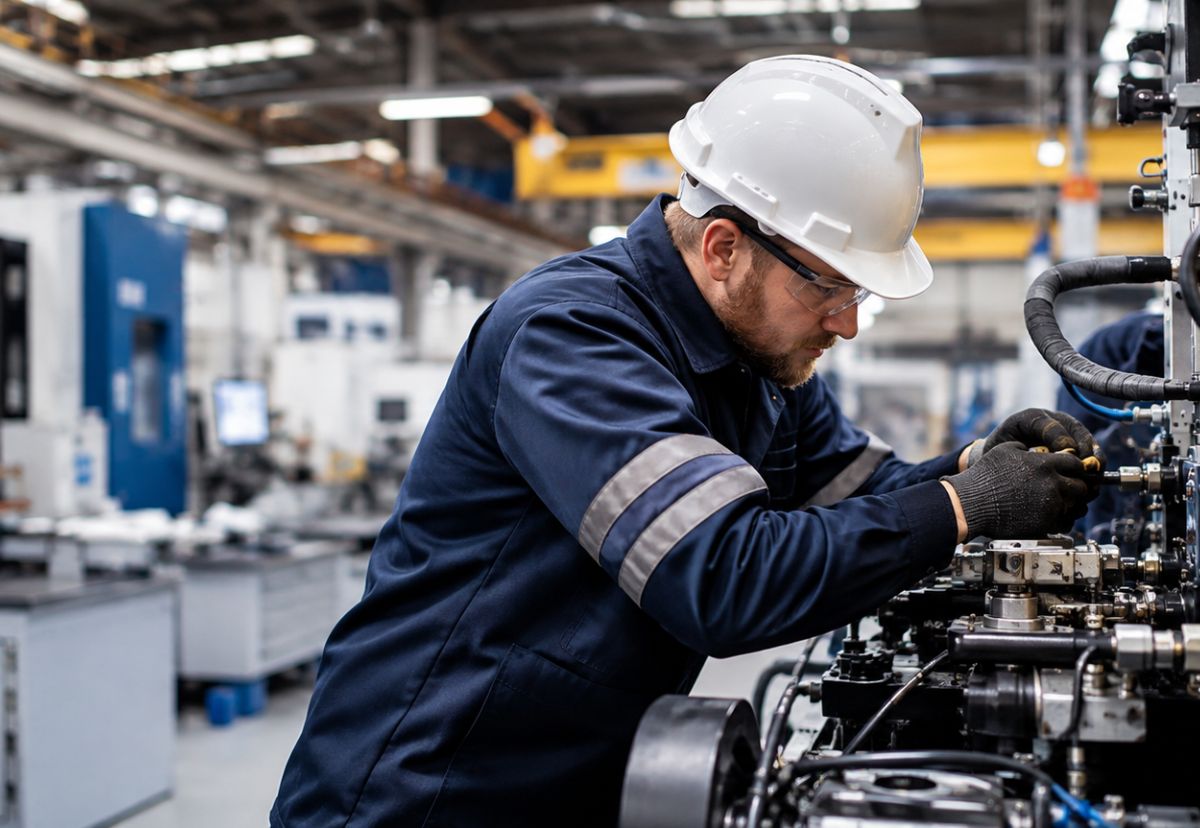
Peak season puts significant pressure on manufacturing operations. Production schedules tighten, delivery timelines shorten, and customer demand increases. That said, peak season also makes unexpected downtime downright detrimental. That’s why preventive and predictive maintenance is critical before entering peak season.

Servicing and repairing equipment before demand spikes helps reduce that downtime. It minimizes disruptions, protects productivity, and goes a long way toward keeping employees working safely and efficiently. And, if you’re like many other manufacturers, peak season often requires hiring a supplementary workforce. If equipment and tools are ready for use, it makes managing that supplementary workforce easier, too.

What Is Preventive & Predictive Maintenance?

Preventive maintenance follows a fixed timeline, either days, months, or run times, at which specific services are required on machinery. Predictive maintenance is based on real-time data and analytics of actual equipment performance or sensor alerts.

In both preventive and predictive maintenance, the goal is simple: address small issues before they become costly problems.

Why Peak Season Changes the Equation

During normal operations, an equipment failure is inconvenient. During peak season, the same failure can have a much larger impact.

A single failure in one area of a manufacturing process can create a bottleneck that affects other production areas and operations. It’s a domino effect.

And the consequences can extend beyond lost production. Unexpected downtime can contribute to:

  • Missed production targets
  • Delayed customer orders
  • Overtime expenses
  • Increased pressure on employees
  • Disruptions to shipping and receiving
  • Unplanned repair costs
  • Difficulty maintaining staffing levels and schedules

Predictive/Preventive Maintenance and Workforce Planning Go Hand in Hand

Thinking about the equipment and machinery before peak season is only one part of the preparation that needs to occur. The people operating, maintaining, moving, and supporting that equipment are just as important.

When machinery is running reliably, employees can spend their time performing the work they were scheduled to do instead of dealing with preventable disruptions. Reliable equipment also helps supervisors create more predictable schedules and maintain a consistent workflow.

For industrial employers, peak-season preparation often involves two parallel priorities: making sure the equipment is ready and making sure the workforce is ready and available. The latter often involves bringing on additional production workers and talent before demand reaches its highest point. Partnering with FlexTrades is one of the easiest ways to supplement your workforce before and during peak season.

Working with an industrial staffing partner can help employers build that workforce proactively rather than waiting until staffing shortages begin affecting operations. Contact FlexTrades if you need support on your maintenance team to accomplish your preventive and predictive maintenance tasks or if you need any other skilled technicians to meet your peak season demands.

One of our recent customers found out the benefits of working with FlexTrades quickly. They had a machine that was critical to their operations, and when it went down, they thought it was a goner. They were already spending time considering outsourcing options and/or new equipment purchases. Not only were they spending time considering these options, but they were also close to spending a lot of money to do so. Our highly skilled maintenance technician, with a wealth of knowledge and experience, was able to assess the machine and get it back up and running, which saved time, money, and our customer’s delivery timelines.

And those aren’t the only costs either. There is a cost to waiting, so preparing before the rush is your best bet.

Start Preparing Before the Rush

A strong preparation strategy can include:

  1. Review equipment maintenance records. Identify recurring issues and equipment that may require additional attention.
  2. Prioritize critical equipment. Determine which machines or systems would create the greatest operational impact if they failed.
  3. Schedule preventive service early. Complete inspections, repairs, and replacements before peak season hits.
  4. Review staffing requirements to estimate how many additional employees will be needed to meet projected demand.
  5. Plan for training and onboarding to make sure new and existing employees understand equipment, processes, and workplace safety expectations.
  6. Build flexibility into the workforce and consider how staffing needs may change as demand fluctuates throughout the season.
  7. Monitor equipment and staffing performance.
  8. Use lessons from previous peak seasons to improve future planning.

A Stronger Peak Season Starts With Preparation

All in all, stronger production during peak season starts with preparation. Peak season will always bring challenges, but many of those challenges can be anticipated. Preventive and predictive maintenance helps industrial operations identify equipment problems before they become production emergencies. Proactive workforce planning helps ensure there are enough people available to keep operations moving. Together, these strategies can give employers greater control over one of the busiest periods of the year.

A drug-testing panel is one of those things a company builds once and rarely revisits. Ours had been on autopilot for several years. This past spring, FlexTrades’ Legal, Human Resources, Sales, Recruiting, and Safety teams sat down and asked a practical question: does every line on our drug-testing panel still do what we think it does?

For marijuana, the answer was no. So we changed it.

The Law Moved Underneath Us

A growing number of states do more than permit recreational marijuana use. They affirmatively protect lawful off-duty use, and they limit what an employer may do with a positive test, including whether an employer may test for marijuana at all. Some of those states include carve-outs for safety-sensitive positions. Some don’t.

That’s a meaningful shift. In those states, declining to hire an otherwise qualified technician because of a positive marijuana screen isn’t a simple safety decision anymore. It’s a hiring decision that certain state laws may treat as unlawful.

There’s a second problem, and it’s the one that bothers me most as a lawyer who cares about safety outcomes. A standard marijuana screen doesn’t measure impairment. It detects metabolites that can linger in the human body for days or even weeks after use. A positive result may tell you something about a technician’s activities last Saturday, but it tells you nothing about whether they’re safe to run a press on Tuesday morning. We were spending money and losing qualified people for a data point that wasn’t answering the safety question we actually cared about.

Our Decision Rule

We landed somewhere deliberately narrow:

  • We stop testing for marijuana in states that protect off-duty use without a safety-sensitive carve-out.
  • We continue testing where a client requires it and state law permits both the test and action based on the result.
  • Federally regulated safety-sensitive roles are unaffected. Where DOT or FAA rules apply, we test exactly as those rules require. That isn’t ours to modify, and we wouldn’t want it to be.

Requests involving state medical cannabis programs are handled individually, under the accommodation process that applies in the relevant state. Everything else on the panel stays. This was a change to one substance, not a retreat from our strict screening process.

In practice, this means our screening instructions now have to match the state, the role, and the client requirement before a candidate is sent for testing. That extra step is intentional. It keeps us compliant without lowering the standard we expect on the floor.

What Did Not Change: The Safety Standard on the Floor

This is the point I most want our technicians and clients to hear directly.

If you work for FlexTrades, you are still expected to show up fit for duty, every shift. Reporting to a job site impaired, whether by marijuana, alcohol, or anything else, is a terminable offense, and it always has been. Removing a pre-hire screen doesn’t change that.

What actually protects you on the floor are the safeguards that stayed in place: reasonable-suspicion testing, post-incident testing, and supervisor training on what impairment looks like. On top of that, we negotiate site rules and review safety training with each client before you ever set foot on their worksite. We also coordinate directly with each client on their fitness-for-duty expectations and enforce them. If someone is impaired at work, we address it quickly.

You should be able to work next to somebody operating a forklift, a crane, or a torch and not have to wonder. That’s the commitment. A pre-employment marijuana screen was just not the thing delivering it.

For Our Clients

This doesn’t change what you require of us, subject to what state law allows. We confirm your testing requirements at intake, and where you require full-panel screening and the law permits it, we run it. Navigating these requirements is one of the ways FlexTrades serves as a compliance partner to our clients. Our team continuously monitors changes in state employment laws, drug-testing regulations, and industry-specific requirements so clients can be confident that their workforce solutions align with both applicable legal obligations and workplace safety expectations. If you’d like to talk through how a specific site is handled, please just ask.

That said, this is not a one-size-fits-all change. Some clients operate under requirements that are more restrictive than state default rules, and some sites involve regulatory obligations that require us to keep full-panel testing in place. Where those requirements apply and the law allows them, we follow them.

The Bottom Line

Good compliance isn’t about keeping every rule you’ve ever written. It’s about evaluating whether the rule is still doing its job. Marijuana screening was costing us qualified technicians and creating legal exposure while contributing almost nothing to whether our people were safe at work. FlexTrades’ reasonable-suspicion and post-incident program does that work. Qualified technicians working in a safe environment continue to be the value we deliver to our clients.

Standard lawyer’s caveat: This is general information, not legal advice. For your specific situation, please consult your own counsel.