As FlexTrades’ General Counsel, a big part of my job is making sure that when a client partners with us, the relationship rests on a foundation that protects everyone involved: our technicians, our clients, and FlexTrades. After spending much of my 20-plus-year legal career reviewing staffing model contracts, talking with clients, and digging into the law that governs our industry, I keep bumping into the same misconception about working with staffing companies.

Allow me to set the record straight: some operations and HR leaders believe that bringing in supplemental workers, whether temporary, contract, or project-based, exposes their company to added legal risk. The worry usually sounds something like: “If we use outside workers, won’t we get stuck with co-employment liability, lawsuits, or benefits claims we wouldn’t have had otherwise?”

It’s an understandable concern. It’s also, for the most part, wrong. And that matters because a flexible workforce is one of the most reliable ways manufacturers meet challenges like sudden swings in demand, a skills gap impacting a critical line, a seasonal surge, or covering a key employee out on medical or family leave.

The real comparison isn’t “staffing vs. nothing.”

Risk is only meaningful in comparison to the alternatives. Let’s break down what we’re comparing.

Compared to hiring employees directly onto your own payroll, partnering with a staffing firm carries roughly the same employment-related risk and, in several areas, less. Compared to filling gaps with independent contractors or gig-style labor, utilizing a staffing company like FlexTrades carries dramatically less risk.

That last point deserves emphasis because it is where client companies can actually get burned. Misclassifying a worker as an independent contractor when the law views them as an employee is one of the most expensive mistakes a business can make. The IRS, U.S. Department of Labor, and state agencies have all leaned hard into enforcement, and the bill for getting it wrong can include back income and payroll taxes, unpaid overtime, plus penalties. Those exposures largely evaporate with a staffing partner for one simple reason: the workers a reputable agency assigns are W-2 employees, fully covered by state and federal employment laws. Our FlexTrades Technicians are W-2 employees of FlexTrades. That status alone does a lot of quiet work to shield our clients from exposure.

The Core Employer Burdens? We Carry Them.

When a FlexTrades Technician is at your job site, a whole category of employer obligations stays with us, not you. Payroll taxes, unemployment insurance, and verifying each worker’s identity and authorization to work are the legal responsibility of FlexTrades as their W-2 employer. Clients are generally insulated from liability in these areas. You get the quality labor, but FlexTrades shoulders the administrative and legal burden behind it.

The Right Person for the Right Job

Lowering your risk doesn’t start with paperwork; it starts with the right match. Before a technician is ever assigned to your site, FlexTrades recruiters review them with real diligence. That means a structured interview to confirm hands-on skills and work history, verification of certifications and credentials against the requirements of your specific job, and a review of references and past assignments. Every technician completes a background check and drug screening before deployment, and we screen for fit with the realities of your environment. This includes the equipment, the safety expectations, the shift, and the demands of travel. The goal is never to simply fill a seat. Rather, the goal is to send you someone who can be productive and safe on day one, because the right match is the single biggest factor in whether a placement strengthens your operation or complicates it.

“Joint/Co-Employment” Isn’t a Trap, and Sometimes It Helps You

Here’s a phrase that sometimes makes people nervous: joint, or co-employment. In most staffing arrangements, the client is considered a joint, or co-employer, because the client supervises and directs the day-to-day work and also controls conditions at the site. That may sound ominous, but in practice, it’s nothing to fear. Your exposure as a joint employer is generally no greater than the exposure you already carry for your own employees, and it is exposure you control through how you run your job site and treat all types of workers.

In one important area, joint employment actually works in your favor: workers’ compensation. FlexTrades carries workers’ comp for our technicians, and because most clients qualify as a “special employer” under state laws, because you supervise the work, the worker consents to the arrangement by accepting the assignment, and the work being done is essentially your work, the protection of the exclusive remedy doctrine typically extends to you as well. Translated out of legalese: if a technician is accidentally injured on your floor, workers’ compensation is usually their exclusive remedy, and you’re generally shielded from a negligence lawsuit. That’s a protection you might not enjoy under other labor arrangements.

One caveat worth its own sentence: companies can forfeit this protection if their contracts go out of their way to disclaim employer or joint-employer status. It’s a good example of why the words in a staffing agreement matter, and why “we’re not the employer in any way” redlines can quietly cost you a defense you might otherwise have.

Where You Still Own Obligations

I won’t pretend that staffing eliminates every employer obligation. Two areas remain a shared responsibility:

Workplace Safety: OSHA protects temporary workers exactly as it protects your internal workers, and the staffing firm and the host, or client, employer share responsibility for safety. The right move, and FlexTrades’ standard practice, is to spell out each party’s role in the contract: site-specific training, hazard communication, PPE, and the rest. Clear allocation protects workers’ safety and creates consistency in the event of a workplace injury.

Equal Employment Opportunity: A staffing arrangement does not shield any party from civil-rights law. You cannot discriminate against or harass a technician any more than you could one of your own employees, and you can be held liable if your team subjects a temporary worker to a hostile environment or retaliation. The standard is the same one you already hold yourself to.

Where You Actually Have Fewer Obligations

Family and Medical Leave Act: For temporary workers, the staffing agency is generally the “primary employer” responsible for providing leave and maintaining benefits. There are headcount-counting nuances, but the core leave obligation sits with us.

Benefits: The lingering fear here traces back to the 1990s Microsoft case, Vizcaino v. Microsoft. Today, the practical safeguard is well established: make sure your plan includes clear exclusionary language and is reviewed by experienced benefits counsel. A word of caution: don’t impose arbitrary caps on assignment length just to dodge benefits eligibility, because that tactic can actually create ERISA exposure rather than avoid it.

Affordable Care Act: Compliance generally rests with the staffing agency as the common-law employer, not the client.

The Bottom Line

Handled correctly, with W-2 employees, a legitimate staffing partner, and a contract that allocates responsibilities clearly, a flexible workforce isn’t a liability you take on. Rather, it’s risk you hand off. The companies carrying the most exposure today aren’t the ones working with staffing firms; they’re the ones leaning on misclassified independent contractors to plug workforce gaps.

That’s what I most want clients to hear from me as FlexTrades’ General Counsel: our model is built so you get the skilled people you need without inheriting the headaches. We carry the employment infrastructure. We put the responsibilities in writing. And we structure the relationship so that the protections, like the workers’ comp exclusive remedy, actually reach you.

If you’d like to talk through how this arrangement looks for your operation, that’s a conversation we welcome. Reach out any time.

Standard lawyer’s caveat: This is general information, not legal advice. For your specific situation, please consult your own counsel.

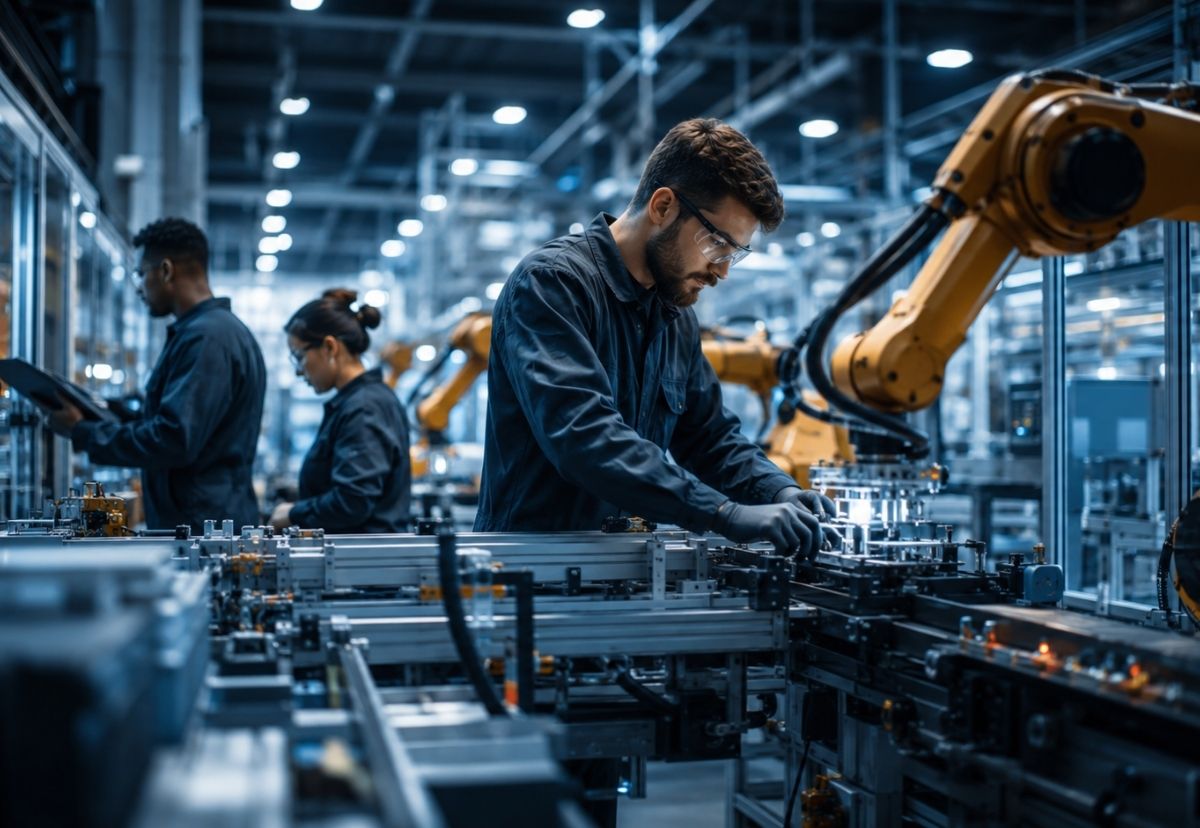
Walk through a modern manufacturing facility and you’ll see robotic weld cells, automated packaging lines, vision inspection systems, conveyors, sensors, and sophisticated control systems working together to produce products with incredible speed and consistency.

From the outside, it might seem like the machines are doing all the work.

But every manufacturer knows the truth. When automation stops, production stops.

And the people responsible for keeping those systems running are automation technicians.

These skilled professionals have become some of the most valuable people on the plant floor as manufacturing becomes more connected, automated, and technology-driven. They’re the troubleshooters, problem-solvers, and technical experts who ensure manufacturers get the return on investment they expect from increasingly sophisticated equipment.

In many ways, they’re also the bridge between manufacturing’s past and future.

The Human Side of Automation

One of the most common misconceptions about automation is that it reduces the need for skilled workers.

In reality, automation changes the kind of skilled workers manufacturers need.

Today’s automated facilities still rely on people who can install, maintain, troubleshoot, repair, and optimize the systems that drive production. Industrial automation technicians combine mechanical aptitude, electrical knowledge, controls expertise, and software skills to keep these systems operating at peak performance.

At FlexTrades, we see this demand every day. While Automation Technician and Controls Technician are common job titles, manufacturers are also searching for PLC Programmers, Industrial Maintenance Technicians, Robotics Technicians, and other skilled professionals who can confidently work with increasingly automated equipment.

The technology may be evolving, but the need for skilled people has never gone away.

Automation Doesn’t Replace Skilled Trades. It Changes Them.

For decades, people have predicted that automation would eliminate manufacturing jobs.

What we’re actually seeing is something different.

As manufacturing technology becomes more advanced, the need for highly skilled people becomes even more important.

Robots still need to be programmed. Sensors still need to be calibrated. PLCs still need to be diagnosed. Automated systems still need to be maintained, repaired, and optimized.

In many cases, today’s manufacturing facilities require a higher level of technical expertise than ever before.

Modern manufacturing doesn’t need fewer skilled tradespeople. It needs tradespeople with different skills.

Automation technicians are among the clearest examples of how the skilled trades continue to evolve alongside technology rather than being replaced by it.

Why Demand Continues to Grow

Manufacturers across nearly every sector are investing heavily in automation.

Food and beverage producers rely on automated processing and packaging equipment to maintain throughput. Pharmaceutical manufacturers use sophisticated automated systems to ensure consistency and compliance. Automotive, agricultural equipment, and aviation manufacturers depend on robotics, controls systems, and advanced production technology to meet quality and production goals.

The common denominator is simple: automation only creates value when it’s operating reliably.

A robotic cell that isn’t producing parts, a PLC issue that shuts down a line, or a sensor failure that interrupts production can quickly become a costly problem. As equipment becomes more capable, it also becomes more complex.

That’s where automation technicians create tremendous value.

They help manufacturers maximize uptime by:

  • Troubleshooting equipment failures
  • Diagnosing electrical and controls issues
  • Supporting equipment installations and startups
  • Performing preventive maintenance
  • Optimizing automated systems
  • Improving equipment reliability and efficiency

Their work often happens behind the scenes, but its impact is felt throughout the entire operation.

More Than Maintenance

Many people assume automation technicians only get involved when something breaks. The reality is much different.

The best technicians spend significant time preventing failures before they occur. They monitor system performance, identify potential issues, update software, calibrate equipment, and make adjustments that improve reliability.

Their goal isn’t simply fixing equipment. It’s helping manufacturers avoid downtime altogether.

As production systems become increasingly interconnected, that proactive mindset becomes even more valuable. A single issue can affect an entire automated process. Skilled automation professionals understand how those systems interact and can identify root causes quickly, minimizing disruption and keeping production moving.

A Career Built for Problem Solvers

For skilled trades professionals, industrial automation also offers something many careers can’t: continuous growth. No two days ever look exactly the same.

One day may involve troubleshooting a PLC communication issue. The next may involve supporting a robotic system startup, diagnosing a controls problem, or helping optimize production performance.

The technicians who thrive in these roles are often lifelong learners who enjoy solving complex problems and understanding how systems work.

Success typically requires a blend of:

  • Mechanical troubleshooting
  • Electrical knowledge
  • PLC and controls experience
  • Robotics familiarity
  • Critical thinking
  • Adaptability
  • Continuous learning

For tradespeople who enjoy challenges and want to work at the intersection of technology and manufacturing, industrial automation offers a rewarding and increasingly valuable career path.

The Growing Talent Challenge for Manufacturers

Unfortunately, demand for automation expertise is growing faster than the available talent pool. This is one of the most common challenges we hear from manufacturers across the country.

Many companies aren’t struggling because they don’t recognize the importance of automation talent. They’re struggling because that talent can be difficult to find.

In many markets, employers are competing for the same limited group of experienced technicians. Some manufacturers are located in regions where automation expertise simply isn’t available in sufficient numbers. Others are investing heavily in training and upskilling existing maintenance teams but need support while those efforts develop.

The challenge becomes even greater when production schedules, facility expansions, equipment installations, or critical projects can’t wait for a lengthy hiring process.

That’s why manufacturers increasingly look beyond their local labor market to find the skills they need.

The Future of Manufacturing Still Needs Skilled People

Manufacturing technology will continue advancing. Robots will become smarter. Production systems will become more connected. Artificial intelligence will play a larger role in manufacturing operations.

But none of those innovations eliminate the need for skilled tradespeople. In fact, they increase it.

Manufacturers don’t just need people. They need proven skilled tradespeople who can create certainty in increasingly complex production environments.

Industrial automation technicians, robotics technicians, PLC programmers, and other automation-focused professionals play a critical role in making that happen.

For manufacturers, they’re essential to productivity, uptime, and operational success.

For skilled trades professionals, they represent one of the most exciting and future-focused career paths in modern manufacturing.

And for both, they’re a reminder that the future of manufacturing isn’t less human than before. It’s more dependent than ever on the right people with the right skills.

Memorial Day has passed. The long weekend is behind us. The grills have cooled. The flags are coming down. Most of us are back to work.

But the meaning of the day should not disappear just because the calendar moved on.

Memorial Day began as Decoration Day after the Civil War, when Americans gathered to decorate the graves of those who died in service. The first national observance took place on May 30, 1868, at Arlington National Cemetery. More than a century and a half later, the purpose remains the same. We stop to remember the men and women who never came home.

There are many places in America where that remembrance feels physical. Arlington is one of them. And inside Arlington National Cemetery, few places carry more weight than the Tomb of the Unknown Soldier.

The Tomb honors those who died in war and were never identified. It gives form to grief that had no name to hold onto. It stands for families who never received answers. It stands for service members whose sacrifice could not be marked by identity, rank, hometown, or story.

And like so many things that last, it was made by hand.

The Tomb began as a simple marble slab. Later, the United States sought to create something larger, something permanent, something worthy of the sacrifice it was meant to honor. That decision started a process that required design, material selection, quarrying, transportation, cutting, sculpting, finishing, and installation.

In other words, it required makers.

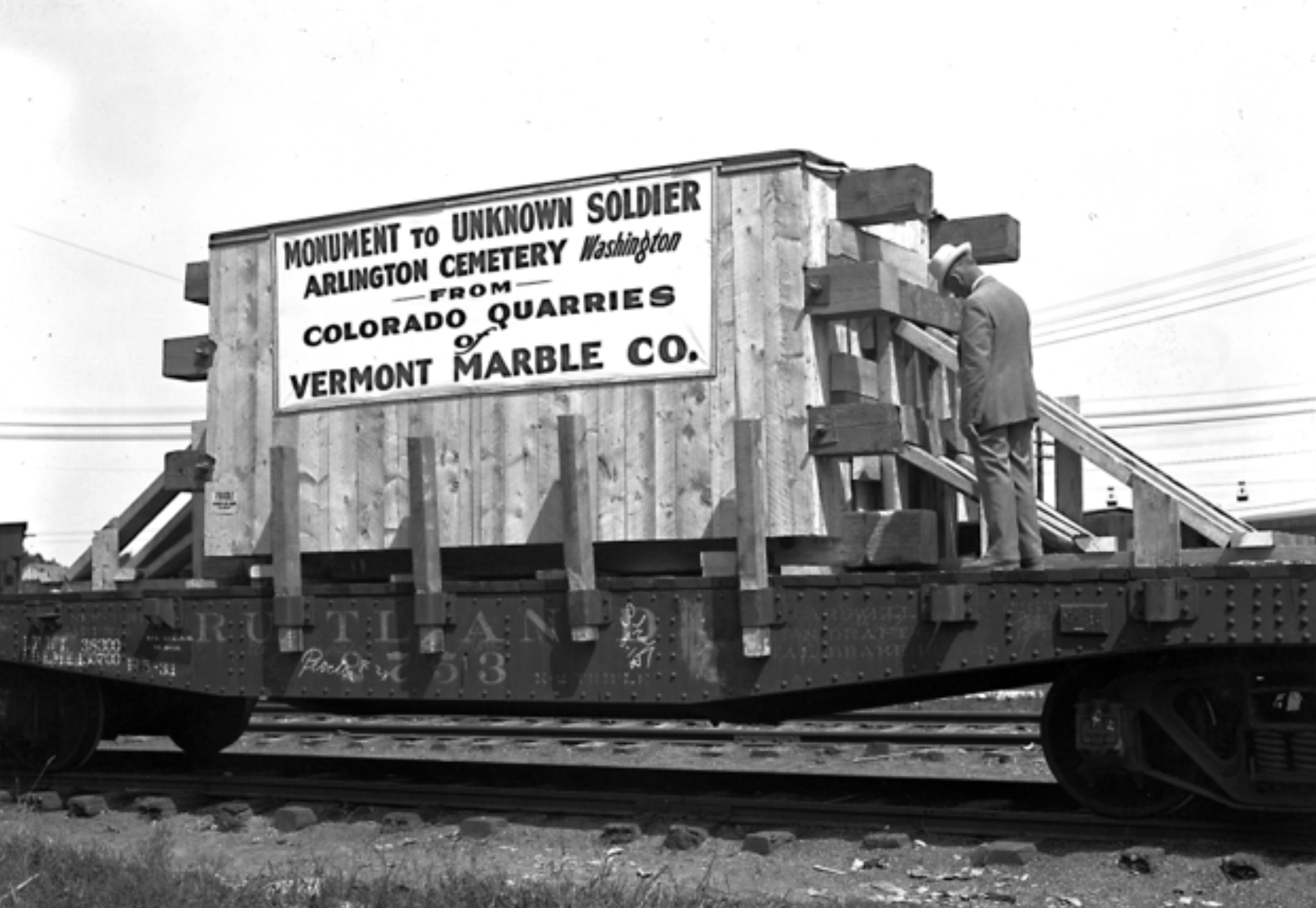
The marble came from the Colorado Yule Marble Quarry, the same region known for producing stone used in the Lincoln Memorial. Pulling a massive block of marble from the mountains was no small task. The quarry sat thousands of feet above sea level. The work was dangerous, difficult, and exacting. Men had to cut, move, inspect, ship, and shape a piece of stone that would become part of the national memory.

That is the part of the story worth sitting with.

Because before the Tomb became a symbol, it was material.

Before it became a place of silence, it was noise.

Wire saws. Rail cars. Stone mills. Hand tools. Measurements. Dust. Sweat. Judgment. Skill.

The block of marble was quarried in Colorado, moved to a mill, shipped east, inspected, partially sculpted, transported again, and finished at Arlington. Architect Lorimer Rich and sculptor Thomas Hudson Jones led the design. The Piccirilli Brothers, a family of master carvers also tied to the Lincoln Memorial, helped complete the sculpting.

This was not fast work. It was not easy work. It was not digital work.

It was physical. Precise. Human.

That matters.

At FlexTrades, we talk often about the skilled trades because the work is everywhere, even when people do not always see it. Manufacturing is not just production floors and output numbers. It is the ability to turn raw material into something useful, lasting, and, in rare cases, sacred.

The Tomb of the Unknown Soldier is one of those rare cases.

Its details carry meaning. The west panel bears the inscription, “Here rests in honored glory an American soldier known but to God.” The east panel includes figures representing Peace, Victory, and Valor. The wreaths carved into the north and south panels represent memory. Every line, figure, panel, and proportion was designed with purpose.

Purpose does not happen by accident.

It has to be drawn. Cut. Checked. Shaped. Corrected. Finished.

That is the quiet link between Memorial Day and making. The holiday asks us to remember sacrifice. The Tomb shows us how remembrance itself can be built.

And then there are the Sentinels.

Since 1948, soldiers from the 3rd U.S. Infantry Regiment, known as The Old Guard, have stood watch over the Tomb. They guard it 24 hours a day, every day of the year. In heat. In cold. In storms. In silence.

Their work is not manufacturing. But it shares something with the best work found across the skilled trades.

Discipline.

Precision.

Repetition.

Pride.

The kind of pride that does not need attention to be real.

Every Memorial Day, Arlington National Cemetery is filled with American flags. Each one is placed with care. Each one marks a life. Each one reminds us that the freedom to enjoy a long weekend was paid for by people who did not get to come home and enjoy theirs.

That is the part we cannot let become background noise.

Now that Memorial Day has passed, the question becomes simple.

What do we carry forward?

Not the day off. Not the cookout. Not the extra time away from work.

The memory.

The weight.

The understanding that some sacrifices do not end when the holiday does.

Think about the names we know.

Think about the names we never got to know.

Think about the families who waited for answers that never came.

And think about the hands that built a place where a nation could carry that grief with honor.

Because remembrance is not passive.

Sometimes, it is made.

And sometimes, the real work begins after the holiday ends.

In a previous blog, we explored why schedule certainty has become one of the most critical priorities in modern data center construction. For hyperscalers, developers, and general contractors alike, delays are no longer measured in inconvenience. They are measured in six- and seven-figure consequences.

The real challenge is operationalizing a solution.

In today’s labor market, the contractors consistently delivering mission-critical projects on schedule are not simply recruiting harder locally. They are changing how skilled labor is deployed.

That’s where FlexTrades comes in.

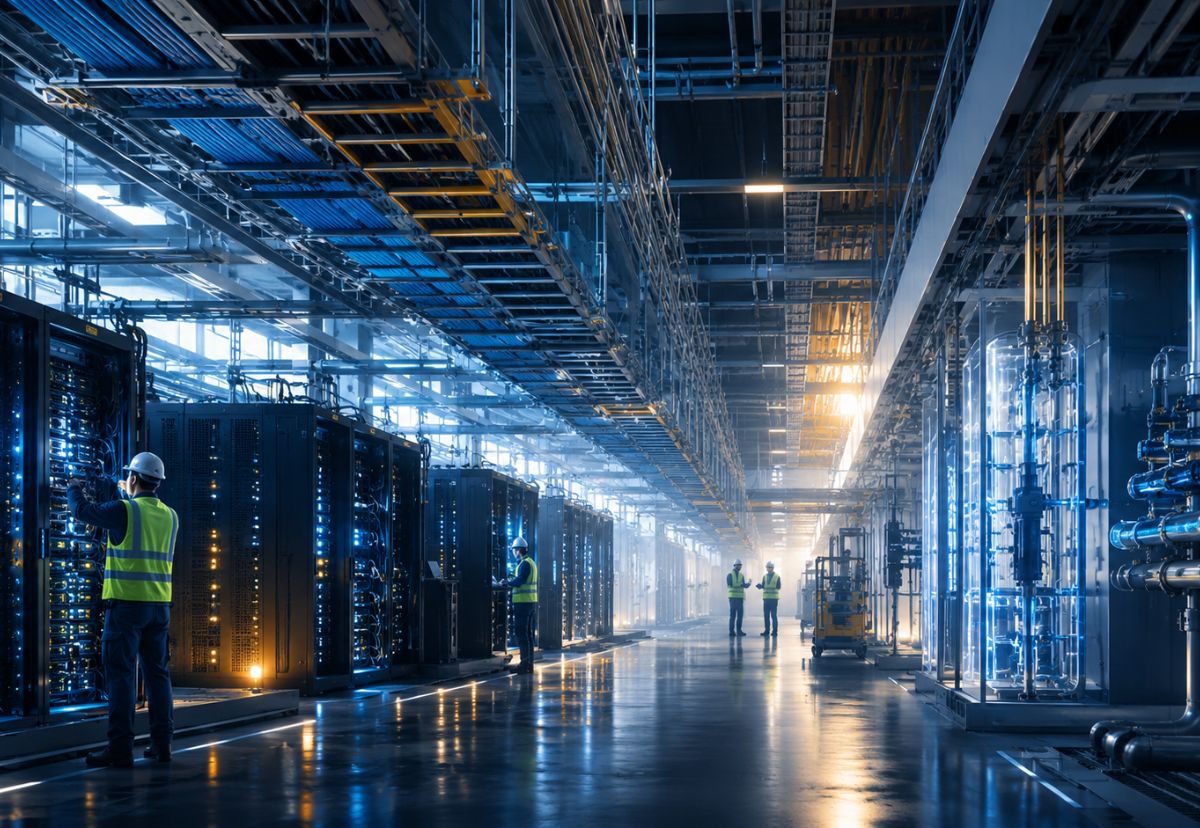
For more than 20 years, FlexTrades has supported complex industrial projects across North America by rapidly deploying elite technical talent into high-pressure execution environments. While data centers represent a rapidly growing market segment, the underlying technical requirements are familiar territory: precision welding, complex power distribution, advanced automation, quality-critical installation work, and zero-error commissioning environments.

Our time-tested rapid deployment model was built for exactly these types of execution challenges.

Mission-Critical Projects Require Mission-Critical Talent

One of the biggest concerns contractors often have when considering outside labor support is whether traveling technicians can truly adapt to the highly controlled environment of a data center build.

The answer depends entirely on who is being deployed.

At FlexTrades, we do not operate from a generalized labor pool. Our nationwide network is built around highly skilled technical professionals with experience in aerospace, advanced manufacturing, industrial automation, power generation, and other precision-driven industries where execution standards leave no room for error.

That matters because modern hyperscale and AI-driven data centers demand more than basic trade competency. They require what we call mission-critical fluency.

Our technicians arrive prepared to operate inside environments governed by:

  • Strict Methods of Procedure (MOPs)
  • Complex safety and HSE requirements
  • Tight quality standards
  • Detailed documentation protocols
  • Zero-defect expectations
  • Coordinated multi-trade workflows

This is not workforce augmentation built around headcount alone. It is technical deployment designed around execution reliability.

Solving the Specialized Bottlenecks That Threaten Schedules

The labor shortages impacting data center construction are not typically found in general labor categories. The real schedule threats emerge when contractors cannot secure enough highly specialized technical professionals to complete critical-path work.

That is where FlexTrades creates value.

High-Density Power Distribution and Integration

Modern AI infrastructure demands enormous power density, making electrical integration one of the most schedule-sensitive phases of a build.

FlexTrades deploys Industrial Electricians and Industrial Technicians experienced in large-scale power distribution systems, controls integration, and complex industrial environments. These professionals understand how to work within tightly coordinated schedules while maintaining the quality standards required to prevent costly rework.

For contractors, this means fewer installation errors, fewer delays tied to troubleshooting, and greater confidence during critical integration phases.

Direct-to-Chip Liquid Cooling Infrastructure

As AI computation requirements accelerate, direct-to-chip liquid cooling systems are becoming increasingly important within hyperscale environments.

These systems require specialized expertise in leak-free piping systems, orbital welding, precision fabrication, and complex fluid loop installation. Those skills are difficult to source locally at scale.

FlexTrades helps contractors close these execution gaps by deploying specialized welders, engineers, inspectors, and mechanical technicians trained in precision piping systems and high-spec industrial fabrication environments.

These are professionals accustomed to industries where tolerances matter, documentation matters, and failures are not acceptable.

Accelerating Commissioning and Final Turnover

For many projects, commissioning becomes the final bottleneck separating substantial completion from operational readiness.

FlexTrades supports commissioning teams with Electrical Engineers, Mechanical Engineers, Quality Inspectors, and technical specialists capable of integrating directly into functional testing and integrated systems testing (IST) workflows.

Rather than slowing down while searching for qualified local support, contractors gain immediate access to professionals familiar with complex industrial systems, documentation standards, and quality-critical testing environments.

The result is a smoother handoff process and greater schedule confidence during the most time-sensitive phase of the project lifecycle.

A Nationwide Deployment Model Built for Speed

Finding skilled labor is only part of the challenge. Over time, mobilization often becomes the larger operational burden.

Travel coordination, housing, onboarding, compliance tracking, and workforce scalability can quickly become distractions that pull project leaders away from execution priorities.

FlexTrades was built specifically to eliminate that friction.

Our nationwide deployment model allows contractors to rapidly scale specialized labor resources without absorbing the operational complexity traditionally associated with travel labor programs.

We manage the full mobilization lifecycle, including:

  • Recruiting and technical vetting
  • Travel coordination
  • Housing logistics
  • Workforce compliance
  • Onboarding support
  • Ongoing workforce management

Instead of spending weeks or months trying to source specialized local talent, contractors gain access to scalable technical teams deployed quickly, often within days.

That changes labor from an unpredictable variable into a dependable execution asset.

Execution Gaps Are Preventable

In today’s data center market, labor shortages are no longer surprising.

Execution gaps are.

Contractors who consistently deliver on aggressive schedules are proactively building scalable workforce strategies capable of supporting complex technical execution from groundbreaking through Level 5 commissioning.

That is exactly what FlexTrades was designed to do.

Partnering with FlexTrades is not about changing how you build.

It is about helping ensure when you finish.

No Doubts. Just Doers.

FlexTrades is ready to deliver schedule certainty to your data center projects. Contact us now to schedule a consultation.

Every year, on the first Wednesday of May, we celebrate National Skilled Trades Day, a day dedicated to recognizing the highly skilled professionals whose work keeps our world running.

From manufacturing floors and warehouses to construction sites and critical infrastructure such as data centers, skilled tradespeople are the backbone of modern industry.

At FlexTrades, this day is about more than recognition. It’s about appreciating the people behind the work and what truly sets them apart.

Because, if you spend a little time in manufacturing, something quickly becomes clear. It’s not just what someone can do. It’s how they show up while doing it that makes all the difference.

Why This Day Matters

National Skilled Trades Day was created to bring awareness to the ever-growing demand for skilled trades professionals and to inspire more people to explore these essential careers.

That need continues to grow across industries:

  • Skilled labor shortages persist
  • Production demands are increasing
  • Timelines are tighter than ever

And while tools and technology continue to evolve, one thing hasn’t changed.

We still need skilled, reliable people to make it all work.

More Than Skill: What Sets Great Technicians Apart

Technical ability is critical in the skilled trades. Precision, experience, and training matter.

But across manufacturing environments, there’s another factor that consistently separates the good from the truly great. Mindset.

The best skilled trades pros don’t just complete tasks. They go above and beyond the job at hand by:

  • Taking ownership of their work
  • Staying engaged when priorities shift
  • Looking for ways to contribute beyond what’s expected

We see this every day in the field. In a recent interview, one of our technicians put it simply:

“I’m here to do what I gotta do, and I’ll make it happen.”

That mindset isn’t unique to one person. It’s shared by skilled trades professionals across the country, evidenced by people who show up ready to work, solve problems, and keep things moving.

The Impact You Can Feel

When manufacturers talk about their best people, they rarely start with a list of completed tasks.

They talk about impact.

They talk about individuals who:

  • Strengthen team dynamics
  • Improve communication on the floor
  • Bring consistency and reliability to every shift, every day

One client recently shared about a FlexTrades technician on-site, “He’s a team player who meshes well with everyone.”

Another added, “His presence changes the tone of the day.”

In fast-paced manufacturing environments, that kind of impact matters.

Because when teams are aligned and engaged, everything works better.

When Attitude Becomes Output

Across the skilled trades, the connection between mindset and performance is clear.

Technicians who stay engaged and take initiative don’t just complete their assigned work. They help move entire operations forward, sometimes seemingly single-handedly.

We’ve seen engineers and technicians step in to support other departments, take on additional responsibilities, and improve workflows simply because they refuse to stand still when there’s work to be done.

As one technician put it, “I can’t just sit here. What else can I do?”

That mindset leads to:

  • Greater flexibility across teams
  • Faster problem-solving
  • Stronger overall performance

It’s not complicated. But it’s powerful.

A Message to Skilled Trades Professionals

Today is about you.

This day is for the welders, engineers, machinists, electricians, maintenance technicians, programmers, assemblers, inspectors, and countless others who show up every day ready to do the work.

You bring more than technical skills. You bring:

  • Work ethic
  • Pride
  • Consistency

You keep production moving, solve problems in real time, and help teams succeed under pressure.

And while the work doesn’t always get the spotlight it deserves, its impact is everywhere.

A Message to Manufacturers

National Skilled Trades Day is also a reminder of something critical:

It’s not just about filling roles. It’s about intentionally building the right workforce.

Because the right people:

  • Improve quality and output
  • Reduce risk and downtime
  • Strengthen the performance of entire teams

As one client shared about their experience working with FlexTrades, “There has not been an individual where I was expecting X and got Y.”

That level of trust comes from consistency in both skill and mindset.

Looking Ahead

For the next generation, the skilled trades offer more than opportunity. They offer purpose.

These are careers built on:

  • Hands-on problem-solving
  • Continuous learning
  • Real, tangible impact

And as today’s workforce shows, success in the trades isn’t complicated.

It’s built on showing up, putting in the effort, and taking pride in the work.

Built by People Who Show Up

The future of manufacturing, and the industries that depend on it, will always come back to people.

People who take initiative.

People who adapt.

People who care about doing the job right.

Today, we celebrate them. Tomorrow, we keep building with them.

Manufacturing doesn’t slow down when your workforce comes up short.

Orders still need to ship. Quality still needs to hold. Deadlines don’t care if you’re understaffed.

That’s where FlexTrades steps in.

We provide highly skilled tradespeople who integrate quickly, work safely, and produce at a high level from day one. The result is simple. Less downtime. Fewer bottlenecks. More control over your operation when demand spikes or labor gets tight.

Across the United States, manufacturers rely on FlexTrades to close critical labor gaps without compromising quality or culture.

Most of our clients operate in core manufacturing sectors, including:

  • Primary Metal Manufacturing
  • Fabricated Metal Product Manufacturing
  • Machinery Manufacturing
  • Computer and Electronic Product Manufacturing
  • Electrical Equipment, Appliance, and Component Manufacturing
  • Transportation Equipment Manufacturing

But that’s only part of the story.

Beyond Traditional Manufacturing Sectors

Modern manufacturing is more complex than ever. Supply chains shift. Demand fluctuates. Skilled labor is harder to find and even harder to keep.

FlexTrades was built for that reality.

Our technicians bring diverse experience across a wide range of industries, allowing us to support operations that extend well beyond traditional manufacturing categories.

We regularly support production teams in:

  • Food Manufacturing
  • Beverage and Tobacco Production
  • Textile Mills and Textile Product Manufacturing
  • Apparel and Leather Goods Manufacturing
  • Wood Product Manufacturing
  • Printing and Related Support Activities
  • Petroleum and Coal Products Manufacturing
  • Nonmetallic Mineral Product Manufacturing
  • Furniture and Related Product Manufacturing
  • Merchant Wholesalers, Durable and Non-Durable Goods

If your operation relies on skilled labor to keep production moving, we can support it.

A Real-World Example: Scaling Production in a Rural Facility

One of our clients, a large rice manufacturer, faced a familiar problem.

Demand was rising fast as harvest season approached. Production needed to scale. But the facility was located in a rural area where hiring locally at speed simply wasn’t realistic.

They needed skilled workers. They needed them quickly. And they needed them to perform.

FlexTrades delivered.

Our technicians deployed to the site and stepped into critical roles across the operation, including:

  • Scale Attendants
  • Heavy Equipment Operators
  • Machine and Line Operators
  • Sanitation Technicians
  • Maintenance Technicians
  • Control Room Operators
  • Lab Technicians
  • Packaging Operators
  • Material Handlers

They didn’t just fill seats. They produced.

With the right people in place, the facility maintained output, protected product quality, and kept shipments moving during one of the most demanding periods of the year.

No shortcuts. No drop in standards. No chaos.

Just execution.

Built for Manufacturers Who Can’t Afford to Slow Down

Labor shortages aren’t going away.

If anything, they’re getting more unpredictable.

The manufacturers who win are the ones who can adapt quickly without sacrificing quality, safety, or their workforce culture.

That’s the role FlexTrades plays.

We give you access to skilled tradespeople when and where you need them so you can scale production, stabilize operations, and keep moving forward.

Let’s Get to Work

If you’re a manufacturer dealing with workforce gaps, production backlogs, or shifting demand, we’re ready to help.

Schedule a call with FlexTrades and take control of your workforce strategy.

If you’re a skilled tradesperson looking for your next opportunity, explore our open positions and get to work.

Walk any manufacturing trade show floor today and you will hear the same two letters repeated over and over again.

AI.

Artificial intelligence has quickly moved from theory to application. Predictive maintenance platforms analyze machine data in real time. Computer vision systems inspect parts faster than the human eye. Generative design software helps engineers build lighter, stronger components in minutes instead of weeks.

But amid all the excitement, one truth often gets lost.

AI is only as effective as the people guiding it.

For manufacturing leaders, the real shift is not just adopting artificial intelligence. It is learning how to work with it. The companies that figure this out first will move faster, solve problems earlier, and operate more efficiently than those still treating AI like a novelty.

This is where AI literacy begins.

What AI Literacy Actually Means

A few years ago, people talked about “prompt engineering.” The phrase sounded technical and intimidating, as if it belonged to programmers and data scientists.

In reality, the idea is much simpler.

AI literacy is the ability to communicate clearly with AI systems so they produce useful, actionable results. It is the skill of framing problems, asking better questions, and interpreting the answers AI generates.

Think of it the same way you would think about any advanced manufacturing tool.

A CNC machine does not create precision parts on its own. A skilled machinist programs it, guides it, and adjusts it based on experience and context.

AI works the same way.

It is powerful. But it still requires human judgment to produce meaningful outcomes.

Where AI Is Already Changing Manufacturing

The shift toward AI assisted operations is already underway across the manufacturing landscape. And the use cases are becoming more practical every year.

Predictive Maintenance

Modern manufacturing equipment generates enormous amounts of operational data. AI systems can analyze that data to identify patterns that signal potential failures before they happen. Instead of reacting to breakdowns, manufacturers can schedule maintenance proactively, reducing downtime and protecting production schedules.

Computer Vision for Quality Inspection

Traditional inspection processes rely heavily on human eyes and manual measurement. AI powered vision systems now scan components in real time, detecting surface defects, dimensional inconsistencies, and material anomalies with remarkable precision.

The result is faster inspections and more consistent quality control.

Generative Design and Engineering

Engineering teams are also using AI tools to explore design possibilities that would be nearly impossible to model manually. By defining constraints such as material strength, weight limits, and manufacturing methods, engineers can generate thousands of optimized design options in minutes.

Many of the most advanced aerospace and automotive components being produced today are the result of this type of collaboration between human engineers and AI systems.

Supply Chain Forecasting

AI is also reshaping how manufacturers manage inventory and supplier networks. Machine learning models can analyze historical demand patterns, supplier performance data, and global market signals to improve forecasting accuracy and reduce supply chain disruptions.

In an era of volatile global logistics, that capability matters.

The Leadership Challenge No One Talks About

Despite all of this progress, many manufacturing organizations are still approaching AI the wrong way.

They treat it like software.

Install the platform. Train the staff. Expect results.

But AI does not behave like traditional software systems. It behaves more like a partner in the problem solving process.

If leaders ask vague questions, they receive vague insights. If teams lack context or direction, the AI models they rely on will produce generic recommendations.

This is why AI literacy is quickly becoming a leadership skill.

Manufacturing leaders must learn how to frame operational problems clearly, interpret AI generated insights critically, and guide teams in using these tools effectively. Without that human layer of understanding, even the most advanced systems struggle to produce meaningful value.

AI Will Not Replace Skilled Workers

A common fear surrounding artificial intelligence is that it will replace human workers on the factory floor.

That fear misunderstands the moment we are in.

AI excels at analyzing patterns, processing large datasets, and identifying statistical anomalies. But it does not understand nuance, operational context, or the countless small decisions that experienced technicians and engineers make every day.

In reality, AI will not replace skilled manufacturing professionals.

It will amplify them.

A maintenance technician who can interpret AI generated equipment diagnostics will diagnose issues faster. A production manager who understands how to query AI driven analytics will identify bottlenecks earlier. An engineer who knows how to guide generative design tools will unlock entirely new design possibilities.

The workforce does not disappear.

It evolves.

The Manufacturing Leaders Who Win

Manufacturing has always been defined by the ability to adopt new tools.

From the introduction of CNC machining to the rise of robotics and advanced automation, each technological shift has rewarded the organizations willing to adapt first.

Artificial intelligence is simply the next chapter in that story.

The companies that succeed will not be the ones that simply purchase AI platforms. They will be the ones that build organizations capable of thinking alongside them.

That means investing in training. Encouraging experimentation. And helping teams develop the ability to ask better questions of the systems now shaping their operations.

Because the future of manufacturing will not belong to AI alone.

It will belong to the people who know how to use it.

Every plant manager, operations leader, and HR executive we talk to in American manufacturing tells a variation of the same story: “We can’t find the skilled workers we need right here where we are.”

It’s not a seasonal blip. It’s structural.

The Manufacturing Skills Gap Isn’t Just Local. It’s National

Skilled trades shortages are more than just a recruiting headache. They’re a strategic challenge for American manufacturers. From CNC machinists and industrial electricians to maintenance techs and welders, demand is outpacing supply significantly. For example, aggregate data shows that American industries face millions of unfilled skilled trade openings annually, with an estimated 1.7 million-worker shortfall between job openings and qualified graduates every year.

That gap isn’t a local anomaly. It’s a national trend that affects manufacturing hubs and rural regions alike. Whether you’re in a highly populated metro area or a smaller community with a proud manufacturing tradition, the math is the same: there just aren’t enough qualified workers locally to meet current demand.

Why Local Labor Pools Alone Don’t Cut It

Here’s the hard reality:

  • Skilled trades programs and vocational pipelines have not kept pace with employer demand.
  • Many regions, especially outside major cities, lack the training infrastructure to produce workers with advanced, manufacturing-ready skills.
  • Even where local talent exists, retirements are outpacing new entrants into the workforce. Skilled trades workers in some fields are aging rapidly, and the inflow of new talent is insufficient to replace them.

This has real consequences. In some sectors, companies turn down work or delay projects because they simply cannot staff them even when demand is there and capacity exists.

The National Talent Advantage: Why Broader Labor Pools Matter

So, what’s the alternative? For innovative manufacturing leaders, the answer is clear. Don’t limit your talent strategy to the ZIP code your plant happens to be in.

A nationwide workforce model, like the one FlexTrades has built, unlocks access to talent that’s:

  • Pre-vetted and travel-ready, so assignments begin quickly
  • Diverse in skill and geography, reducing regional talent bottlenecks
  • Experienced across industries, bringing best practices and adaptability

In contrast to a purely local recruiting strategy, this approach allows manufacturers to tap into labor pools that aren’t constrained by geography or community demographics. This is vital when the local labor force can’t meet demand.

Real Business Impact: FlexTrades’ Nationwide Difference

We see this in action every day:

  • A facility in a rural Midwest town fills critical maintenance roles they couldn’t staff from local resumes alone.
  • A coastal plant scales up for a major production run by deploying skilled machinists from across multiple states.
  • A manufacturer accelerates uptime by bringing in welders and technicians from regions with stronger workforce pipelines, without draining local talent.

In each case, it’s not that the skills didn’t exist in the country. It’s that they weren’t accessible locally. A broader labor network solves that problem.

A Strategic Advantage in a Tight Labor Market

Manufacturing is at a crossroads. Investment in domestic production, from clean energy equipment to advanced electronics, is rising. But talent constraints threaten to slow progress.

Decision-makers need solutions that go beyond traditional recruiting: models that think nationally but act locally, delivering skilled talent where and when it’s needed. That’s how you keep production lines running, reduce downtime, and compete in today’s fast-moving global economy.

Because at the end of the day, not all labor pools are created equal, but the right one can make all the difference.

I wasn’t raised to think about tariffs.

Odds are, you weren’t either.

I was taught to work hard, get a job, earn a living, and if I was lucky, make a difference. That was the formula. That was the plan. No one ever pulled me aside to explain how international trade policies or import taxes might one day shape the cost of materials, the future of U.S. manufacturing, or the kinds of jobs that would still be around for my kids.

But here we are.

If you’ve worked in or around manufacturing over the last five years, you’ve probably felt it. That slow, creeping shift in how things get made, where materials come from, and how much harder it’s gotten to keep things moving on time and under budget. And while there are a lot of moving parts to that story, tariffs (those taxes we put on imported goods) are a big one.

They’re not new. Tariffs have been around since the beginning of this country. But that’s not the point.

The point is what they’re doing now.

What’s Actually Happening

Right now, tariffs are not just a talking point.

They are policy.

Tomorrow is April 2. President Trump has officially declared it “Liberation Day.” And with that declaration comes a sweeping new tariff policy that will impact nearly every foreign-made product entering the United States.

We’re not just talking about steel and aluminum anymore.

This time, it is everything. Every imported bolt, battery, bearing, appliance, tool, machine, and microchip will be taxed under what the administration is calling a universal baseline tariff.

It is bold. It is aggressive. And depending on where you stand in the supply chain, it is either a necessary correction or a massive disruption. Or maybe it is both.

If this sounds familiar, that is because it is.

Back in 2018, the Trump administration imposed a 25 percent tariff on steel and aluminum, along with additional tariffs on goods from China, Canada, and Mexico. Some industries got a boost. Others took a hit. And many of the manufacturers we work with at FlexTrades got caught somewhere in the middle.

Now here we go again. Only this time, it is bigger. Louder. And for most companies, a whole lot harder to plan around.

The Cost of Protection

Tariffs do not just raise prices on foreign goods.

They raise prices on everything.

If your business depends on imported materials, your costs are going up. If your vendors rely on imported components, their costs are going up. And when that happens, you are either eating those costs or passing them down the line.

Eventually, those added costs land in one of two places. Either they show up on your balance sheet. Or they show up in your customer’s final invoice.

And it is not just businesses feeling the strain. It is the welders, the machinists, and the maintenance techs. It is the folks walking into the shop every morning wondering how many more curveballs this industry can throw at them.

It is the shop foreman trying to make a delivery deadline with parts that did not arrive. It is the business owner staring at a spreadsheet and wondering how to pay ten percent more for steel when the contract was signed six months ago.

Some shops adapt. A few even thrive.

But others? They are running out of road.

The Bigger Question

Tariffs are not inherently good or bad. They are tools. And like any tool, they can build or they can break depending on how they are used.

The idea behind them is simple. Protect domestic production. Level the playing field. Keep jobs at home. All of that makes sense.

But when tariffs go too far, they do not just hurt foreign competitors. They hurt the people we are trying to protect. And if we are being honest, manufacturing in America is already hard enough.

We do not need more pressure.

We need more support.

So, What Now?

Liberation Day is tomorrow.

That is not a headline. That is real.

And what comes next will impact American manufacturing in a big way. The question is, are we ready?

Because the goal of bringing jobs back is a good one. But goals without preparation tend to collapse under their own weight.

If we want this to work, we need to:

  • Invest in skilled trades and train the next generation of workers
  • Strengthen our supply chains instead of just shifting their cost
  • Support the companies who are doing things the right way

Tariffs might shape the playing field.

But it is people who build the field in the first place.

Every bolt. Every beam. Every overnight shift and every early morning run to the yard. It all starts with someone showing up, doing the work, and doing it right.

So the next time you see a “Made in America” label, stop and take a second look.

Because behind that label is someone’s livelihood. Someone’s future. Maybe yours.

What do you think?

Are these new tariffs going to help your business or hurt it?

And more importantly, are we doing enough to support the workers who keep this country moving?

Let’s talk.

Because this conversation matters.

Something big is happening in U.S. manufacturing.

ArcelorMittal, the second-largest steel producer in the world, just announced a $0.9 billion investment in a new steel manufacturing facility in Calvert, Alabama. The plant is set to open in 2027 and will produce 150 kilotons of non-grain-oriented electrical steel (NOES) every year. If that sounds technical, here’s what matters. This type of steel is critical for producing full-size pickups, SUVs, and other larger vehicles, and with hybrid sales climbing to a five-year high, demand is only growing.

Manufacturers are spending billions to expand production and secure supply chains, but no one is talking about the most important factor in all of this. Labor.

Steel plants do not run on investments alone. Manufacturing does not move without skilled tradespeople. It takes machinists, welders, millwrights, CNC programmers, and industrial maintenance technicians to bring these billion-dollar projects to life.

Right now, there aren’t enough of them to meet the demand.

Manufacturing is Surging. The Workforce is Not.

The U.S. automotive sector is booming. Automakers are building more. Supply chains are stretching farther. Investments like ArcelorMittal’s are only the beginning. That is all great news for the industry, but it exposes a problem that keeps getting worse. There are not enough skilled workers to keep up.

A lack of available talent means missed deadlines, supply chain disruptions, and production delays. When major manufacturing expansions happen, companies need highly trained, ready-to-go technicians who can hit the ground running. That is where FlexTrades steps in.

We specialize in solving workforce gaps before they become production problems. We do not just place people in jobs. We deploy skilled tradespeople exactly where and when they are needed. That is the difference between keeping up with demand and falling behind.

The Future of U.S. Manufacturing is Skilled Labor

ArcelorMittal’s $0.9 billion plant is a bet on the future of U.S. manufacturing. It is proof that production is not slowing down. It is also a reminder that technology and infrastructure are only part of the equation. A factory filled with state-of-the-art machines is worthless if there is no one to run them.

Manufacturers must shift the way they think about workforce strategy. Investing in the right people is just as important as investing in new plants, new equipment, and new technology. Without a scalable, flexible workforce, growth is nothing more than potential.

The companies that will thrive in this new era of U.S. manufacturing are the ones that prioritize skilled labor as a competitive advantage.

FlexTrades is already doing that.

Let’s Build the Future of U.S. Manufacturing Together

If you are a manufacturer looking for skilled tradespeople to meet growing demand, let’s talk. If you are a highly trained worker looking for opportunities to work on exciting projects across the country, we want to hear from you.

The future of manufacturing belongs to those who are ready to build it.