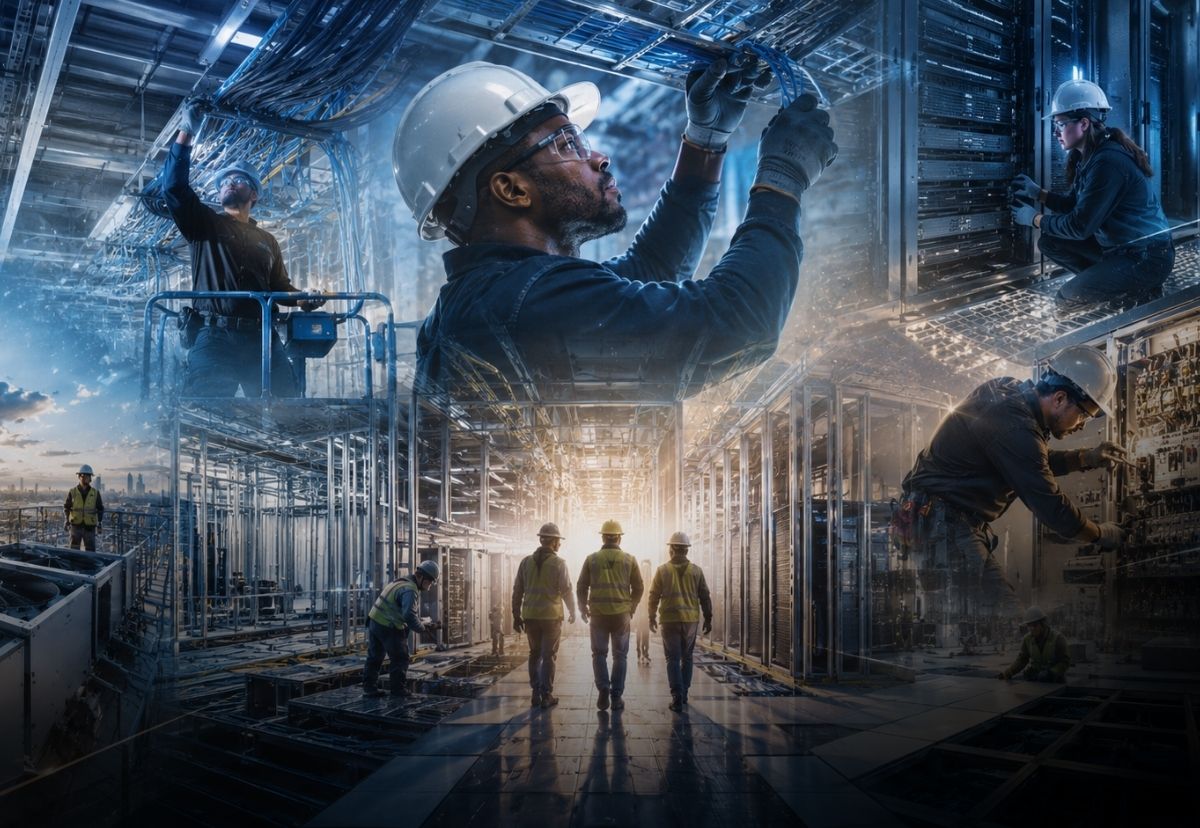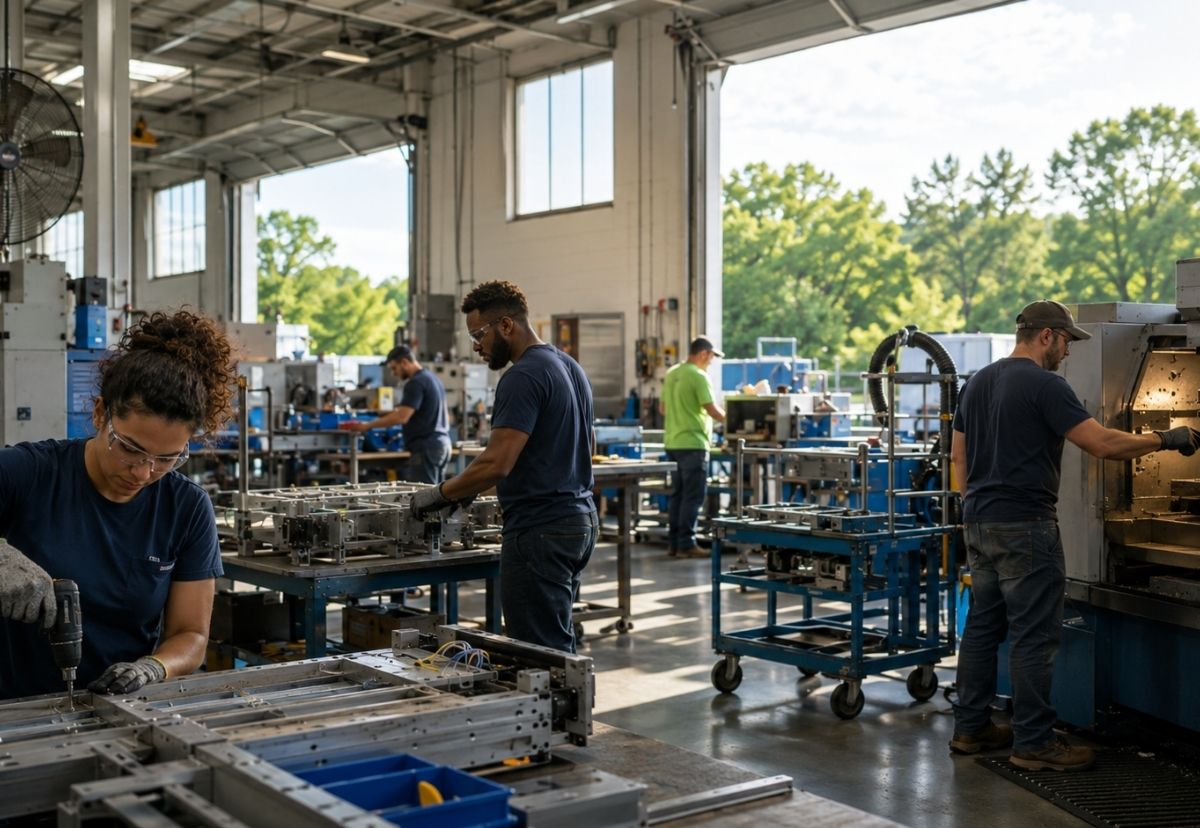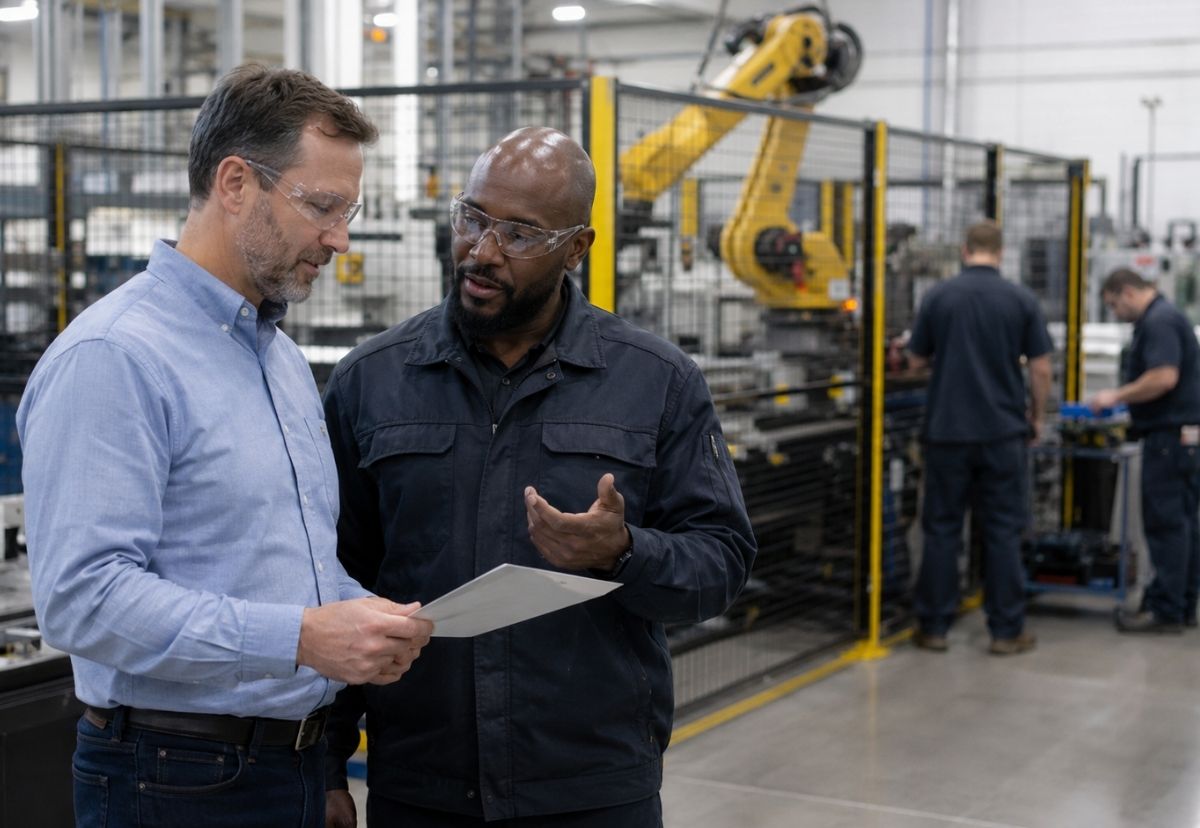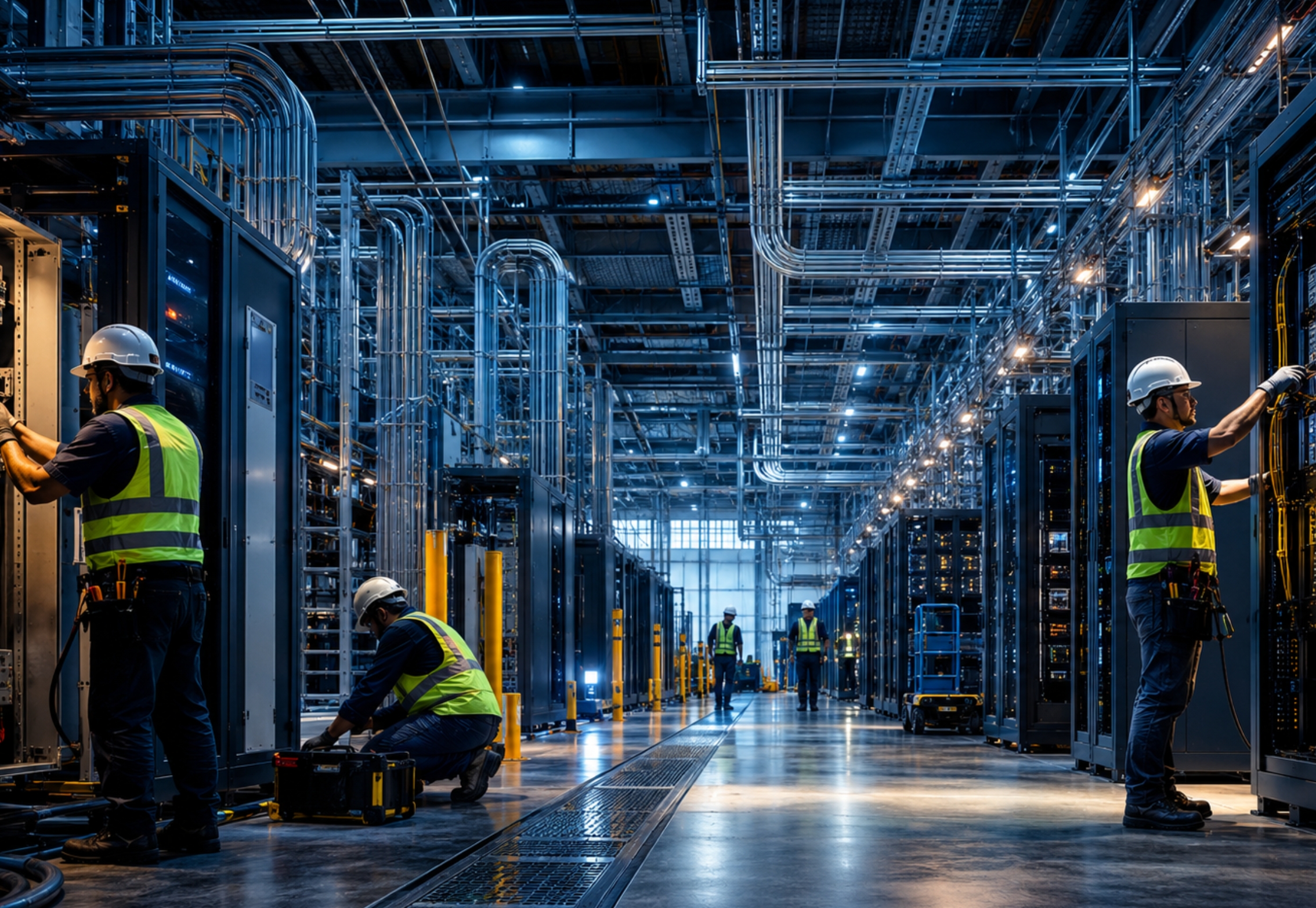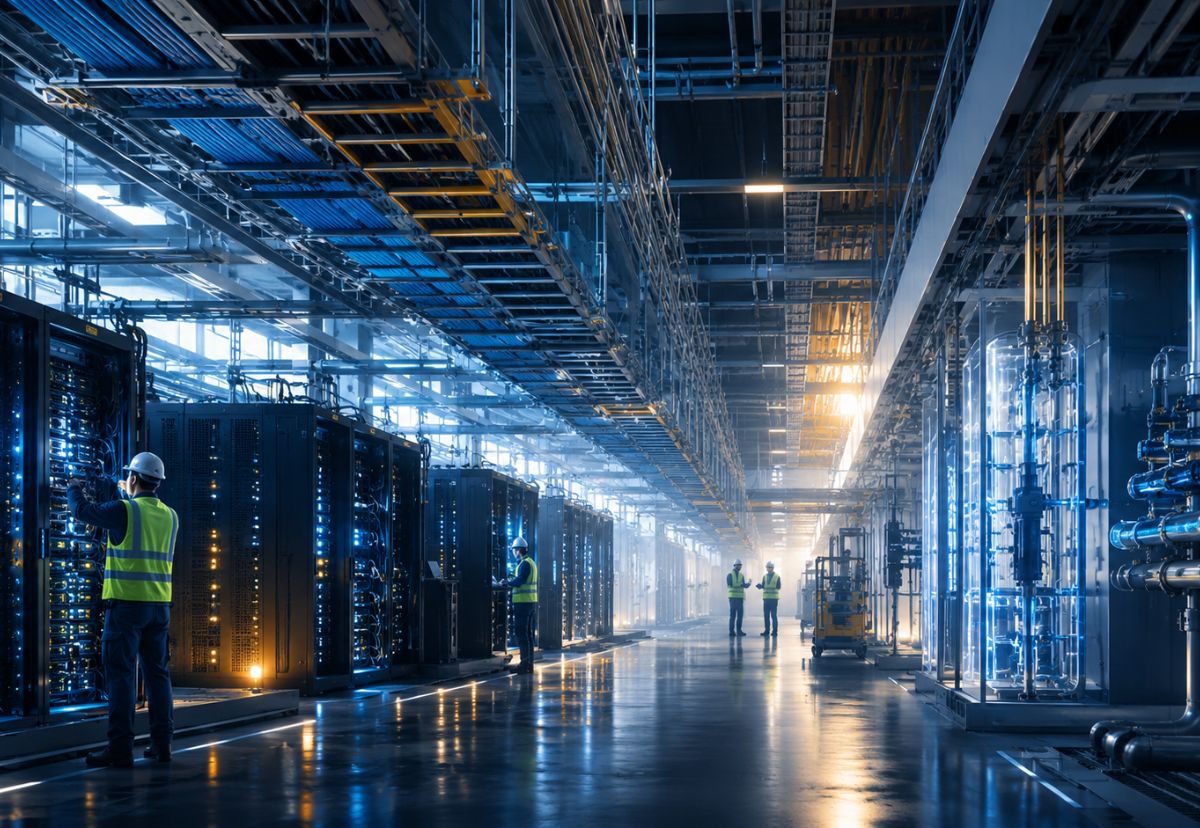

Five years ago, delivering a large-scale data center project was already complex. Today, general contractors are executing builds that are larger, more technical, and bound by non-negotiable Ready-for-Service (RFS) deadlines.

Welcome to the Gigawatt Era.

In 2026, capital is no longer the constraint. Demand for AI infrastructure and hyperscale capacity has ensured funding is available and timelines are compressed. But while capital has scaled, one critical factor has not: access to highly specialized technical talent.

And that gap is where risk lives.

The Countdown You Can’t Miss

For general contractors, the RFS date isn’t just a milestone. It’s a contractual obligation.

Liquidated damages clauses, often ranging from $50,000 to $250,000 per day, have made schedule adherence a financial imperative. A delay of even a few days can erode margins. A delay of weeks can turn a strong project into a liability.

But the impact goes beyond penalties.

Missed deadlines delay revenue for the end client, disrupt commissioning timelines, and strain long-term relationships. In a market where repeat business is driven by certainty, the ability to hit a date is often what determines who wins the next project.

Bigger Builds, Smaller Talent Pools

The scale of modern data center construction has outpaced the traditional workforce model.

Projects are increasingly located in power-rich regions that lack deep, specialized labor markets. At the same time, demand for skilled technicians and engineers continues to surge, creating intense competition for talent.

The result is a clear mismatch:

  • Projects are larger and more complex
  • Timelines are shorter
  • Local labor pools are not deeper

Relying solely on local hiring is no longer a strategy. It’s a constraint that, in many cases, is becoming a liability.

The Difference Between Skilled and Mission-Critical Ready

Not all labor is created equal, especially in data center construction.

Hyperscale environments demand a level of precision where errors aren’t just costly but unacceptable. Mission-critical fluent technicians and engineers understand the complexity of high-density power environments, liquid cooling systems, and zero-error execution during installation and commissioning.

They don’t just complete tasks. They understand how their work impacts the entire system.

And they’re in short supply.

This is where many projects encounter their greatest execution gap, not in planning or funding, but in consistently deploying the right expertise at the right time.

Why the Old Model Breaks Down

Traditional workforce strategies were built for a different era. One defined by predictable timelines and stable labor markets.

They rely on local pipelines, extended hiring cycles, and gradual scaling. That model can’t keep pace with the demands of the Gigawatt Era.

When projects require large numbers of specialized workers on-site within days, not months, the margin for error disappears.

The question is no longer how do you find talent?

It’s become how do you guarantee it shows up on time, ready to perform?

Introducing Schedule Insurance

To meet today’s demands, leading general contractors are rethinking workforce strategy. They’re beginning to look at it not as a support function, but as a form of risk mitigation.

This is the idea behind Schedule Insurance.

Schedule Insurance isn’t a policy. It’s a proactive approach to eliminating the single greatest threat to project timelines: workforce uncertainty.

It’s built on three pillars:

  • Speed: Rapid deployment of skilled technicians and engineers
  • Expertise: Access to mission-critical fluent professionals
  • Reliability: Confidence in consistent, high-level execution

In an environment where delays can cost hundreds of thousands per day, Schedule Insurance becomes essential.

Closing the Execution Gap

This is where FlexTrades comes in.

FlexTrades was built to bridge the gap between project demand and workforce availability. Instead of relying on local labor markets, we deploy a mobile, national workforce of vetted technicians and engineers. They are ready to go where the work is, no matter how remote the location.

Our teams are:

  • Mission-Critical Fluent
  • Liquid-Cooling Ready
  • Rapidly Deployable

This approach removes one of the most unpredictable variables in any project: whether the right people will be there when you need them.

With FlexTrades, workforce becomes a certainty, not a question mark.

Protecting Margins. Preserving Relationships.

Schedule Insurance isn’t just about avoiding penalties. It’s about protecting the full value of the project.

When the right workforce is in place:

  • Timelines stay intact
  • Quality remains high
  • Client expectations are met

And just as importantly, trust is reinforced.

In a competitive market, the ability to consistently deliver on time isn’t just an advantage, it’s a differentiator.

Winning the AI Infrastructure Race

The race to build AI infrastructure is accelerating. Success isn’t defined by who can build the biggest. It’s defined by who can deliver with certainty.

The general contractors who win in 2026 and beyond will be those who can commit to a date and meet it.

That requires more than planning. It requires a workforce strategy built for the realities of the Gigawatt Era.

It requires Schedule Insurance.

No Doubts. Just Doers.

FlexTrades is ready to deliver schedule certainty to your data center projects. Contact us now to schedule a consultation.

In highly regulated industries, precision isn’t optional. It’s required.

At Mesa Labs, precision is at the heart of everything they manufacture. Their calibration and quality control instruments support industries like healthcare and laboratory science by ensuring critical systems operate safely and accurately.

For the team at their Calibration Solutions business unit in Lakewood, Colorado, that mission carries real responsibility.

“These products provide the measurement and calibration that other devices rely on in lifesaving or life-supporting fields,” says Jasmine Stone, Director of Operations. “When you have products that maintain people’s livelihood, you have to be delivering on time.”

As demand grew and operations evolved toward a more responsive, just-in-time model, Mesa Labs faced a familiar challenge in modern manufacturing: how to scale quickly without compromising quality, culture, or the well-being of their team.

Their solution came through a workforce partnership with FlexTrades.

A Lean Team Focused on Quality

Mesa Labs operates with a deliberately lean production team where efficiency and consistency are equally important.

“I’m most proud of our team’s ability to deliver quality product on time,” Stone says. “We’ve built the capability to turn around products within days, sometimes less, from when the order is placed.”

That level of responsiveness has taken years of operational improvement.

“It required a lot of willingness to change and try new things,” she says. “But our team has shown an incredible ability to flex and sprint when needed to get our customers solutions.”

The challenge is that growth in a manual assembly environment requires more than new equipment. It requires skilled people to perform the work.

“When demand increases quickly, it’s a huge commercial win,” Stone says. “But operationally, it creates moments where you have to pivot very fast.”

And those moments can put pressure on internal teams.

“I really like my people, and I want to keep them happy,” she says. “There’s only so much you can ask outside the normal expectation before you risk burnout.”

Workforce Flexibility Without Sacrificing Culture

For Stone and her team, FlexTrades provided a way to respond quickly without overloading their workforce.

“I might know I need people tomorrow, but I don’t know what next month looks like yet,” she says. “Having that partnership means I can support a burst of demand without burning out my existing team and still deliver products on time.”

Workforce flexibility has also helped Mesa Labs maintain its goal of being an employer of choice.

“With us being very lean, we also offer strong benefits like PTO and family leave,” Stone explains. “But when every role is essential, that can create operational challenges.”

The partnership with FlexTrades helps close those gaps.

“I don’t want someone taking leave to care for a family member to impact whether a person receives dialysis treatment,” she says. “Knowing I can get someone here quickly, sometimes within a week, has been massive.”

Turning a Production Challenge into a Breakthrough

One of the biggest operational transformations came during a difficult period on one product line.

At the time, low first-pass yields meant additional labor was needed to ensure quality products still reached customers.

“I needed to throw as much labor at it as possible so we could mitigate that and still get good product out,” Stone explains.

FlexTrades technicians stepped in quickly.

“Within a month, we had five or six employees integrated with the team.”

The results were dramatic.

“We quadrupled our output,” she says.

More importantly, the additional capacity bought time to improve their underlying process. Today, that same product line has improved from an 84-day turnaround time to just four days.

“Short-term pain for long-term gain,” Stone says. “We could not have done it without FlexTrades.”

Raising the Bar for the Entire Team

For Seth Walker, Mesa Labs’ Warehouse and BGI Manager, the partnership also reshaped how he thinks about temporary labor.

“Working with FlexTrades completely changed my view on temp work,” Walker says. “They bring people who already have experience and just need to learn ‘the Mesa way.’”

That preparation makes an immediate impact on the floor.

“It’s like magically beaming someone into the warehouse who already knows what they’re doing,” he says. “That gives us time to focus on improving other parts of the operation.”

The technicians don’t just help with workload. They elevate expectations.

“The FlexTrades employees we’ve had have leveled up the individuals around them,” Stone says. “They show what coming up to speed quickly can look like.”

Walker agrees.

“They’ve done a great job finding people who want to be here,” he says. “They care. They’re engaged. They have a good nose for decent people.”

Supporting Growth Without Chaos

As the partnership evolved, Mesa Labs began using FlexTrades more proactively.

During one forecasted surge in demand, Stone staffed additional technicians across production, quality, and warehouse teams ahead of time.

“The team kept waiting for the train to hit,” she says. “But it never did.”

Why?

“We had staffed for it.”

Instead of scrambling to react, the team stayed focused and productive.

“For the first time, we weren’t getting hit by the train,” Stone says.

Protecting Customers and the People Behind the Work

For Stone, the value of the partnership ultimately comes down to two priorities: protecting customers and protecting employees.

“When your workforce is burnt out, quality suffers,” she explains. “And when you’re desperate for people, you risk hiring someone who isn’t right for the role.”

FlexTrades helped eliminate that compromise.

“We don’t have to bring in just a warm body,” she says. “We get skilled technicians who can perform the work the right way.”

That allows Mesa Labs to maintain their standards while supporting their workforce.

“Our partnership has allowed us to remain an employer of choice,” Stone says. “We can keep the benefits that matter to our employees while still delivering the quality products our customers depend on.”

A Partnership Built for the Future

Looking ahead, Mesa Labs expects continued growth.

“We have exciting products and a strong roadmap,” Stone says.

But growth rarely follows a predictable path.

“With FlexTrades, I can tell our commercial team, ‘Bring it. If you think you can sell it, we’ll make it.’”

Even if the workforce isn’t in place yet.

“I know we can get the skilled labor we need quickly,” she says. “That gives us the ability to pivot, grow, and still deliver quality products.”

When asked to summarize the partnership in one sentence, Stone put it simply:

“FlexTrades has helped Mesa Labs protect the vulnerable, while also protecting our people.”

Walker summed it up even more directly.

“Success.”

Engineering is the discipline of making things work. From the skyscrapers shaping city skylines to the microchips powering smartphones, engineering touches nearly every part of modern life. While the profession is grounded in universal principles such as applying scientific and mathematical concepts to solve real problems, each sector applies those principles differently. One of the most diverse and essential branches of engineering operates within manufacturing.

What Unites Engineers Across Industries?

Despite their differences, engineers share a common purpose… to innovate, optimize, and solve problems. Across industries, they improve efficiency, ensure quality, and drive technological advancement. Key similarities include:

  • Problem Solving: Engineers analyze complex challenges and develop practical, scalable solutions.
  • Systems Thinking: They evaluate how individual components function within larger systems.
  • Optimization: Efficiency, safety, reliability, and performance remain top priorities.
  • Use of Technology: Modern engineering relies on advanced software, simulation tools, automation platforms, and data analytics.
  • Quality and Safety Compliance: Engineers must follow strict regulatory, safety, and industry standards.

What Makes Engineering in Manufacturing Unique?

While manufacturing engineering follows the same foundational principles as other disciplines, the environment presents distinct challenges.

Speed and Efficiency as Priorities

Civil or aerospace projects may take years to complete. Manufacturing operates on compressed timelines. Engineers must support rapid production cycles while minimizing downtime and maintaining consistent quality.

Continuous Improvement and Iteration

Unlike one-time design projects such as bridges or medical devices, manufacturing engineers operate in a constant state of refinement. They improve processes over time using structured methodologies such as Lean manufacturing and Six Sigma, both widely used in industrial operations to reduce waste and variation.

Integration of Automation and Robotics

Manufacturing environments depend heavily on automation. Engineers design, implement, and maintain robotic systems, programmable logic controllers, sensors, and smart equipment that improve productivity and reduce variability.

Material Selection and Process Engineering

Material selection in manufacturing must account for cost, availability, durability, regulatory requirements, and manufacturability at scale. Engineers evaluate tradeoffs between performance and production feasibility.

Workforce and Equipment Coordination

Manufacturing engineers balance human labor, robotics, and heavy machinery within complex production environments. They ensure workflows are synchronized and resources are allocated effectively.

Cost Driven Decision Making

Cost efficiency is central to manufacturing. Engineers must continuously identify ways to reduce scrap, shorten cycle times, improve yield, and control operating expenses without sacrificing safety or quality.

Types of Engineers in Manufacturing

Modern manufacturing relies on specialized engineering roles, including:

  • Manufacturing Engineer. Improves and standardizes production processes.
  • Design Engineer. Develops products optimized for manufacturability and performance.
  • Mechanical Engineer. Designs and maintains mechanical systems and equipment.
  • Electrical Engineer. Develops and supports electrical infrastructure and control systems.
  • Process Engineer. Optimizes workflows and production methods.
  • Industrial Engineer. Improves plant layouts, labor efficiency, and operational systems.
  • Production Engineer. Oversees daily manufacturing execution and output.
  • Quality Engineer. Implements quality systems aligned with industry standards.
  • Controls Engineer. Designs and programs automated control systems.
  • Test Engineer. Validates product reliability, safety, and performance.
  • Tooling Engineer. Designs custom tooling, fixtures, and production aids.
  • Applications Engineer. Works with clients to implement technical solutions for specific needs.
  • Materials Engineer. Selects and tests materials for strength, durability, and cost efficiency.
  • Robotics Engineer. Designs and integrates robotic systems.
  • Automation Engineer. Implements smart manufacturing technologies and connected systems.
  • Mechatronics Engineer. Combines mechanical, electrical, and software systems to build intelligent machinery.

The Future of Manufacturing Engineering

Manufacturing continues to evolve as technology advances.

  • Smart Factories and Industry 4.0: Connected manufacturing environments leverage industrial IoT, AI, and real-time data analytics to improve visibility, predictive maintenance, and decision making.
  • Sustainable Manufacturing: Engineers are developing energy efficient processes, waste reduction strategies, and environmentally responsible material alternatives.
  • Advanced Robotics and AI Integration: Autonomous systems are becoming more adaptive and data driven, improving flexibility across high mix, low volume production.
  • Space Manufacturing: With increased commercial investment in space, research is exploring manufacturing in microgravity environments, including additive manufacturing and material behavior beyond Earth conditions.

Looking for Engineering Solutions?

At FlexTrades, engineering is more than a discipline. It is the backbone of modern manufacturing performance. Whether you are a company seeking experienced engineers to strengthen production or an engineer looking for your next challenge, FlexTrades connects talent with opportunity.

Are you an engineer ready for a new assignment? Explore opportunities that let you apply your expertise across industries and projects nationwide.

Need engineering support for your manufacturing operations? Contact FlexTrades to access skilled engineering professionals who can improve efficiency, strengthen quality systems, and support production stability.

Let’s build the future of manufacturing together. Connect with FlexTrades today.

Every plant manager, operations leader, and HR executive we talk to in American manufacturing tells a variation of the same story: “We can’t find the skilled workers we need right here where we are.”

It’s not a seasonal blip. It’s structural.

The Manufacturing Skills Gap Isn’t Just Local. It’s National

Skilled trades shortages are more than just a recruiting headache. They’re a strategic challenge for American manufacturers. From CNC machinists and industrial electricians to maintenance techs and welders, demand is outpacing supply significantly. For example, aggregate data shows that American industries face millions of unfilled skilled trade openings annually, with an estimated 1.7 million-worker shortfall between job openings and qualified graduates every year.

That gap isn’t a local anomaly. It’s a national trend that affects manufacturing hubs and rural regions alike. Whether you’re in a highly populated metro area or a smaller community with a proud manufacturing tradition, the math is the same: there just aren’t enough qualified workers locally to meet current demand.

Why Local Labor Pools Alone Don’t Cut It

Here’s the hard reality:

  • Skilled trades programs and vocational pipelines have not kept pace with employer demand.
  • Many regions, especially outside major cities, lack the training infrastructure to produce workers with advanced, manufacturing-ready skills.
  • Even where local talent exists, retirements are outpacing new entrants into the workforce. Skilled trades workers in some fields are aging rapidly, and the inflow of new talent is insufficient to replace them.

This has real consequences. In some sectors, companies turn down work or delay projects because they simply cannot staff them even when demand is there and capacity exists.

The National Talent Advantage: Why Broader Labor Pools Matter

So, what’s the alternative? For innovative manufacturing leaders, the answer is clear. Don’t limit your talent strategy to the ZIP code your plant happens to be in.

A nationwide workforce model, like the one FlexTrades has built, unlocks access to talent that’s:

  • Pre-vetted and travel-ready, so assignments begin quickly
  • Diverse in skill and geography, reducing regional talent bottlenecks
  • Experienced across industries, bringing best practices and adaptability

In contrast to a purely local recruiting strategy, this approach allows manufacturers to tap into labor pools that aren’t constrained by geography or community demographics. This is vital when the local labor force can’t meet demand.

Real Business Impact: FlexTrades’ Nationwide Difference

We see this in action every day:

  • A facility in a rural Midwest town fills critical maintenance roles they couldn’t staff from local resumes alone.
  • A coastal plant scales up for a major production run by deploying skilled machinists from across multiple states.
  • A manufacturer accelerates uptime by bringing in welders and technicians from regions with stronger workforce pipelines, without draining local talent.

In each case, it’s not that the skills didn’t exist in the country. It’s that they weren’t accessible locally. A broader labor network solves that problem.

A Strategic Advantage in a Tight Labor Market

Manufacturing is at a crossroads. Investment in domestic production, from clean energy equipment to advanced electronics, is rising. But talent constraints threaten to slow progress.

Decision-makers need solutions that go beyond traditional recruiting: models that think nationally but act locally, delivering skilled talent where and when it’s needed. That’s how you keep production lines running, reduce downtime, and compete in today’s fast-moving global economy.

Because at the end of the day, not all labor pools are created equal, but the right one can make all the difference.

I want you to picture a moment that probably feels familiar.

A production schedule that looked reasonable a few months ago. A delivery date everyone nodded at in a meeting. A plan that worked… until it didn’t.

Not because demand disappeared.

Not because quality slipped.

But because there simply were not enough skilled people to do the work.

No alarms. No dramatic collapse. Just a quiet realization that the math no longer adds up.

That moment is happening every day across manufacturing floors in this country. And it is still being treated like a temporary inconvenience instead of what it actually is, a long-term reality.

What We Still Refuse to Fully Acknowledge

The skilled labor shortage is not going away anytime soon. That part is no longer up for debate. What remains oddly controversial is what that truth requires of us.

Even if trade education improves tomorrow. Even if apprenticeships scale. Even if younger generations rediscover the value of skilled work… it will take years, likely decades, for those efforts to materially close the gap.

Yet many organizations are still behaving as if patience alone is a strategy. As if time will smooth this out. As if doing more of what worked ten years ago will somehow start working again.

Hope is not a workforce plan.

The companies struggling the most are not unaware of the shortage. They talk about it constantly. What they struggle with is accepting that the rules have changed and acting accordingly.

Pressure Is Increasing, Not Easing

At the same time, the environment around manufacturing is getting more complex.

Automation is advancing.

AI is accelerating processes.

Equipment is becoming more sophisticated and less forgiving.

None of this reduces the need for skilled labor. It raises it.

Advanced machines still require experienced people to run them, troubleshoot them, and keep them productive. AI may speed decision making, but it does not replace the hands and minds required to execute the work. In many cases, it exposes workforce gaps faster than before.

Layer that onto missed delivery dates. Delayed revenue. Strained customer relationships. Overworked internal teams trying to compensate.

This is not theoretical risk. It is already showing up on balance sheets and in customer conversations.

Why Traditional Staffing Keeps Missing the Moment

When workforce pressure peaks, many companies default to the same solution they have always used.

Call a staffing agency. Request resumes. Move fast and hope for the best.

The problem is not effort. It is fit.

Traditional staffing models were built for transactions. For filling seats quickly. For volume. They were not built for skilled, project-based manufacturing environments operating under long-term labor constraints.

Speed alone does not solve complexity. More resumes do not guarantee better outcomes. Short-term fixes do not hold up when the shortage itself is long-term.

That disconnect is where frustration sets in. Not because companies are unwilling to adapt, but because the tools they are using were designed for a different era.

What Forward-Thinking Manufacturers are Doing Differently

Some organizations have stopped waiting for conditions to improve. They have accepted that instability is the operating environment, not a temporary phase.

They are not abandoning internal hiring or training. They are complementing it.

They are forming workforce partnerships built around projects, outcomes, and predictability. Partnerships that acknowledge reality instead of fighting it.

This is where FlexTrades fits, not as a staffing vendor, but as a workforce solution designed for how manufacturing actually works today.

Project-based skilled trades. Deployed where and when the work demands it. Built to deliver certainty in an uncertain labor market.

The difference is not philosophical. It is practical.

When labor shortages are structural, solutions must be structural too.

The Real Divide

The skilled labor shortage will not fix itself. Time alone will not solve it. Waiting carries real risk.

Some companies will continue reacting.

Others will build systems that account for reality.

That is the divide forming right now across manufacturing.

Not between those who care and those who do not.

Between those willing to adapt and those still hoping the old rules apply.

The shortage is not ending. But how companies respond to it will define who keeps moving forward.

Manufacturing leaders are heading into 2026 with cautious optimism. After a year marked by the uncertainty of volatile demand, shifting supply chains, and an increasingly competitive labor market, the newly released Deloitte 2026 Manufacturing Industry Outlook offers a clearer view of where the industry is headed.

Yes, it highlights renewed investment in smart manufacturing, automation, and digital tools. But it also emphasizes a challenge that continues to impact nearly every manufacturer:

Technology is advancing quickly, but the skilled workforce required to support it is not keeping pace.

This is the core takeaway of trend number five in the report. It is also the reason many companies are reconsidering how they plan, source, and develop critical talent.

The Talent Gap Is Not New But Its Impact Is Growing

Smart factory initiatives, advanced machining, new maintenance technologies, robotics, and AI enabled production systems all require experienced people to implement and sustain them. But those skill sets remain difficult to recruit, expensive to hire, and slow to develop internally.

Even when employers succeed in building pipelines through apprenticeships or universities, the reality is:

  • New hires take time to become productive
  • Rising skills requirements outpace traditional training cycles
  • Experienced workers remain in short supply nationwide

Meanwhile, production targets, customer expectations, and project deadlines continue to accelerate.

The result is a skill shortage that is not just an HR challenge. It is a business risk.

Revisiting the Build Buy Borrow Model

To navigate these pressures, Deloitte reinforces the value of the Build Buy Borrow framework. Most leaders know it, but few use it holistically.

Build

Develop talent within your organization.
Predictable long term. Slow in the short term.

Buy

Hire experienced workers from the market.
Effective when the talent exists, but increasingly competitive and costly.

Borrow

Partner with outside experts or temporary talent to meet project based, specialty, or surge needs.
Fast, flexible, and often under leveraged.

Manufacturers have traditionally focused on Build and Buy. But when both become longer, costlier, harder, or riskier, they can delay critical initiatives from capital projects to backlog reduction to maintenance cycles.

That is why Borrow is emerging as a key tactical lever for manufacturing businesses, not just an emergency stopgap.

Borrowing Talent The Fastest Path to Capability

For years, borrowing talent was viewed as a temporary fix. Today, it is a strategic advantage. Leaders are realizing that flexible, highly skilled talent can reduce risk, increase agility, and keep operations on track while other workforce elements catch up.

Here is what makes Borrowing so effective:

Immediate access to crucial skills

Whether you need automation technicians, machinists, welders, engineers, or maintenance experts, flexible talent removes the wait time. You bring in people who have done the work before and can contribute on day one.

Greater certainty around project timelines

Smart factory upgrades, preventive maintenance, process improvements, and throughput initiatives rely on expertise. Borrowed talent ensures these projects stay on schedule, even when hiring lags.

Lower exposure in volatile markets

Borrowing lets manufacturers scale responsively without long term commitments. That agility matters when production demand shifts unpredictably.

Knowledge capture that strengthens the core workforce

This is where borrowing becomes building. Experienced contract professionals do more than complete tasks. They also:

  • Document processes
  • Transfer hard earned knowledge
  • Train internal staff
  • Raise overall technical capability

The result is a short term engagement with long term value.

The Important Distinction Not All Partners Are Equal

Deloitte’s outlook acknowledges the rise of specialty third party firms offering targeted expertise. Still, many manufacturers think contract labor means general labor or entry level help.

But the industry has evolved.

Firms like FlexTrades provide something different. Highly skilled tradespeople and engineers who can mobilize quickly and deliver results immediately.

Our technicians bring:

  • Deep experience across industries, tools, and processes
  • Adaptability to diverse production environments
  • The ability to ramp up in days or weeks, not months or years
  • A focus on outcomes and project success

This is not just filling gaps. This is adding capability.

Borrow Today Build Tomorrow Win Sooner

The manufacturers who will outperform in 2026 will not rely on a single workforce strategy. They will blend all three intelligently:

  • Build the next generation of talent
  • Buy selectively for critical full time roles
  • Borrow expertise to stay agile and keep work moving

Borrowing accelerates progress today while creating the breathing room needed to build a stronger workforce for tomorrow.

This is exactly where FlexTrades fits.

We help manufacturers stay resilient, reduce risk, and complete essential work with experienced project based talent. All while supporting the long term development of their teams.

Let’s Strengthen Your Workforce Strategy

If the workforce challenges highlighted in Deloitte’s 2026 Outlook reflect your reality, FlexTrades can help you take the next step with certainty.

Reach out today to start building a more agile, future ready workforce plan for tomorrow.

For decades, Just-In-Time (JIT) manufacturing has been the gold standard for efficiency. By keeping inventory lean and production tightly aligned with demand, JIT has helped manufacturers control costs, improve quality, and stay competitive in fast-moving markets. But, as the last few years have shown us, even the most finely tuned JIT systems can hit a wall when disruptions occur. Supply chain delays, demand spikes, and labor shortages have forced manufacturers to rethink what resilience really looks like. That’s where Just-In-Case (JIC) thinking comes in.

At FlexTrades, we help manufacturers maintain the efficiency of JIT operations while building the flexibility and readiness of JIC. Because when unexpected challenges arise, being ready “just in case” shouldn’t mean sacrificing everything that makes your production model successful.

Why JIT Works and Where It Breaks

When it’s operating smoothly, JIT is a thing of beauty. It minimizes waste, reduces storage costs, and helps ensure quality through continuous improvement. But JIT also assumes everything goes according to plan. Materials arrive on time. Machines keep running. Your workforce stays at full strength. Unfortunately, the real world doesn’t always cooperate.

Even minor disruptions such as a supplier delay, sudden order surge, or a few key employees out sick can ripple across your production. That’s when your efficient, finely tuned system can quickly turn into a backlog. Manufacturers worldwide are learning the hard way that “lean” can’t mean “fragile.”

The Rise of Just-In-Case Thinking

A Just-In-Case mindset doesn’t replace JIT, it reinforces it. JIC is about building agility and redundancy into systems and processes wherever it matters most, without losing the precision and efficiency your business depends on.

For many manufacturers, this shift includes diversifying suppliers, investing in smarter forecasting, or keeping a modest inventory buffer. But the most overlooked, and often the most critical, factor is your workforce. If you don’t have the right people in place when demand changes or disruptions hit, every other JIC measure becomes a stopgap. That’s where FlexTrades comes in.

Your Workforce: The Ultimate Just-In-Case Strategy

At FlexTrades, we provide workforce flexibility that allows JIT manufacturers to operate confidently, even when conditions are unpredictable.

Here’s How

Rapid Deployment: Our highly skilled tradespeople and extremely experienced technicians can be mobilized nationwide in a matter of days, not weeks or months. That means when production needs to ramp up quickly, or recover from downtime, help is already on the way.

Precision Skill Matching: From machinists and welders to maintenance techs and engineers, we deploy the exact skill sets your operation needs to ensure consistent quality and minimal onboarding time.

Built-In Flexibility: Whether you need 5 people or 50, for a few months or several years, our model adapts to your demand curve. That flexibility helps you maintain throughput during spikes without carrying excess labor cost during slow periods.

Continuity Without Compromise: Because our technicians are employed, managed, and supported by FlexTrades, you don’t sacrifice productivity for preparedness. You get seasoned professionals ready to plug into your systems and processes right away.

From Reactive to Resilient

We’ve seen the difference this makes.

One manufacturer we supported faced a backlog of parts awaiting inspection due to a serious shortage of skilled quality inspectors locally. When our FlexTrades team deployed this client estimated their backlog to be at least three YEARS long. Our team cleared that backlog in just three MONTHS, which also gave their permanent workforce breathing room to focus on recruiting local talent without the looming pressure of a growing backlog.

That’s what Just-In-Case looks like in action: the ability to react quickly without losing efficiency or control.

Building Resilience Together

Manufacturers don’t have to choose between lean or ready. The smartest operations are blending both, running Just-In-Time but prepared for Just-In-Case.

At FlexTrades, we make that possible. Our workforce solutions help American manufacturers plan ahead for the unpredictable, giving them the confidence to say “yes” to opportunity – even when conditions aren’t perfect.

If you’re ready to make your JIT operation more resilient, let’s talk about how FlexTrades can help your business prepare for Just-In-Case.

At FlexTrades, our recruiters seek out some of the most skilled and professional tradespeople in the country. An important part of that process is making sure each new employee understands what working for FlexTrades is all about.

We asked our recruiting team to share some of the most frequently asked questions they get when speaking to candidates. If you’re a tradesperson considering working for FlexTrades, this article may answer some of your questions before you begin.

Question 1: How do I get to the job site?

Once you’ve accepted a position, the first part of the journey is getting to your hotel near the job site, but how do you get there?

Personal vehicles:

The most common option is using your personal vehicle. Travel Pay is provided and is intended to help cover gas and other travel expenses. Your recruiter will provide more details based on the project you’re assigned to.

Commercial flights:

For some projects, flights may be used to get you closer to the site. Once you land, a group transport vehicle will typically take you from the airport to the hotel and from the hotel to the job site. This vehicle is usually driven by your on-site Project Success Manager.

Rental cars:

In rare cases, you may be offered a rental car to get from the airport to the hotel and then to the job site.

Question 2: How often are we paid?

Weekly pay is standard for all positions. The hourly amount depends on the position you are filling. Overtime is paid at time and a half after the first 40 hours.

In addition to wages, you will receive a daily per diem. This is tax-free money meant to cover expenses while traveling. Rates vary by project and region, but the most common is $45/day. Your recruiter or the job posting will provide specific details.

Question 3: Can I work more than 50 hours?

Yes, depending on the project. A minimum of 50 hours per week is guaranteed, which includes 10 hours of overtime. In many cases, clients bring in FlexTrades because there is a lot of work to do, and that can mean even more overtime opportunities.

Question 4: Can I refer people to you?

Yes. You can refer friends and family to FlexTrades. If the person you referred is hired and works 30 days on-site, you will receive a $1,000 bonus.

Note: Referral bonus details are accurate at the time of this post but are subject to change.

Question 5: Do you offer benefits?

Yes. FlexTrades offers a full suite of benefits to technicians. Some benefits have already been outlined above, including weekly pay, per diem, overtime, and referral bonuses.

Additional benefits include:

Question 6: What happens after the project?

A number of options may be available at the end of a project. When you complete a project successfully, FlexTrades will always try to find you more work. Options depend on your skillset, the time off you want between deployments, and the positions currently open.

Extensions:

Sometimes you may be able to extend your current project. If available, your Project Success Manager or recruiter will let you know before your project ends. You are never required to accept.

New project:

You may prefer to head home for a while or start a new assignment right away. Toward the end of your contract, your recruiter will check your availability and interest.

Flexible home time:

You always have the option to take time off after a project, whether to see family, return to a seasonal job, or simply rest at home.

Question 7: What’s the catch?

There is no catch. Like any job, you need to show up and do the work. If you’re a professional who shows up on time every day and does your job, you will be well compensated for your efforts.

Conclusion

If you have questions that weren’t answered here, write them down and ask your recruiter. They will be happy to answer anything to make sure you feel comfortable and confident working with us.

Part of FlexTrades’ mission is to “provide life-changing career opportunities for our technicians.” To deliver on that mission, we want you to have the information you need to make the best decision for yourself and your career.

When manufacturing operations hit turbulence, whether from labor shortages, unexpected production backlogs, or urgent deadlines, FlexTrades delivers certainty. Our clients consistently face complex business challenges, but time and again, our highly skilled tradespeople and on-demand workforce solutions have helped them overcome these hurdles with speed, precision, and reliability. Guided by our mission “to make a difference by redefining what’s possible in workforce solutions, enabling our clients to solve business challenges with certainty while providing life-changing career opportunities for our technicians,” every engagement is built on one promise: your obstacles become success stories through our solutions.

Overcoming Labor Shortages

For many of our partners, the first challenge is the same: labor shortages. One U.S. primary metal manufacturer recently shared how impactful the right technician can be when the stakes are high. When FlexTrades deployed Kelvin, a seasoned tradesperson, he quickly mastered the role and demonstrated professionalism under pressure. “Kelvin was a great help. He learned the job quickly, handled issues like a professional, and would be welcome to return when we have further needs,” their leadership told us. That kind of immediate impact is what separates FlexTrades from quick fixes or temporary stopgaps. We don’t send warm bodies. We deliver expertise.

Clearing Backlogs Faster Than Expected

Sometimes the need is more time-sensitive than others. One aerospace parts manufacturer faced a $3 million backlog that could have taken months to resolve. With FlexTrades machinists on site, the backlog was eliminated in just seven weeks. Another client, buried under three years of inspection work, saw the entire backlog eliminated in only three months thanks to one of our experienced quality inspectors. We also helped an agricultural equipment manufacturer close a critical production gap through the rapid deployment of skilled welders and assemblers. FlexTrades’ traveling skilled trades professionals worked seamlessly alongside client teams to clear hundreds of backlogged units in weeks, not months.

Supporting Transitions and Growth

Not every challenge comes neatly packaged as a backlog. In some cases, clients need to keep production running during unique circumstances such as facility relocations, expansions, or system rollouts. A plastics manufacturer moving a facility recently relied on FlexTrades to provide the skilled technicians they needed to meet customer demand. Their plant manager later said, “The technicians assigned to our business were professional, hardworking, and highly skilled. FlexTrades was an essential part of our strategy to meet the increased demand of our customers.” Across industries, this same story repeats itself: whether the obstacle is sudden downtime, surging orders, or a critical deadline, our people step in and operations stay on track.

What Makes FlexTrades Different

What makes this consistency possible is the way we approach workforce solutions. FlexTrades maintains a nationwide network of highly skilled machinists, welders, programmers, inspectors, engineers, and other technicians who are fully vetted and ready to contribute from day one. Every deployment is tailored to the client’s specific needs, whether that means a handful of technicians on a specialized project or hundreds deployed across multiple sites. Because our model is flexible and project-based, clients avoid unnecessary overhead or risk. They scale their workforce up or down with flexibility and certainty, confident they will always have the right people in place when needed.

A Partnership Built on Reliability

This reliability extends beyond skill and speed. Safety, communication, and professionalism are central to how we operate. As one client summed it up: “All employees that you have selected and sent to us have been exceptional… the communication between our staff and the FlexTrades staff has been phenomenal.” That is not just an endorsement of individual performance. It is a testament to the partnership we build with every client we serve.

Delivering Workforce Solutions That Make a Difference

FlexTrades is not just solving labor challenges. We are enabling American manufacturers to keep promises to their customers, protect their reputations, and grow their businesses with confidence. Whether clearing backlogs in weeks instead of months, keeping relocation projects on schedule, or deploying skilled professionals who elevate teams from day one, FlexTrades delivers certainty to our clients. And because our work is rooted in people and purpose, we also provide opportunities that make a difference in the lives of our technicians, creating a cycle of trust, empowerment, and performance that benefits everyone involved.

So, if your business is navigating talent shortages, battling production bottlenecks, or preparing for the next big challenge, FlexTrades is ready to help. Our workforce solutions are not just about filling roles. They are about solving problems, protecting productivity, and delivering measurable results. With FlexTrades, you do not just get workers. You gain a partner who turns disruption into progress every single time.

In the fast-paced manufacturing world, lifelong learning is key to staying competitive. By promoting ongoing education, employers ensure their teams are equipped to optimize processes and drive efficiency for production. Continuous workforce development also strengthens both individual worker performance and overall company adaptability by reinforcing to every employee that their personal career journeys matter too. Onboarding FlexTrades technicians can help manufacturers implement training and development programs to keep their workforce ahead of any learning curve.

Why Upskill?

The goal of upskilling technicians is not just about getting faster output and higher-quality results. By investing in workforce development and helping employees achieve growth in their careers, employers demonstrate a commitment to both personal and professional development. This not only enhances individual skills but also builds trust, motivation, and a deeper connection to company goals. These benefits create a more engaged and productive workforce while increasing employee retention.

How Does FlexTrades Help?

FlexTrades has a deep roster of technicians specializing in everything from assembly, fabrication, machining, maintenance, inspection, welding, and more. Many of our traveling skilled trades pros have built their expertise across multiple FlexTrades assignments, gaining valuable experience in various manufacturing sectors, including aerospace, automotive, food, and chemical. This diversified experience, combined with high-level technical and soft skills, results in technicians ideally suited to help develop, perfect, and deliver training to any manufacturer’s in-house workforce.

The technicians we deploy have superior skill sets, but not superior mindsets. They integrate easily into any manufacturing workforce and can boost internal training of full-time staff seamlessly. Because of their wide range of training and experience, FlexTrades technicians bring a unique perspective that adds value to any training program. From safety standards to quality inspection best practices to optimizing production processes, our technicians can help improve training in ways that enhance real-world output and streamline operations for peak efficiency.

A Strategic Workforce Solution

Partnering with FlexTrades for your manufacturing business not only delivers skilled, dedicated, and experienced technicians to fill your production gaps but also adds a unique asset to your workforce toolbox. The mentoring that happens naturally with our technicians, whether they are deployed in true trainer roles or not, leads to increased productivity, reduced downtime, improved employee retention, and an overall boost to your facility’s preparedness for any production hurdle or spike in demand.

Your workforce is your greatest asset. Invest in its growth, optimize efficiency, and build a stronger future with FlexTrades. Connect with our team today to explore tailored solutions for your manufacturing needs.