
National Grief Awareness Day is August 30 this year. It began almost a decade ago. The intention of this day (and National Grief Awareness Month throughout all of September) is to raise overall awareness of the many ways those affected by grief cope with loss, provide resources to those going through personal losses, and to remind us all the importance of supporting people we know to be grieving. Like many silent struggles, there are many tools available to the individual experiencing grief but there is often a stigma associated with needing or using them. To try and reduce the stigma around conversations about grief, I’d like to talk to you about my personal experience using one of the tools available to millions of Americans attempting to manage their grief – their EAP (Employee Assistance Program). 

What is Grief? 

According to the Mayo Clinic, grief is a strong, sometimes overwhelming emotion for people, regardless of whether their sadness stems from the loss of a loved one or from a terminal diagnosis they or someone they love have received. The feelings associated with grief can vary greatly from person to person and so can how long it most strongly affects people. People can also use a wide range of tools to cope with grief, both internal and external. If you’re uncertain about whether your grieving process is normal, consult your health care professional. Outside help is sometimes beneficial to people trying to recover and adjust to a death or diagnosis of a terminal illness. 

What is an Employee Assistance Program (EAP)? 

An employee assistance program (EAP) is a work-based intervention program designed to assist employees in resolving personal problems that may be adversely affecting the employee’s performance. EAPs traditionally have assisted workers with issues like alcohol or substance misuse; however, most now cover a broad range of issues such as child or elder care, relationship challenges, financial or legal problems, wellness matters and traumatic events like workplace violence. Programs are delivered at no cost to employees by stand-alone EAP vendors or providers who are part of comprehensive health insurance plans. Services are often delivered via phone, video-based counseling, online chatting, e-mail interactions or face-to-face. 

How do you use an EAP for grief assistance? 

My father died on Halloween of 2021. Dad and I were close and his passing was not peaceful or pleasant. I wouldn’t say I’ve necessarily struggled since losing him, but I can’t pretend I’ve thrived either. Some days I find myself crying in the car for no reason and others I feel like my focus is affected. When I was first reminded that our EAP through FlexTrades had resources for dealing with grief I checked them out online and found them helpful. When another bad day hit me months later, I decided to call and use one of the 3 annual sessions with a trained and licensed councilor which my EAP provides. I was connected and prescreened to make sure I was not in need of emergency assistance then we simply had a conversation. We talked about the things I’ve been feeling and the things many others typically feel in my situation. Then we discussed avenues and alternatives to coping. Finally, we talked about professional service providers in my area and the counselor even was able to provide a list of those I could call in my area that matched my requirements and were covered under my insurance plan. It was easy, non-judgmental, helpful, and surprisingly cathartic.  

Ways to cope 

What I learned from that counseling call was that my, and everyone else’s, experience with grief is unique. There is no right or wrong way to act or feel nor is there a “proper” amount of time for those feelings to last. But there are simple ways you can cope with grief. 

  • Give yourself permission to take as much time as you need to help you move forward through processing your loss. 
  • Surround yourself with caring, supportive people. 
  • Find safe ways and places to express your feelings without hurting yourself or others. 
  • Try to maintain a healthy lifestyle. 
  • Maintain as much of your “normal” routine and schedule as possible. 

Empathetic grief is normal 

Grieving isn’t just for those experiencing loss but for those who care about those who’ve lost. If you are a friend of someone currently experiencing grief don’t be frustrated if you’re struggling to support them. It can be difficult but try to remember these 5 things as a guide. 

  • Be a supportive, caring listener. 
  • Be a “safe friend” accepting your friend’s feelings, even those that are more negative. 
  • Continue to reach out a month or more after the funeral. 
  • Help your friend slow down their decision-making process when making changes following loss. 
  • Let your friend know that it’s ok to not be “normal” yet at work and socializing, regardless of time-frame. 

Recently, one of my streaming services had The Machinist in a list of movies recommended for me to watch next. I’ve seen the movie before and, at least from a critic’s perspective, it’s a fine film. Dark, suspenseful, surprising – it really does check a lot of boxes that normally indicate a great movie. But thinking about the film reminded me that it’s potentially frustrating to watch if you’re a machinist or somebody else working in a shop environment. For those of you who haven’t seen The Machinist yet, I’ll tell you why. 
 

PPE

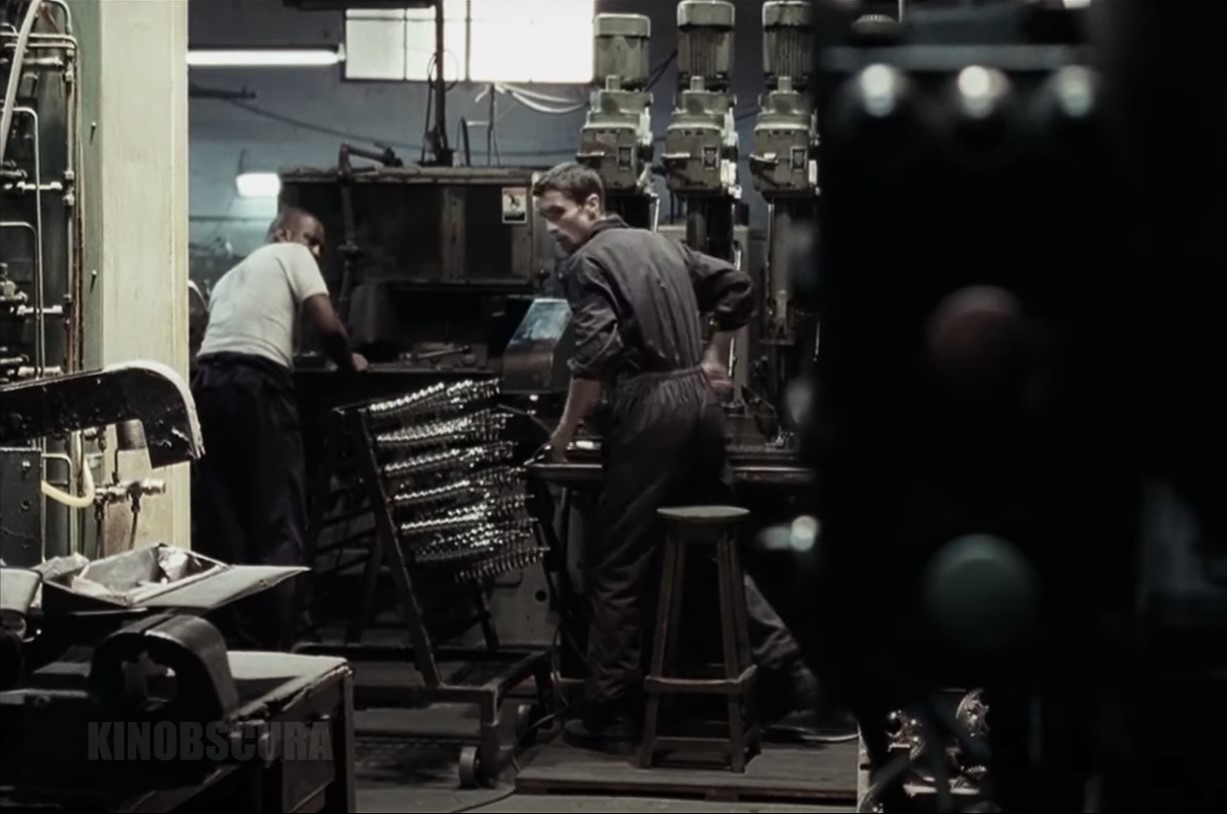
When was the last time you were in a shop, even a very small one, and didn’t see anyone utilizing their personal protection equipment? For me, it’s been a VERY long time. Having the right PPE is so important we actually published a checklist for technicians. However, you can watch every single shop-scene in this movie and not see a single set of safety glasses or hearing protection. Not even one! Some core scenes in this film are set around injuries that happen, or nearly happen, around production machines. Yet, somehow, nobody chooses to opt for extra PPE, even after they see a coworker gruesomely hurt. I dislike this part of The Machinist the most because it perpetuates a narrative about manufacturing that hasn’t fit the industry appropriately for decades. 
Screenshot of shop with no PPE in sight

Machine Tool Safety

Speaking of those machines, where are the guards? Why so lax on proper procedure? At one point, the main character brings up OSHA workplace standards regarding Lockout/Tagout requirements. Does his supervisor or coworkers appreciate his input? Of course not! Instead, he gets grumbles, snide remarks, and rolled eyes. All because he’s reminding them that there is an industry regulation already in place to prevent exactly the kind of injury that occurs later in the film. First, having spent plenty of time in a shop, I can tell you this attitude is inaccurate. I’ve forgotten LOTO myself a couple times when rushing and, I can promise you, it wasn’t my coworker who was embarrassed when it was brought to my attention. Second, portraying such disregard for such fundamental procedures in a film famed for being “realistic” creates a false sense of accuracy too. This in turn goes on to undermine industry integrity for everyone unfamiliar with production environments. 
 

Environment

The theme of misrepresentation in this movie continues when you consider the physical environment of the shop itself. The Machinist is a dark and dirty movie, so it’s understandable that cinematographers chose to reflect that with the shop set they created. Understandable but sadly still a totally inaccurate representation of most modern machining facilities today. In a post-Kaizen, Six Sigma-focused industry the “standard” shop is now much different. Well lit, well ventilated, and clean is now the norm for everything from the machine to the shop floor. Part of the reason that the skills gap even exists in the trades is because media continues to portray the industry with such dated imagery. 
 

Workforce Attitude 

Another contributor to our current labor supply problem in manufacturing has a lot to do with the perceived attitude of our workforce. People in blue collar roles are commonly shown to be unwelcoming, unhelpful bullies. 

Man motioning decapitation at main character

Members of younger generations entering the workforce today are a product of an education system full of anti-bullying policies and they are unwilling to tolerate the idea of something else in their workplace. Movies like The Machinist add fuel to this fire making potential machinists and fabricators think that all their coworkers will be rude, uncaring jerks just waiting for a chance to retaliate. This is most unfortunate of all the film’s missteps because those of us already working in and around the trades know the opposite to be true. Namely, these aren’t our father’s factories we’re working in or their colleagues we’re working alongside. Rather, machinists today work in facilities using the most modern tools, processes, environments, procedures, AND mentalities. 

That’s why The Machinist is a terrible movie for machinists. If this article still makes you want to watch the film yourself, it’s currently streaming on Amazon Prime. Whether you’ve seen it already or not, I hope it also makes you watch it differently than you would have otherwise. Our industry needs more thoughtful consideration about how we’re represented and how we represent ourselves. Got another movie you think is terrible (or wonderful) to watch for people in the trades? We’d love to hear about it. Send suggestions to our Writing Team and maybe you’ll hear what we think about it in a future review.

The start of the next school year is just around the corner. Anyone with a TV or a smartphone knows that. We see lots of articles and lists about what is best and worst for students to buy or use. Most of this information is aimed at the traditional K-12 or college student. What about those getting ready to start technical or vocational programs? They are still going to school and have many of the same needs and concerns any student does. However, those preparing for technical careers need to consider additional requirements due to the specific demands of their program or the physical environment of their lab (shop). The following recommendations are sure to help anyone training for the trades to show up on day one just a little more prepared. 

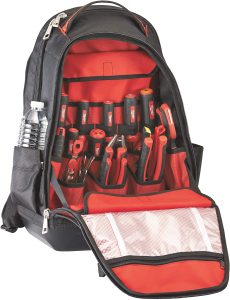
  1. Backpack Every student needs a backpack but students in technical and trades programs need a backpack that can carry tools and hold up to the elements. There are many great options on the market, depending on your needs and tools. Some can get expensive though and price is still a consideration for those just beginning a career. This tool backpack from Milwaukee is the best combo of features, quality, and price you’ll find on the market. And it even has a padded sleeve for your laptop!
    Milwaukee Backpack
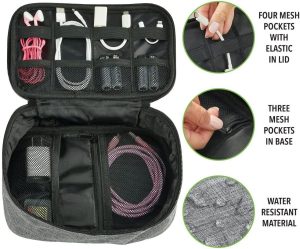
  2. Tech Organizer Technical education and technology go hand in hand, so keeping wires untangled is a major concern. The modern student has an ever-growing collection of gadgets, chargers, and cables. Organizers are a great way to keep such things protected and easily accessible. A quick Google search can reveal a lot of options for organizers. Bigger is normally better, especially if you must carry a brick charger for your computer, but slimmer is easier to store. Also, while durability is almost always a concern in the trades, a pouch like this will normally be stored within another bag. This means you can feel free to opt for a cheaper option when you have the choice. A great middle ground selection is this one from mDesign. 
    Tech Organizer
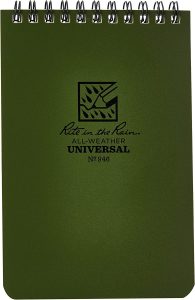
  3. Pen & Paper When you start a technical training program, you’ll spend plenty of time in the classroom. You’ll also find yourself in the shop or the elements frequently. This means your writing equipment needs to function in all conditions. There are plenty of pricey choices available but there are inexpensive options out there that still perform their best when the weather is at its worst. Consider this paired trio from my personal collection, a Rite in the Rain weatherproof notebook and a Zebra F-701 loaded with a Fisher Space Pen refill. The notebook won’t get damaged if you spill on it and will retain its shape even in your pocket. The pen is sturdy and runs pressurized ink cartridges, like Fishers, but costs much less than other options. Combining these items allows you to write in wet conditions, upside down, even in space (seriously, that’s why they call them Space Pens) so you’re sure your notes will always outlast the conditions. 
    Weather Proof Notepad
  4. Post-Its Speaking of writing, if you want to leave a note around the site or your shop you want it to be seen. Post-It notes are great for this but don’t always love the dust, grease, dirt, and grime of many environments. 3M fixed this when they released Post-It Extreme Notes. These will work indoors or outdoors. They’re water-resistant, have 100x the holding power vs the originals, and they’ll still attach/detach without leaving residue.
    Post-It Extremes
  5. Network Everything you learn in a technical program will be important. But, just like anything else in life, what you know generally matters less than who you know. It’s essential that the modern tradesman starts building their network as soon as they start building their tool collection. This network of instructors, co-students, friends, family, and people connected to your school or trade will not only help you prepare for your first job, it’s very possible your network may be what leads you to that first job or the next. I’ve previously covered an easy way anyone can build their professional network using just 10 minutes a day. Read about my 30-day LinkedIn Challenge to learn more. 

I hope you found these recommendations helpful. If you’d like some help choosing other equipment like lunchboxes or building your tool collection, you should check those blogs out as well! And remember, we’re always looking for ideas. If you have one for a future review or list, please send it to our Writing Team and we’ll be sure to cover it in a future article. 

Personnel Management Group Inc. 

7/25/2022 


PMG, Inc. Announces Rebrand to FlexTrades 

PMG built our reputation on the flexibility of our skilled trades technicians and the solutions they help us provide to the American manufacturing industry. Now we want that flexibility to be evident from the first time you hear our name – FlexTrades! 


Minneapolis, MN July 25, 2022. PMG, Inc., a premier traveling workforce solutions provider serving companies across all industries of manufacturing, announced today that it has completed a major rebranding. This rebrand will allow the company to more clearly represent who they are and what they do while also reflecting the flexibility of the solutions they offer clients and the employment they provide their skilled tradespeople. 

Established in 2004, PMG is a leader in deploying skilled industrial and engineering talent to clients in need of creative solutions to address production gaps. PMG leans on its nationwide workforce while managing all associated details, big and small, to deliver the right talent match for each client project. The rebranding to FlexTrades is comprehensive across all platforms. A new logo, colors, documents, branded materials, and website will launch in coordination with the name change.  

While much of what they “look like” will change along with the name – nothing else will. FlexTrades will continue to provide the same highly skilled resources they always have to production-focused facilities across the nation with the same level of service and satisfaction their clients and technicians alike have come to expect. 

“Our name and logo may be changing,” said Dave Jacobsen, FlexTrades CEO & Founder, “but what we do and how we do it won’t change in the slightest. The mission of PMG is to make a difference every day through its impact on American production. That will continue to be the FlexTrades mission today, tomorrow and into the future.” 

Visit www.flextrades.com to explore the new website, brand, logo and more to learn how FlexTrades can make a difference for you. 

About FlexTrades 

FlexTrades is a premier traveling workforce solutions provider offering bespoke services to manufacturing, logistics and distribution companies across all sectors of the industry coast to coast. Established in 2004, FlexTrades is a leader in deploying skilled industrial and engineering talent to client facilities experiencing production shortfalls, skill gaps or operational backlogs. FlexTrades leverages its vast network of skilled trade technicians while seamlessly handling all travel logistics, administration, and personnel management to ensure the right talent for each project. The FlexTrades mission is to make a difference every day through its impact on American production. The success of this commitment is evident in the thousands of individuals annually provided with work that matters and by the ever-growing satisfaction of clients, technicians, corporate team members, partners, and communities. 

Media Contact: 

Josh Erickson 

Public Relations & Engagement Specialist 

jerickson@pmgservices.com 

952-693-2801

This week Americans celebrated the 246th birthday of our country. We wanted to pile on by celebrating ten of the greatest inventions the U.S. has contributed to the world. Some are big, some are simple, but each one made life a little easier, a little faster, or a whole lot better. Here are our picks, in no particular order.

Bread Slicing Machine

America may not have invented sliced bread, but the bread slicing machine was all ours. Otto Frederick Rodwedder, a jeweler from Iowa, spent more than a decade perfecting his design. It finally hit commercial production in 1928 and changed the way we eat forever. To this day, every new innovation is still compared to the “best thing since sliced bread.”

The Internet

In 1969, researchers working for the U.S. Advanced Research Projects Agency sent the first host-to-host message between UCLA and Stanford. That single data packet was the start of something massive. Today, more than half the world is online, and the internet adds trillions to the global economy every year.

Global Positioning System (GPS)

Approved by the Department of Defense in 1973, GPS was designed to synthesize the best elements of existing satellite navigation systems. It became fully operational in 1993 and has changed the way we navigate — on land, sea, and air — ever since.

Post-It Notes

Thanks to a happy lab accident by 3M chemist Spencer Silver, and a clever idea from his colleague Art Fry, the Post-It Note was born in 1974. Originally used to mark hymnal pages during choir practice, it went on to revolutionize how we leave reminders, plan meetings, and stick grocery lists to the fridge.

The Telephone

Scottish-born Alexander Graham Bell was living in Massachusetts when he patented the electric telephone in 1876. Three days later, he made the first phone call: “Mr. Watson – come here – I want you.” With that, the world got a little smaller, and communication changed forever.

The Airplane

Bicycle mechanics Wilbur and Orville Wright were obsessed with flight. On December 17, 1903, in Kitty Hawk, North Carolina, they launched the first successful powered aircraft. Every plane since has borrowed from the core principles they proved that day.

The Light Bulb

While many contributed to the invention of electric light, Thomas Edison is credited for creating the first fully functional and commercially viable light bulb in 1879. His system changed how — and when — the world worked, slept, and gathered. It quite literally lit the path to modern life.

Interchangeable Parts

Before mass production, everything was made by hand. Eli Whitney changed that by developing interchangeable parts, a system he proved in the early 1800s with a government contract for 10,000 muskets. The idea paved the way for the assembly line and modern manufacturing as we know it.

Plastic

European chemists made the first plastics, but it was American inventor Charles Goodyear who unlocked their potential. He patented the vulcanization process in 1844, allowing plastics to become durable and commercially viable. Every industry we know today — from packaging to medicine — has been reshaped by plastic.

Moving Pictures

In 1890, William Dickson, an assistant to Thomas Edison, introduced the Kinetograph, one of the first motion picture cameras. By 1892, he’d helped create the Kinetoscope, the world’s first movie projector. Two years later, America began public screenings, launching a storytelling industry that would dominate the globe for more than a century. 

If you’re a CNC Programmer or working toward becoming one, you’ve likely heard the name Mastercam. It’s one of the most well-known computer-aided manufacturing (CAM) software tools on the market. While there are several CAM platforms available, Mastercam has built a reputation as the industry standard — not necessarily because it’s the best in every category, but because it’s the most widely used.

As of 2020, Mastercam boasted more than 274,000 installed seats in manufacturing. Its closest competitor? Just under 150,000. That kind of market share doesn’t happen by accident.

So how did Mastercam get here? And why is it such a dominant force in the CNC world?

One Tool for Every Machine

One of Mastercam’s biggest advantages is versatility. It can be used to program a broad range of machines, including:

  • CNC mills
  • Lathes
  • Routers
  • Mill-turns and multi-axis systems
  • Wire EDM

For shops that run multiple machine types, having a universal CAM platform streamlines training, programming, and integration. That flexibility makes it a favorite across industries — from aerospace to automotive to medical devices.

The Leading CAM Package in Education

Mastercam isn’t just dominant on the shop floor. It’s also the number one CAM software used in technical education programs across the country.

As of 2020, there were nearly 143,000 installed seats in schools, compared to fewer than 75,000 for the next closest option. That means most students entering the CNC field are already familiar with Mastercam before they even start their first job.

This early exposure helps fuel its dominance in industry. It also makes Mastercam a smart skill to learn for anyone entering the trade.

A Long History in Manufacturing

Mastercam was founded in 1983, making it one of the first PC-based CAM platforms available to manufacturers. It began as a 2D tool and evolved over time into a full-featured 3D CAD/CAM package.

With nearly four decades of development, Mastercam has had time to fine-tune its features, improve compatibility with CNC equipment, and build a loyal base of users and educators alike.

That kind of longevity builds trust — and trust matters when you’re running million-dollar machines with high-stakes tolerances.

Want to Learn Mastercam?

If you’re serious about becoming a CNC Programmer, Mastercam is a valuable tool to know. You can check with your local trade or technical school for in-person training opportunities. Many programs offer hands-on learning with Mastercam as part of their curriculum.

Prefer to learn at your own pace? Explore Titans of CNC Academy, a free online platform created by Titan Gilroy. It’s an outstanding resource for CAD/CAM and CNC machine training, built for real-world manufacturing needs.

May is the month of flowers. Blooms burst in every color, painting landscapes in bright contrast to April’s gray skies. But here in Minnesota, we’re just as proud of another kind of flour — the kind that helped build an industry and shape a city.

In celebration of the season, we’re looking back at the history of flour milling — from its ancient roots to its peak in the Twin Cities, and where the industry stands today.

First Tools, First Grains

Humans started making tools nearly 250,000 years ago, but those early creations were mostly for hunting and survival. It wasn’t until around 10,000 to 15,000 years ago that we turned our focus to agriculture.

Grain, unlike meat or produce, was easier to store and transport. That made it perfect for trade — and perfect for early cities.

The trick was in the milling.

To make grain digestible, early societies learned to grind it using stones. Even 6,700 years ago, people were milling wheat between stones to remove the bran and germ, leaving the endosperm to become flour.

Early Innovations in Milling

  • Ancient Egyptians used saddle stones
  • Greeks developed hopper-fed “hourglass mills”
  • Romans introduced water power around 100 B.C.

Through the centuries, mills improved by harnessing new sources of energy — from humans and animals to windmills and waterwheels. Sifting systems became more advanced. By the 19th century, mills were adopting gears, belts, and roller systems to move grain faster and produce purer flour.

One key figure in this shift was American inventor Oliver Evans, who designed the first continuous milling system. His work introduced bucket elevators, screw conveyors, and sifters into a single seamless process — the first real automation of its kind.

Milling Moves to the Midwest

As the U.S. expanded westward, so did its agricultural and industrial base. With new rail lines, barge access, and cheap land for growing wheat, the center of U.S. flour production migrated west.

By the late 1800s, Minneapolis had all the ingredients to become the new flour capital:

  • Proximity to wheat-growing regions
  • Reliable river power
  • Rapid rail expansion
  • A workforce hungry for opportunity

At the same time, a “New Process” of milling was changing the game. It used Canadian hard wheat, milled slowly between wider-spaced stones, to produce better flour more efficiently.

Edmund La Croix and the Minnesota Advantage

One of the biggest breakthroughs in modern milling came from Minnesotan Edmund La Croix, who invented the middlings purifier in 1865.

His innovation separated the finest parts of the wheat more effectively, dramatically improving flour quality. It helped Minneapolis mills produce flour that could compete with — and beat — European brands in quality.

By 1870, the average mill could extract 72% flour from grain, compared to just 28% in millfeed. Milling had officially become one of the first fully automated industries.

The Rise of the “Mill City”

By 1880, Minneapolis had overtaken St. Louis as the nation’s top flour producer. In that year alone, the city produced 2 million barrels. By 1910, that number had climbed to 15.4 million barrels, earning Minneapolis the title “Flour-Milling Capital of the World.”

World War I drove even more demand. In 1916, Minneapolis mills produced 18.5 million barrels, more than 20% of all U.S. flour.

Three companies dominated:

  • Washburn-Crosby (Gold Medal Flour)
  • Pillsbury
  • Northwestern Consolidated Milling

Pillsbury’s “A” Mill was the largest in the world, producing 12,000 barrels per day.

By 1928, Washburn-Crosby had become General Mills, and in 2001, it acquired Pillsbury — uniting Minnesota’s two biggest flour producers under one roof.

Flour Today: Global Competition, Local Legacy

While Minneapolis is no longer the flour capital, its influence remains. The ruins of the original Washburn Mill, destroyed in an explosion in 1878, still stand today near the Mill City Museum, complete with the iconic Gold Medal Flour sign.

Globally, countries like China, India, and Russia now lead wheat production. The U.S. ranks fourth in milled flour exports, behind Turkey, Kazakhstan, and Germany.

Want More?

If this article gave you something to chew on, check out our post on how fireworks are made. Or watch this video to see modern flour production in action.

Got a question about how something is made? Send it to the FlexTrades Writing Team and we’ll cover it in a future blog. 

In our house, May the 4th isn’t just another day — it’s an unofficial holiday. We celebrate it every year with full enthusiasm, and if you’re a Star Wars fan, you probably do too.

Whether you lean Jedi or Sith, we hope you take a moment today to suit up in something galactic — a well-worn tee, a cozy Chewbacca robe, some Leia buns, or maybe even a full-on Jar Jar Binks mask (if you dare).

The Force runs strong with us — and so do the lessons from a galaxy far, far away.

Workplace Wisdom from the Star Wars Universe

Believe it or not, the Star Wars saga isn’t just about lightsabers and droids. It’s packed with wisdom that feels surprisingly relevant to our everyday work here at FlexTrades.

Here are a few of our favorite quotes and how they show up on the job:

“The greatest teacher, failure is.” – Yoda
Even when a project doesn’t go as planned, there’s always something to learn. That’s how great technicians grow.

“You’re going to find that many of the truths we cling to depend greatly on our own point of view.” – Obi-Wan Kenobi
Perspective matters. On the road or in the shop, staying open to different ideas often leads to the best outcomes.

“Remember, concentrate on the moment. Feel – don’t think. Use your instincts.” – Qui-Gon Jinn
Good tradespeople trust their training and stay present. That instinct — backed by experience — often makes the difference.

“Compassion, which I would define as unconditional love, is essential to a Jedi’s life. So, you might say that we are encouraged to love.” – Anakin Skywalker
Caring about your work, your coworkers, and your community isn’t weakness. It’s strength.

Share Your Star Wars Spirit

We want to see how you’re celebrating May the 4th Be With You! Whether you’re repping the light side or the dark side, show us your look.

Post your pictures on our Facebook page and tag us. Bonus points for matching family outfits, themed snacks, or a solid Wookiee impression.

And Until Next Time…

Whether you’re flying solo or working as a team, May the Force be with you —  today and every day.

Work/life balance matters — we’ve even hosted a webinar about it. But for those who travel for work, especially in the skilled trades, striking that balance isn’t always easy. Some of our FlexTrades technicians are on the road for weeks or even months at a time. That level of travel comes with real challenges, especially for anyone with kids, families, or responsibilities waiting back home.

So how do you make it work?

We asked our most experienced traveling professionals, and here’s what they had to say. Whether you’re new to the road or a seasoned road warrior, these tips can help you find your own version of balance.

Before the Project: Set the Stage

Communicate Clearly

  • Talk with your project manager about job expectations, timelines, and challenges
  • Keep your family informed about your location, schedule, and availability
  • Be proactive about updates. If your flight gets delayed, let people know — don’t leave them wondering

Use a Calendar

  • Request time off early for important dates like weddings, graduations, or concerts
  • Even if you can’t attend an event in person, you can still follow up and ask about it
  • Put family milestones on your calendar so you don’t forget to check in

Plan for Home Coverage

  • Who handles emergencies while you’re gone?
  • Who’s feeding the dog, checking the mail, or watering the garden?
  • Plan ahead and have a backup for every critical task

During the Project: Stay Connected

Use Technology to Your Advantage

FaceTime. Zoom. Snapchat. Whatever the platform, use it.

A nightly call still goes a long way, but real-time updates, shared photos, and group messages can make miles feel shorter.

One FlexTrades technician said his family stays connected through a shared Snapchat group with his four daughters. “It lets me stay involved on their schedule, not just mine.”

Stay Involved from Afar

  • Ask your spouse or friend to livestream a game or concert
  • Use apps like Zoom or Houseparty for family game nights
  • Help with homework, celebrate wins, or just chat — even from a hotel room

Share the Trip

Send a photo of something interesting. Buy a souvenir. Bring back something small — a shell, a postcard, even hotel shampoo. These tokens remind your loved ones that they’re still part of your journey.

Some FlexTrades techs even have family or friends visit during longer assignments. It’s a great way to make the job feel more like home — even for a weekend.

After the Project: Reconnect and Reflect

Debrief and Improve

  • Spend your first night back simply reconnecting
  • The next night, talk through what worked and what didn’t
  • Make a plan for how you’ll handle things better next time

Write it down so it doesn’t get forgotten in the rush of the next trip.

Use Your Perks

You’ve earned rewards — use them.

  • Got hotel or airline points? Book a trip with your family
  • Have extra gear or swag from a project? Bring it home for your kids

When the benefits of your travel are shared, the time away gets a little easier to accept.

Embrace Imbalance

There’s no such thing as a perfect 50/50 balance between work and life.

As one of our technicians said:

“Ninety days on the road and thirty days at home might seem out of balance, but when I’m home, I’m 100% there. I take the kids to school. I volunteer. I do projects. I make that time count.”

Sometimes balance isn’t about the day or the week. It’s about the season. What matters most is being intentional with the time you have — wherever you are.

Want More?

If this helped you think about work/life balance differently, check out our Road Warrior Webinar to learn more about what life is really like as a traveling technician with FlexTrades.

Still have questions? Or maybe you have a blog idea you want us to cover? Send your thoughts to the FlexTrades Writing Team — we’d love to hear from you.

April is the month of showers — we all know they bring May flowers. But have you ever thought about the showers that keep us smelling fresh all year round?

Roughly two out of three Americans shower every day. But it hasn’t always been that way.

The history of the modern shower is long, winding, and surprisingly global. From waterfalls to water heaters, here’s how we got here.

From Rivers to Rome: The Origins of Showering

Early humans cleaned themselves in streams, waterfalls, rain, and any natural water source they could find. As communities formed, the systems evolved.

  • The ancient Egyptians created ceramic jugs to mimic the feel of cascading water
  • The Greeks developed piping systems to move water where it was needed
  • The Romans brought the concept of hygiene to the masses, building public bathhouses across their empire

When Rome fell, the infrastructure crumbled with it. Medieval Europe lost access to Roman engineering, and the public bathhouse culture disappeared in many places.

Despite popular belief, hygiene didn’t vanish during the Dark Ages — but the systems that supported it did.

The Invention of the Shower

Fast forward to the 18th century, when interest in personal hygiene came back into focus. In 1767, William Feetham, a London stove maker, patented what is recognized as the first modern shower.

It wasn’t perfect.

  • It pumped cold water to a basin overhead
  • It dumped reused water on the user’s head
  • It wasn’t exactly refreshing

But it was a start.

By 1810, inventors added heated water. By 1850, modern plumbing was back in action — solving the whole “recycled water” issue and setting the stage for what we now recognize as a real shower.

Showers Gain Popularity

Throughout the 19th and early 20th centuries, showers grew in popularity, especially in England and the U.S. But the bathtub still reigned supreme until the 1980s, when showers took over as the go-to option in most households.

That’s when the customization boom began. Shower heads, body jets, built-in lighting — all became part of a new era in home design. The growth hasn’t stopped since.

The Shower Industry Today

The global market for bath and shower products is now worth nearly $50 billion a year.

It’s driven by more than just hygiene. Today’s consumers care about:

  • Efficiency – modern showerheads use significantly less water than bathtubs
  • Sustainability – water-saving technologies and eco-conscious materials
  • Experience – from rainfall heads to digital temperature control

In fact, a 10-minute shower today can use up to four times less water than a typical bath. That means getting clean doesn’t have to mean wasting water.

Curious for More?

If this kind of thing interests you, check out our post on the history of foundries to see how another everyday process evolved. Or, for something a little more modern, watch this video on how showerheads and hoses are mass-produced today.

And remember, the next time a question hits you in the shower, we’d love to help answer it. Send your ideas to writingteam@flextrades.com and we just might feature it in a future blog.