Attention Travel Technicians: Homemade Gift Guide 

Put a homemade twist on gifts during the holidays with this homemade gift guide. Check out these affordable and quick gifts to send to your loved ones. 

For the Foodies

Soup In a Jar 

Grab your favorite dry ingredients and place them in a mason jar! Tie a ribbon with a written recipe attached to add that personal touch. Need ideas? Check here. 

The Cookie Jar 

cookie jar

Find your family’s favorite box of cookie mix and toppings at your local store. Place them into a mason jar and add a bow to the lid. For inspiration, click my two personal favorites Chocolate Chip Cookie Mix, and Peppermint Cookie Mix. 

S’mores Please 

smores mix 

Missing the warm summer and anxiously waiting for bonfire season? The wait is over, this recipe will get you there! You’ll need chocolate of your choice, marshmallows, and golden grahams. More information is available here. 

Kiss A Day Jar 

kisses in a jar 

Fill a jar with desired candy, find a chalk painter marker, or print out a label. This can say “A Kiss A Day While I’m Away” or use it as a countdown jar to help your loved ones visualize the time. Here is an example: Kiss Jar. 


For the family

Hand Warmers/ Mini Heat Packs 

homemade hand warmers

Create these microwavable crafts with rice and fabric. Turn small fabric squares from your craft store into a thoughtful gift. This is a great gift for adults and children. Click here for instructions. 

Bubble Bath Gift Bag/Box 

bubble bath 

Find travel size bubble bath items, bath bombs, loofas and/or towels. For children, add small bath toys! There are plenty of fun ways to add excitement to this gift and it’s perfect for all ages. Find inspiration here. 

Relaxation/Sensory Box

homemade relaxation gift box 

For this gift, think of items that relax your loved one. Do they enjoy a specific beverage, snack, or hobby? Find items to place together in a box with tissue paper. For children, make a sensory box. Grab a few small toys, model magic, and stickers to create a magical experience. Need a little help? Here it is! 

Memory/Adventure Box

homemade gift adventure box 

Shutterfly offers free photo prints for new app users. Order prints with memories or adventures you’d like to share and grab a shadowbox from your local craft store. Or even send supplies for the family to create one to share with you when you return! Memory Box Tips. 


A little something extra

personal picture with kids at Christmas 

Change your holiday tradition with family at home. Target and Walmart have family onesie sets. Hulu offers a Watch Party feature, that allows multiple screens to watch the same movie or show together. Set up your webcam and enjoy this new memory! 

Are you away from home during the holidays? Read about these holiday tips to help get through this time of year.

Not Home for the Holidays

You don’t have to look hard during this time of year to realize the holidays are upon us. City streets are decorated, store windows are full of gift ideas, and seasonal music is omnipresent. For most of us, even if this isn’t our idea of ’the most wonderful time of the year,’ it’s a time of joy and nostalgia. But there’s a large portion of the population that the rest of us forget about during this season – those who can’t get home. While most are at home, millions of people around the world are working so that we can celebrate.

From flight attendants and emergency workers to our own FlexTrades technicians keeping the wheels of industry turning through seasonal spikes, there are a lot of people missing time with their families. We want all of you in that position to know we appreciate you a lot! But we also realize that all the recognition in the world doesn’t make such a sacrifice any less lonely. Therefore, we turned to our travel-work experts for some tips on how to make sure you don’t feel alone just because you’re spending this holiday away from home.

Holiday Tips for When You’re Away from Home

Communicate

The number one rule of family planning is communication and that goes double for holiday schedules. Once your shift is solidified, the first thing you should do is let your family know. There are a lot of ways to make alternate seasonal plans, but most are not very realistic at the last minute. It sounds simple, but often the best answers are exactly that. If you know you’re going to miss a party or tradition, talk about it asap. You’ll be surprised how creative your family can get.

Decorate

Whether you’re in an office or on the shop floor, you might not be able to go home for the holidays, but that doesn’t mean you can’t bring some of it to you. Christmas lights, a mini-tree, or a singing reindeer are easy ways to surround yourself with some seasonal items. You can even level-up this step into a simple group activity by involving coworkers or others with a ’project’ such as setting ten minutes aside for everybody to cut out a paper snowflake for their station. Do you have a cherished tree ornament at home? Bring it with you on the road so you’re not leaving all your nostalgia behind. Even wearing a work uniform doesn’t have to be a dealbreaker. If you can’t wear that Santa hat or Grinch shirt, try wearing a themed lanyard or safety glasses with decorated frames!

Technology

Technology can be a stressor in life, especially during the holidays, but it can also be a day (or even a season) saver. Video calling and messaging apps, like FaceTime, have already changed the roadwork experience for many FlexTrades technicians. You don’t have to be on the road to also benefit from these technologies though. Even if you’re just missing a New Year’s Eve party for a single shift, using FaceTime and a well-timed break can make sure you’re still there with the people that matter to you when the ball drops. There are lots of other technologies that can help with this too. One that we love is using the group watch function of your favorite streaming platform to share a classic holiday film with your friends and family, no matter where you all are around the globe! Using VR goggle could make it even more exciting but does require a few extra steps.

Redefine Family

Working over the holidays, especially on the road, can be a team effort. It could make sense to celebrate those holidays with your work team. Little things like group caroling competitions or gift exchanges can add a lot of fun to seasonal work. Those little things make it easier to focus on the big stuff too, like making sure your teammates know just how much you appreciate them. Shared appreciation is always a good thing!

Volunteer

Do you feel bad about something you’re missing this season? The best way to feel good is to do good. If you can’t make it home for the holidays, then do something to make where you’re at feel homier. Church groups, charitable associations, and community organizations put a big emphasis on holiday projects, and they can always use extra hands! There are many online platforms, like VolunteerMatch, that make it easy to find opportunities to help, no matter where you find yourself around America. A great side benefit to volunteering for the road warrior crowd is that it doubles as networking for the out-of-towner too. Doing good and meeting good people is a win/win in any season!

Other Ideas

We hope this list gives ideas of how to make the most of this holiday season away from home. If you have other tips, we’d love to hear them! Send them to our Writing Team. We’ll do our best to cover them in future posts.

Do you want to give yourself a gift that keeps on giving all year? Check out our blog page to catch up on other advice about working away from home.

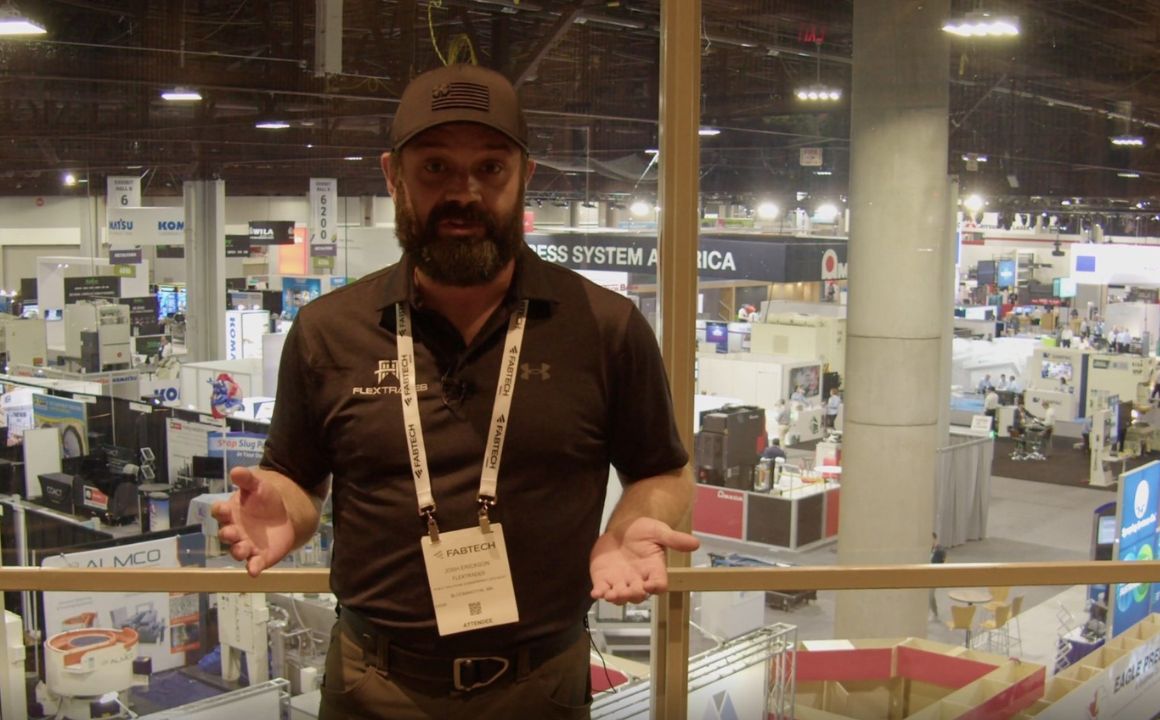
FABTECH is the North American metal fabricating industry’s premier event every year. It is run in partnership by some of the biggest trade associations in the sector. The intent of the show is to bring buyers and sellers into a convenient venue to conduct business, make connections, share ideas, AND learn. The event occurs annually in the US rotating between Chicago, Atlanta, and Las Vegas. An identical event takes place in Mexico annually on a rotation between Monterrey and Mexico City. FABTECH Canada is a biennial event exclusive to Toronto. You can learn more about FABTECH at your convenience. FlexTrades was in Atlanta for the entire event last week. We wanted to share some of our biggest takeaways with you. 


Automation 

Lead times were such a giant part of so many conversations at FABTECH 2022 that they almost got their own place on this list. The concern with how to deal with long lead times from suppliers and reduce lead times for customers is one of many primary drivers for the prevalence of automation at FABTECH this year. From reducing injuries to improving workflows to increasing efficiency, it seems most exhibitors and attendees consider a robot or cobot to be at least a partial solution for their problems. Automation of every kind was on abundant display. This great highlight video does a fantastic job of showing you as many of them as possible in 90 seconds! 


Sustainability 

It’s no secret that consumer taste is changing. No longer is it enough to deliver the best product or the best price. The market has evolved. Manufacturers still need to deliver on quality and price point, but people buy for the story now too. At least part of that story has become focused on sustainability. Mainly, end users want to know how you’re improving the environment of your facility for employees and how you’re maintaining the environment for your communities and consumers. FABTECH 2022 taught us that producers who don’t already have a focus on sustainability need to develop one quickly or they’ll be left behind. Meanwhile, companies who have been early adopters of processes with an ESG and sustainability focus are already reaping the benefits. 


Safety 

We’ve been saying for years that today’s facilities are no longer our fathers factories. The image of the dark, dirty, dangerous facility that news reels from the 50s and 60s accustomed us to are just no longer accurate. That doesn’t mean our current workforce doesn’t want manufacturers to continue to move the line forward regarding safety. Filtration systems to improve air quality, lighting advances to improve visibility, lift assist systems of all kinds, and even drones to inspect confined spaces were evident in displays or conversations at FABTECH this year. This prevalence indicates that an improved safety focus is something that all generations currently represented in the workforce agree upon. COVID protocols and practices brought safety front of mind for all of us (finally), and that’s here to stay. 


3D Printing 

Recent studies tell us that a full third of manufacturers are putting additive manufacturing on their short lists for investment. FABTECH 2022 echoed these findings in a big way. Additive was everywhere across this year’s expo. There were new powders to create metals, new machines to layer them, and everything in between. This expo made a point of teaching the industry that additive processes are much more than just 3D printing these days. 


Workforce 

The lack of available talent in the skilled trades pipeline to manufacturing was as big a topic as it has been in recent years. That has traditionally been a huge driver for interest in automation. This year, especially among keynote speaker panels, we’ve heard a bigger emphasis placed on the role we play as employers in developing the workforce. These presentations are intended to make deciders across the industry aware that younger employees want the same things previous generations wanted. Millennial and Gen Z jobseekers are just willing to ask for it up front, and they’re capable of doing their own research to know if your competition is offering it. Panelist Will Healy III put it best when he said, “If you’re hiring a welder for $15 base rate and you offer full benefits but McDonalds down the street is hiring people for $15 base rate and full benefits AND a free cheeseburger at lunch – what you’re really competing with is a cheeseburger. You need to think differently and bring more to the table than the competition if you want to win.” 


Next FABTECH 

The next FABTECH happens in Mexico this coming March. But we don’t want you to wait until then to see and learn more! If you found this content interesting and informative, we put out new industry content all the time. Check out our YouTube page for yet to be released interviews we captured in Atlanta. You can always follow FlexTrades on your social media platform of choice or check out our blog page to make sure you don’t miss out. And, of course, if you have other ideas for topics you’d like to know more about, or questions for FlexTrades, just send them to our Writing Team and we’ll be happy to cover them in a future article or video.

Candy Corn, that’s right, let’s talk about it. 

The sweet treat that divides the nation remains a mystery to the masses. Today, we’re going to tackle a few questions and figure out what candy corn is, how it’s created, and most importantly – where it goes after Halloween. 

Candy Corn Ingredients 

Candy corn has four main ingredients: 

  1. A “slurry” (as they call it) is similar to a buttercream. This is created with vanilla and sugars. 
  2. Food coloring is used to individually color each layer with yellow and red dyes. 
  3. The surprise ingredient – (and my personal favorite) marshmallow! Marshmallows are broken down into the slurry to create the light and fluffy texture of the candy corn itself. 
  4. Lastly, the confectioner’s glaze. This is made of honey, gelatin, sesame oil, sugar and salt. 

The Process 

The slurry is taken from a large industrial mixer and placed into three different containers; each container holds a designated layer of the candy corn: yellow, orange, and white.  This container continues to mix the solution so that the slurry maintains the same consistency.  

Wooden trays are dusted with dry cornstarch and then loaded onto the belt where each layer then fills the candy corn imprints. Due to the liquid nature of the material, there is no wait time in-between. Each layer is immediately placed on top of the other to dry. 

Each wooden tray holds 1300 corn pieces, and the machinery can produce 25 boards per minute! 

Once this process is complete and the candy corn is fully formed, they’re tossed into a rotating bin. In this rotating bin, technicians then toss the confectioner’s glaze onto the candy corn pieces until they’re evenly coated. The drying and coating process can take 4-5 days to complete.

Alright, so where does it go? 

Whether you love candy corn and are eager to find it year-round, or you can’t wait for candy corn to leave the shelves, you must wonder where the leftovers go. 


Last year, 35 million pounds of candy corn was produced across the United States. Only 70% of all candy corn is effectively sold before Halloween. Where does it all go then? 


We did some digging. 

Despite popular belief, “the trash” isn’t the main answer. 

In fact, the answer may surprise you. 


Once Halloween concludes, candy corn sales resume. The day after Halloween, candy corn is wiped from the shelves for highly discounted prices, and resellers will snatch up the leftovers. 


Candy corn stays fresh, if unopened, for around nine months! In fact, you can find candy corn year-round with online retailers like Amazon.  


Well, there you have it! This sweet treat has many layers – from its creation in the 1880s to mimic corn kernels for industrial times, to secret ingredients like marshmallows folded in to guarantee its shape. While candy corn is consumed by many year-round, Halloween is simply the best time to grab them in-store! 

This year, October 11 marks the 10th anniversary of the International Day of the Girl Child. The United Nations General Assembly declared this day by adopting Resolution 66/170 in 2011. The intention is to recognize the rights of girls around the world and bring awareness to the unique challenges they face daily. Much progress has been made globally in the last decade but the disparity, between boys and girls, in access to basic human rights is still shocking when you check the numbers. 

How to get involved 

The UN has several suggestions for activists and advocates who want to help the continued advancement of this movement. Among them are to engage government officials, public policy makers, key influencers across industries, and all other stakeholders to make more targeted investments to address inequalities experienced by girls everywhere. Another suggestion they make is to share human interest stories, blogs, and videos of girl change-makers to amplify their impact on others.  


You can find more suggestions on UNICEF’s website or check out YouTube for stories about girl influencers such as Malala Yousafzai too. But, as a man in a family of mostly women, I’d like to recognize this day by sharing the story of the girl change-makers in my life with all of you. I hope reading this makes you want to publicly share a story of your own to recognize the powerful girls in your own life and to help grow this movement for them. 


My Girls 

I’ve written a blog before about the role my aunts and uncles played in my formation and the way becoming an uncle to my nieces changed my life. But I don’t mention in that article how my nieces have changed my perspective of what girls can do. Now, to be clear, I’m not a misogynistic person and I’ve never been accused of being one. I was raised in a family where my grandma, and then my mother, called most of the shots and it never felt strange or especially progressive to anybody. Many other families like ours were very similar. I learned early and often that all women are deserving of respect.  


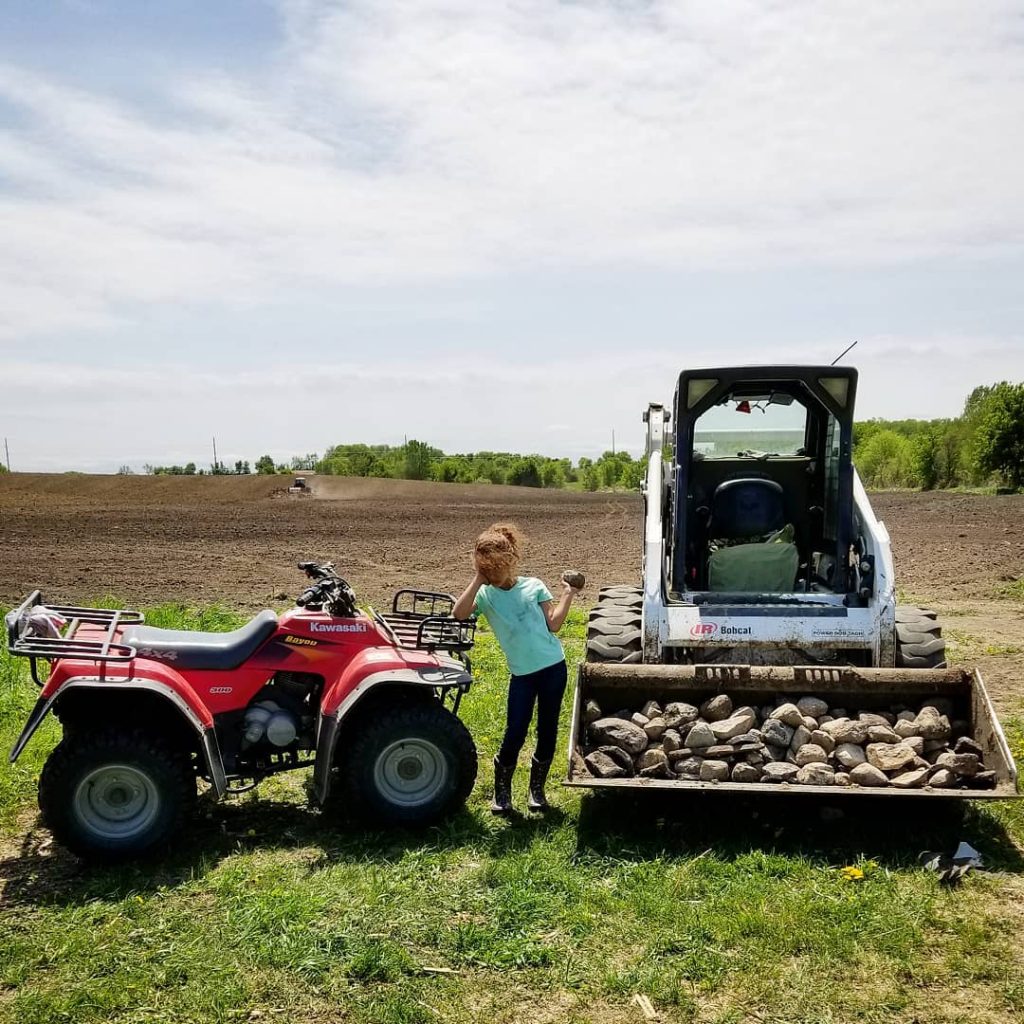
But growing up on a farm, I was always taught that I should do the “heavy, hard” things to spare my grandmother, mother, sister, and cousins (all girls) from the most physical of tasks. This attitude towards division of labor never seemed particularly biased to me until years after my childhood when my father started to age. As dad got older and his physical capabilities began to erode, I began to realize that he just couldn’t do some of the things I needed him to do anymore. Things came to a head one day when I needed help in the field and my dad couldn’t get out of bed, let alone into a skid steer. Luckily, my youngest niece was available and that became the first day she operated equipment solo. She was 7.

Iani by rocks piled in a skid standing by an ATV

Since then, both of my nieces have learned how to use tools, pick sweetcorn, handle livestock, get the Christmas tree for grandma each year, and many other things I never expected them to need to learn. 

Their abilities have been proven many more times over the years, especially in the last one. Since my dad passed away last October, I rely on them more than ever now. But they never cease to surprise me. Even when my mom’s mailbox was hit recently, they didn’t need me. Instead, they took care of grandma together.

Girls at the beach

Today, I no longer even ask my girls if they can do something. The concept that they can’t has completely left my consideration. Now, I simply ask them if they will do something and then I watch them do it even better than I can. Girls can do that, or so I’ve learned. It stopped surprising me years ago.

I hope you’ve learned more about International Day of the Girl Child, or at least been led to think about it, than you would have without this article. We’ve done blogs on other national and international days that you might like learning more about too. Check them out on our blog page. And, of course, if you have other resume tips or questions just send them to our Writing Team and we’ll be happy to cover them in a future article.

I’m a big advocate for the skilled trades in general, and manufacturing specifically. I spend a lot of time and energy to get in front of the next generation of our workforce at high schools, technical colleges, military reintegration units, and other vocational training programs around America. Whenever I’m lucky enough to be granted access to such a program, I obviously spend some time speaking about the opportunities to work at FlexTrades and passing along the tribal knowledge I’ve picked up over the decades that I’ve found to be critical to success in any industry. But I’m always surprised how much time I spend answering questions about the skilled trades themselves.  

It reinforces to me how poorly those of us within the trades have marketed ourselves over the past half-century. But these questions are also an important reminder for me to remember that people outside of our industries don’t have the knowledge that insiders do. Because of this, it’s important to be able to speak to the basics – especially when talking to younger audiences. With this in mind, I’d like to share 10 of the questions I most commonly get about the trades (and how I answer them) with all of you. 


1) I’m not mechanically inclined or into working with my hands. Is there an opportunity for me to work in the skilled trades? 

There is an opportunity in the trades for everyone, regardless of what their natural aptitudes may be. First, being mechanically inclined is important but the continuing development of tools and technology make that less of a necessity every day. To be clear, you’ll still need to use tools to work in a hands-on position. I’m just saying those tools get easier to use well and require less expertise to do so all the time. This means the industry is trying to make itself more welcoming for all skill levels. But let’s say you are one of those people that just isn’t capable of that kind of work. There’s still a home for you in the trades! From sales to HR to project management to design to administration, trades-oriented companies need all the peripheral and support skills that any other company needs. Don’t ever forget that! 


2) Do I need to go to college to work in the trades? 

Plain and simple, no. This doesn’t mean you can’t, or shouldn’t, just that it’s not a requirement. Whether working in construction, agriculture, or manufacturing, I have worked with individuals who followed all possible paths to success. They may look different, but they lead to the same place. If school isn’t for you and you need to get to work, starting in an entry-level position with a company that provides lots of on-the-job training and plentiful advancement opportunities can be a great way to grow your career. If you have a passion for a particular trade or a firm idea of what path into trades work you want to follow, going to the right local vocational program can be a wonderful option to start. Maybe a four-year degree experience is what you want. That doesn’t mean we don’t need you in the trades! Business, communications, engineering, design, and management majors are just a few of the degree paths that are still much in demand at companies across the trades. 


3) What is the best program to take to get a job in the trades? 

The best program to take is the one that fits your interests, skills, and schedule the best. That’s the easy answer. The more complex answer is that it depends on where you’re from and where you’re going. This means that the same school can have programs that are much different when it comes to the quality of their training or the quality of their network. The network can be just as important as the training, because even the best training doesn’t do you much good if nobody is trying to hire graduates from your program. You should also keep this thought in mind when considering local demand for talent. If a school has a great welding program but your desired geographical area has few welding or fabrication shops, you may still struggle to get hired even with excellent skills. All of this means the more homework you do before selecting a program, the less hustling you’ll have to do to get hired after completing it. 


4) I want to be an entrepreneur and run my own business. How does a goal like that fit in the trades? 

In short, perfectly! There are well over 250,000 manufacturers, and close to 500,000 construction companies, in just the United States. The vast majority (well over 75% in any given year) are considered to be mid- or small-sized companies. More than half of them employ 20 people or less. This means that most companies employing tradespeople are technically small startups owned and operated by entrepreneurs, and most of them came to that place by starting in bottom rung roles not by pursuing a degree in entrepreneurship or significant amounts of venture capital first. All these numbers add up to one inescapable fact, there isn’t an industry that is more inclined to upward mobility or entrepreneurial growth than the skilled trades. 


5) I don’t have many tools. How does a person start a skilled trade career without their own tools? 

By working for a company that doesn’t require you to provide them. This may sound simple but that’s because it is. There are barriers to employment in any industry. The expense of tools can be a big one in the trades. But not every company requires you to provide your own and many that do will provide assistance with your purchases. Tools can be a complicator, but the right research can make sure they’re not a deal breaker. 


6) I come from a small town without a lot of employment opportunities locally. How do I get started in the skilled trades? 

Maybe you start your own company. Maybe you temporarily relocate to begin your career so you can start building experience. Or maybe you come work for FlexTrades. We have projects all around America where your skills are in demand. Whether you’re just starting your career, or well along your career path, we have opportunities for you. Almost all of our work requires travel, but you’ll never have to permanently relocate, and you can homebase from anywhere across the country. If this sounds like you, check out our available openings now! 


7) Is it hard to start a career in the skilled trades? 

No. People interested in starting are very much in demand and there are many ways in which they can begin. Entry level work with a local company, apprenticeship programs through companies or unions, associates degrees from vocational schools, condensed training programs, military service – all these paths can lead you to a successful career in the trades. You just need to pick the one that’s right for you and then stay on it! 


8) Are there opportunities to grow my career once I get started in the trades? 

Of course! Just like any company, there are many ways you can job up. Seniority can get you better pay or more responsibility at some companies. Continuing education or ongoing certification can help you advance at others. Experience alone can help push you up the ladder since knowing the ins and outs of a company often gives internal candidates a leg up on the competition when it comes to new openings and advancement opportunities. The only thing that really can hold your career growth back in the skilled trades is your personal ambition or creativity. 


9) Will I make as much money as a “white collar” job? 

Most likely? Yes! While top earners in any one trade may not make what top earners in certain “white collar” fields make (think surgeons compared to great welders) when talking about the “average” worker it’s not even close. There is too much variation in annual average and median incomes, based on location, for me to start quoting them now. What I’ll say is that, wherever you live around the US, do a quick internet search using these phrases “median (insert skilled trade of choice, such as Welder) income for (insert your local zip code) compared to other occupations”. I promise your results will be surprising. 


10) What trade is most in-demand? 

That answer varies significantly with geography. For example, injection-mold operators are a lot more likely to be in demand somewhere that has many aviation or automotive manufacturers because they do a lot of injection-molding. However, I tend to encourage people to pursue maintenance careers when they know they want to work in the trades but aren’t sure which trade. Why? Because no matter what changes occur with equipment we use or how we use it, somebody will always be needed to troubleshoot, maintain, and repair that equipment. Maintenance is a great trades career for a lot of reasons but job security like that is one of the big ones. 


More FAQs 

I hope you found value in this list and that you’re more prepared to advocate for careers in the skilled trades in the future. If you’d like more answers, check out our blog page to see other questions we’ve covered in the past. Got a question or answer of your own to share? We’d love to help you do that! Send them to our Writing Team and we’ll be happy to share them in a future blog.


As the seasons change and life begins to settle in, we often think we need a change of scenery ourselves. Fall is one of the most popular times for job opportunities to arise. So here are some tips from our technicians on how to fall into place with your new position successfully. 


 Be Prepared  

  • Check out your new job site on Google Maps, familiarize yourself with the area. What local stores are nearby? Gas Stations? Convenience stores? Can you find parking?  
  • Pack your essentials the night before and get plenty of sleep! Starting your new assignment well-rested will help you succeed! 


The First Impression 

  • Review your orientation schedule and job aids. 
  • Get to know you supervisors by engaging in conversation and asking questions. 
  • Carry a pen and notebook with you, jot down notes during the day! 


Become a Networking Guru 

  • Introduce yourself to your coworkers, learn about their interests, you can even add them to your LinkedIn network! 
  • Be mindful of suggestions within the workplace – constructive criticism can help you grow in your field. 


Take A Deep Breath 

  • Remember that this is just the beginning of your transition. Adjustment takes time! 
  • Confidence is key, perform your best! 

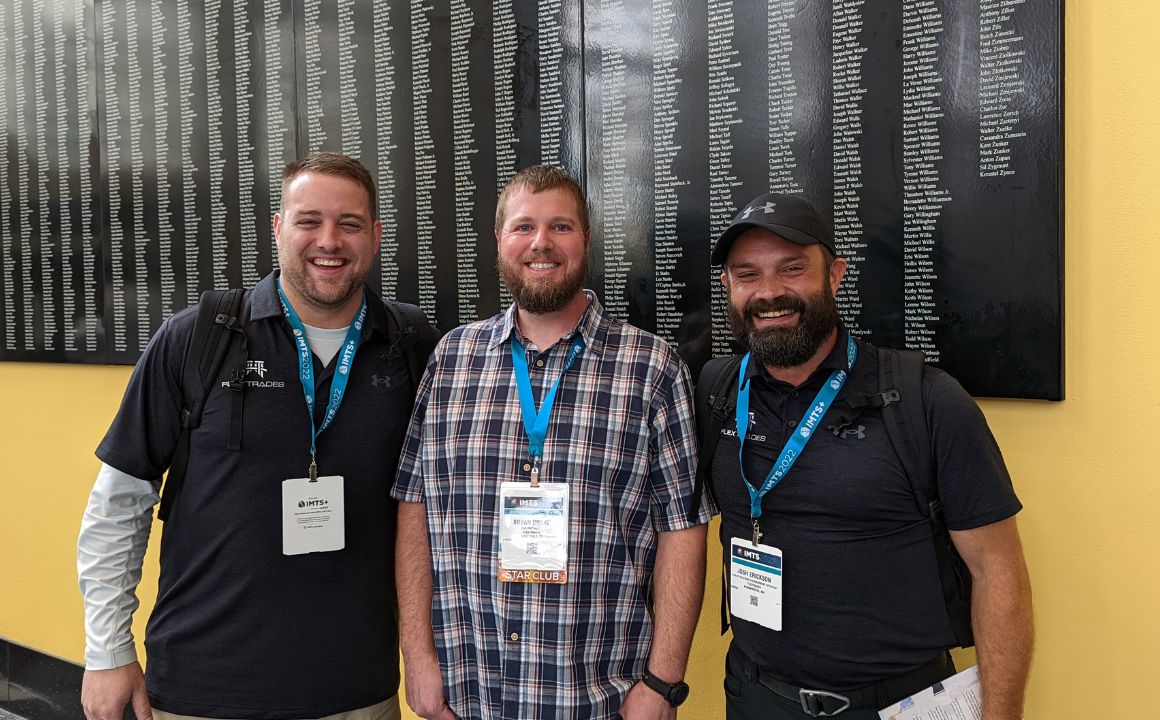
The International Manufacturing Technology Show (IMTS) occurs in Chicago every two years. It is normally one of the biggest events worldwide in all of manufacturing but, after a 4-year gap due to COVID concerns in 2020, this year was even bigger. IMTS 2022 didn’t just represent a symbolic return to “normal” for our industry or a chance to reconnect with friends and colleagues. Rather, it was a celebration of all we’ve missed in the last couple years AND everything new we get to look forward to in the years to come. FlexTrades was there last week, and we had so many amazing experiences, interactions, and takeaways that we can’t possibly share them all. However, we do have some highlights we want to make sure you didn’t miss. 

By the numbers 

IMTS, even for veteran attendees, is overwhelming. It takes up all McCormick Place, the largest convention center in North America, and an entire week of the calendar. The raw size and scale of the venue and exhibits creates a sense of shock and awe for first time attendees. Meanwhile, the sheer number of people creates not just a crowd but an energy that can be felt physically. A great way to start wrapping your mind around IMTS is to begin with the numbers. 


  • 2.6 million Square feet of exhibit space utilized by vendors and conferences 
  • 1.3 million Square feet taken up by display booths alone 
  • 86,307 Total individuals who attended at least one day this year 
  • 33 Number of times IMTS has been held in Chicago 
  • 2,000+ Total exhibitors displaying products and solutions 
  • 117 Number of countries with exhibitors or visitors in attendance 
  • 57 million Total weight (in pounds) of equipment and material on display 
  • 9 Number of pavilions featuring displays (each a trade show unto itself) for different specialties 
  • 12 Total conferences occurring during the week 
  • 9 Specialty attractions, including a demo of a JET SUIT! 
  • Countless Number of demonstrations, conversations, and ideas that occurred 


By the images 

Words can say a lot about IMTS, but pictures and videos say even more. Here are links to some from the Association of Manufacturing Technology (AMT), the host of IMTS, and FlexTrades. 


T-minus two years 

The star of IMTS 2022 was all of us, our excitement to reconnect, and our hunger to tell the stories of our industry like never before. The increase in media and content creators in attendance was noticeable this year. We expect that number to grow even more by the time IMTS 2024 arrives. But we don’t want you to wait years to see and learn more! If you found this content interesting and informative, we put out new industry content all the time. Follow FlexTrades on your social media platform of choice or check out our blog page to make sure you don’t miss out. And, of course, if you have other ideas for topics you’d like to know more about, or questions for FlexTrades, just send them to our Writing Team and we’ll be happy to cover them in a future article or video.  

This week was National Payroll Week which is observed in recognition of all employees and the payroll professionals who pay them. These groups are put together because they collectively handle, report, contribute or otherwise touch 70% of the US Treasury’s annual revenue. Wow! In honor of the week, we asked our accounting department what they think your accounting department wants you to know. We learned 5 big things from them. 

Regularly Review Your Pay Stub 

This is not only to ensure your pay is accurate either. Things to review include other pay items such as deductions and taxes. 

Please be sure to send any updates, changes, or information as soon as possible. There is processing time between when information is received to funds being paid, and this will help ensure timely inclusion in payroll. 

Make Sure to Keep Them Updated 

Please be sure to send any updates, changes or information as soon as possible. There is processing time between when information is received to funds being paid, and this will help ensure timely inclusion in payroll. 

It’s Just Math 

“Accountants aren’t any more qualified than you to divvy up the bill at a restaurant.” Bring a calculator and figure out the tip yourself. You’ve got this. 

Fun Fact 

The most common pay frequency in the U.S. is biweekly, which is used by 37 percent of private businesses. Surprisingly, weekly beats semimonthly as a runner-up at 32 percent. 

More Tips & Tricks 

I hope you found value in this list. If you’d like to learn more about your accounting department, give them a call or email and I bet you’ll be glad you did. If you’d like more lists check out our blog page to see more. Did we miss something about accounting that you’d like to share? We’d love to help you do that! Send to our Writing Team and we’ll be happy to share them in a future blog. Stay cool and be safe this summer!

September is International Update Your Resume Month. Most careers require a resume as part of consideration for employment but too often people try to write a resume at the last minute. Since a well-done resume takes time and research to create, the last minute is the worst time for jobseekers to make one. Making this month the perfect reminder to get YOUR resume ready for the next unexpected opportunity to pop up. With that in mind, here are some tips to help you craft a resume that work for you rather than against! 

Honesty is the best policy 

According to a recent CareerBuilder survey, 1 in 4 hiring managers spend less than 30 seconds reviewing a resume but 75% of them have still caught a lie while doing so, leading them to not follow up with that candidate. This means that honesty is your best policy when applying for a job. Not only because it can hold you back but because you’re not setting yourself up for future success even if you do get a call back! 

Proof(reading) is in the pudding 

“You’re not hiring me to write so why does my resume matter?” I hear that all the time from those working more technical roles, like machinists and welders. But, in the era of online applications and telephone interviews, even for the technical trades your resume matters more than ever today. Why? Because a hiring manager sees your resume before they ever see you or your work, making it your best opportunity to put your most (or least) professional foot forward first. Thus, proofing for proper grammar, punctuation, and spelling help subconsciously reflect your strengths like thoroughness, attention to detail, and willingness to take the extra step. 

Be specific and detailed 

If nobody has told you yet, everyone in a hiring position uses resume-reading programs. If your resume is found on an online platform it’s found because it contained certain keywords that were used as search terms. This means that even the right experience can be missed by hiring managers if it’s not being represented by the words and phrases they’re using to search for candidates. How then does a jobseeker succeed? By using this knowledge to their advantage when writing their resume. For example, if you’re a welder looking to highlight your TIG (GTAW) welding experience a quick Google search will show you that kind of welding is searched for most commonly as ‘TIG’ or ‘GTAW’. Therefore, you should make sure to use both terms within your resume and you should avoid other punctuation marks like hyphens or backslashes. If you do so, more eyeballs will see your resume, and you’ll get more interview requests and job offers as a result. 

References: Professional vs Personal 

When asked to provide references most of us generally submit the people that know us best because they are the ones most likely to say good things about us. But remember, no matter how good, or true, the things your friends and former coworkers have to say about you are it doesn’t make them a professional reference. A truly professional reference is not just somebody that knows you or someone you’ve work with before. Rather it is somebody you’ve worked FOR (shift leads, supervisors, foremen, trainers, etc.) because those are the kind of references that can speak about you as a technician, person, coworker, AND employee. When you have a reference like that to make sure you have good contact information for them and give them a heads up you’ve used them as a reference. This last part is important. Make sure they reliably respond to outreach, because even the best reference in the world doesn’t do you any good if they don’t answer when called. 


I hope these tips encourage you to update your own resume and, hopefully, make doing so a little easier. If you’d like to find other ways to celebrate International Update Your Resume Day, there are many more options on the web. We’ve done blogs on other topics jobseekers might find helpful, interview tips. Check them out on our blog page. And, of course, if you have other resume tips or questions just send them to our Writing Team and we’ll be happy to cover them in a future article.