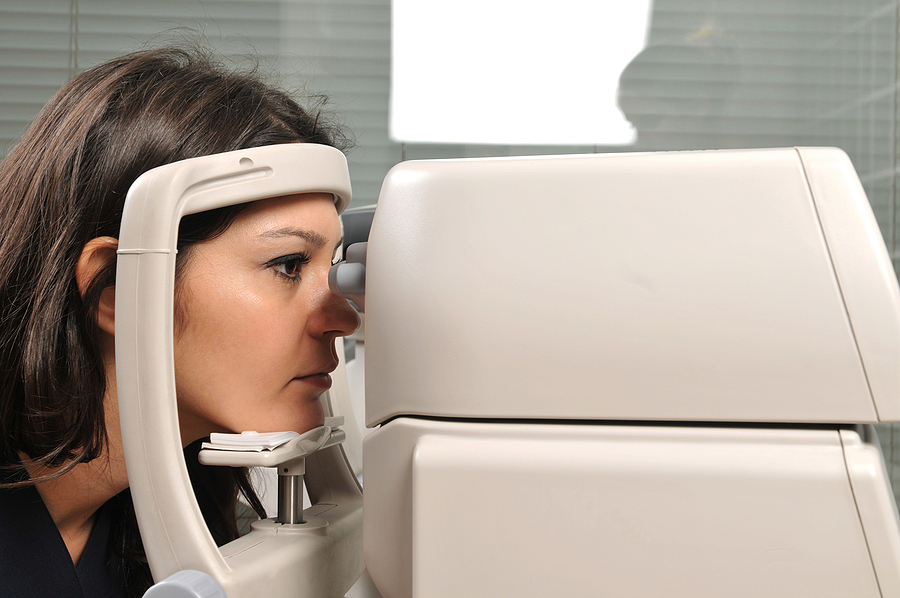
Your eyes: 2 things you are probably taking for granted, simply assuming they will always be happy and healthy without having to put much effort into maintaining their health. In reality, taking care of your eyes so you are able to see those beautiful great grandbabies of yours when you are in your 80’s does take a little work, but I promise it is worth the effort!

Below are just a few reasons why you should take advantage of that vision insurance you have been paying for and not utilizing:

  1. Suffering from headaches? Ever thought it might be related to eye strain? It’s certainly worth seeing someone so they can help pinpoint the problem (or eliminate that concern).

  2. Grades suffering at school? According to Optometry Times, ‘one out of every four children have vision problems.’ If you are like me, your kids complained about not seeing the white board for months before you took their concerns seriously and realized maybe they weren’t just begging for attention. Make sure your child sees an eye doctor annually so learning or reading difficulties related to eyesight can be recognized/diagnosed early.

  3. Things looking fuzzy? Your eyes are constantly changing and those glasses you have been wearing since high school (20 years ago) may be back in style, but those lenses are in desperate need of an update! Get your eyes checked so you can determine if an update is needed (they’ll probably even set you up with some new lenses to pop into those funky old frames if you are not willing to let go quite yet).horn rim eyeglasses sittin on top of an exam chart forground sharp and background soft

  4. Stop it early! Having an annual eye exam is a great opportunity to have a professional look at the overall health of your eyes, even when you are not showing any symptoms or concern. Optometrists can detect eye diseases early in hopes of preventing serious damage.

  5. Concerns about other common health issues? Having an optometrist peek at your peepers allows them the chance to check for the onset of many other diseases or diagnosis, including diabetes, high blood pressure, and high cholesterol. Who knew?

If you are a FlexTrades employee, you have access to affordable vision insurance! Be sure to take advantage of your eye exams annually and get those green/brown/blue/hazel beauties the attention they so desperately deserve.

Did you know that FlexTrades has an entire behind the scenes safety team!? It’s called “Safety First”. FlexTrades’ #1 priority is to keep our people safe on and off the job!

“Safety matters because you matter” – Brenda Lovitz, FlexTrades’ Safety Manager.

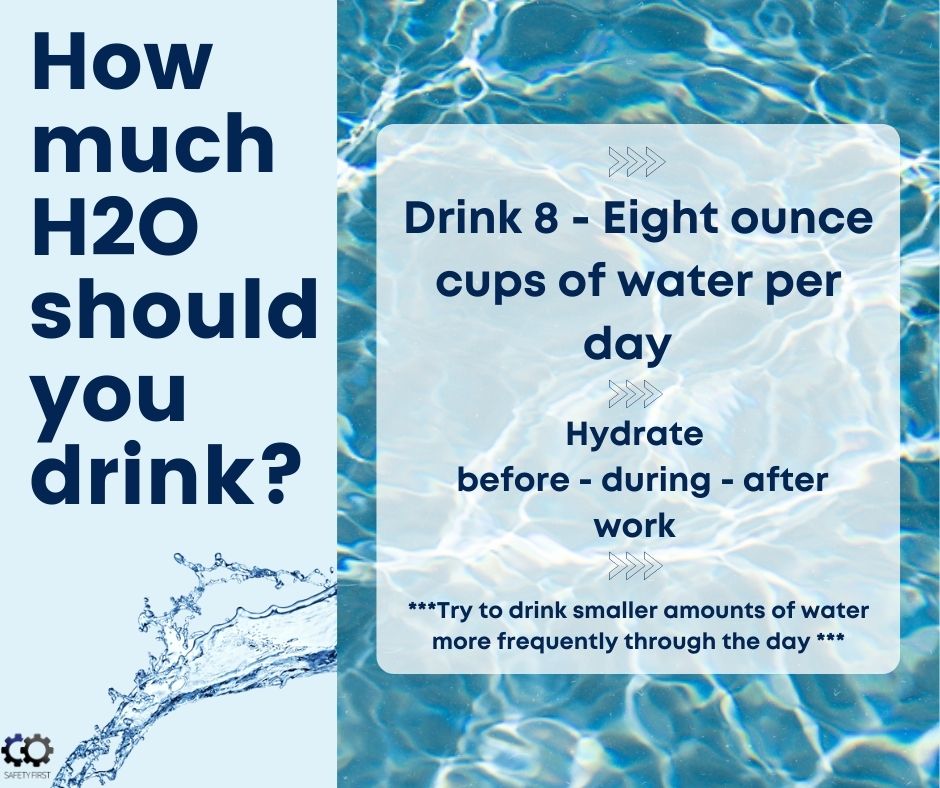
We have been bringing awareness to the importance of staying hydrated. All across the United States the temperatures have been HOT this summer.

Here are some tips on how to stay hydrated:

  • Drink water throughout the day… attempt 8-10 ounces every 1-2 hours. Drinking water at shorter intervals is more effective than drinking large amounts infrequently.
  • If you are working in the heat… you will require more water consumption.
  • Try to avoid… energy drinks, surplus of caffeine, or any alcohol. If you do choose to consume any of these, you will require more water consumption to stay hydrated.
  • Eat regular meals through the day… this will help you retain the salt that you lose when sweating and moving around.
  • Carry a water bottle with you… having this with you will make it easier to drink water.

Infographic about how much water you should drink

Safety First is what FlexTrades Plans, Practices and Prioritizes.


This week Americans celebrated the 246th birthday of our country. We wanted to pile on by celebrating ten of the greatest inventions the U.S. has contributed to the world. Some are big, some are simple, but each one made life a little easier, a little faster, or a whole lot better. Here are our picks, in no particular order.

Bread Slicing Machine

America may not have invented sliced bread, but the bread slicing machine was all ours. Otto Frederick Rodwedder, a jeweler from Iowa, spent more than a decade perfecting his design. It finally hit commercial production in 1928 and changed the way we eat forever. To this day, every new innovation is still compared to the “best thing since sliced bread.”

The Internet

In 1969, researchers working for the U.S. Advanced Research Projects Agency sent the first host-to-host message between UCLA and Stanford. That single data packet was the start of something massive. Today, more than half the world is online, and the internet adds trillions to the global economy every year.

Global Positioning System (GPS)

Approved by the Department of Defense in 1973, GPS was designed to synthesize the best elements of existing satellite navigation systems. It became fully operational in 1993 and has changed the way we navigate — on land, sea, and air — ever since.

Post-It Notes

Thanks to a happy lab accident by 3M chemist Spencer Silver, and a clever idea from his colleague Art Fry, the Post-It Note was born in 1974. Originally used to mark hymnal pages during choir practice, it went on to revolutionize how we leave reminders, plan meetings, and stick grocery lists to the fridge.

The Telephone

Scottish-born Alexander Graham Bell was living in Massachusetts when he patented the electric telephone in 1876. Three days later, he made the first phone call: “Mr. Watson – come here – I want you.” With that, the world got a little smaller, and communication changed forever.

The Airplane

Bicycle mechanics Wilbur and Orville Wright were obsessed with flight. On December 17, 1903, in Kitty Hawk, North Carolina, they launched the first successful powered aircraft. Every plane since has borrowed from the core principles they proved that day.

The Light Bulb

While many contributed to the invention of electric light, Thomas Edison is credited for creating the first fully functional and commercially viable light bulb in 1879. His system changed how — and when — the world worked, slept, and gathered. It quite literally lit the path to modern life.

Interchangeable Parts

Before mass production, everything was made by hand. Eli Whitney changed that by developing interchangeable parts, a system he proved in the early 1800s with a government contract for 10,000 muskets. The idea paved the way for the assembly line and modern manufacturing as we know it.

Plastic

European chemists made the first plastics, but it was American inventor Charles Goodyear who unlocked their potential. He patented the vulcanization process in 1844, allowing plastics to become durable and commercially viable. Every industry we know today — from packaging to medicine — has been reshaped by plastic.

Moving Pictures

In 1890, William Dickson, an assistant to Thomas Edison, introduced the Kinetograph, one of the first motion picture cameras. By 1892, he’d helped create the Kinetoscope, the world’s first movie projector. Two years later, America began public screenings, launching a storytelling industry that would dominate the globe for more than a century. 

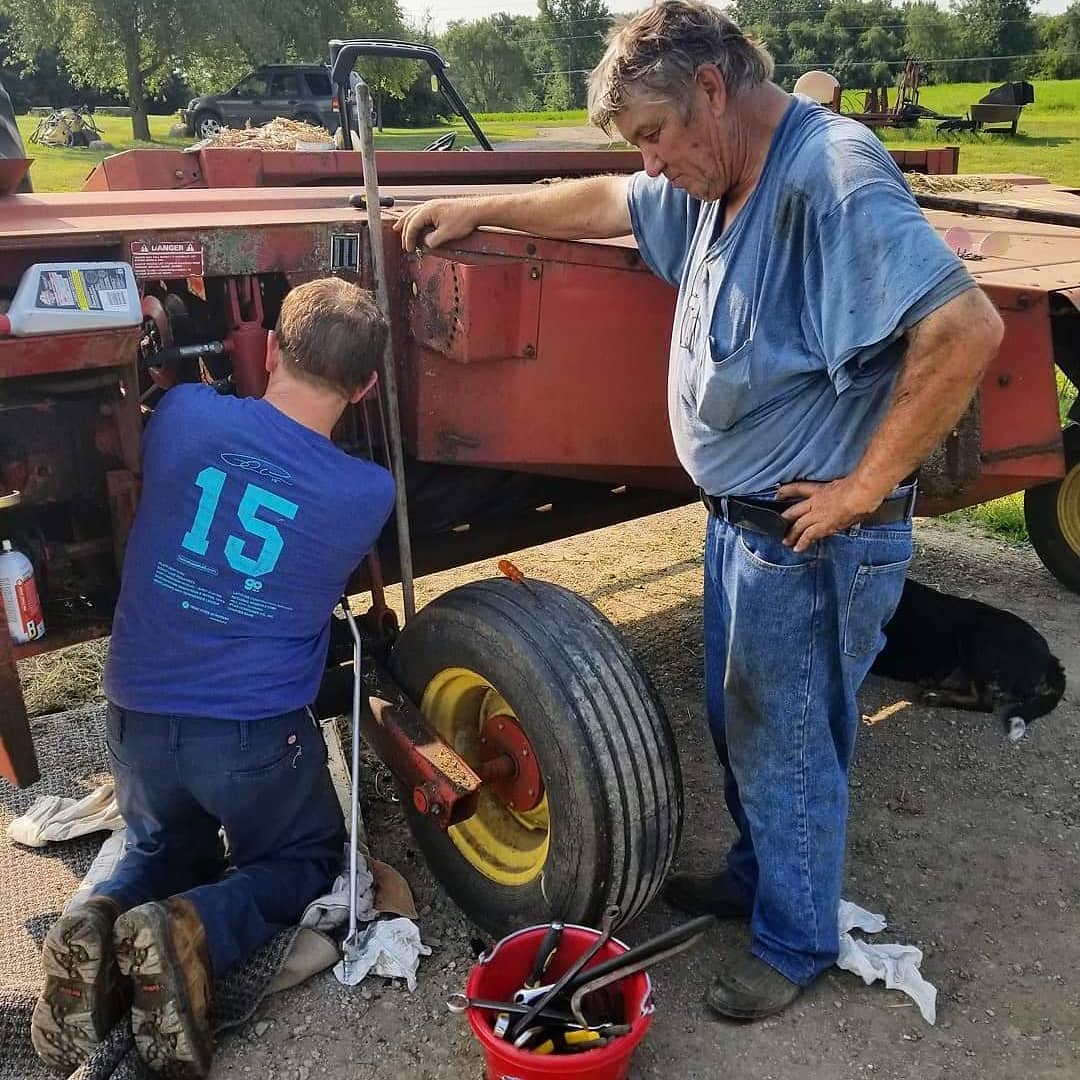
Growing up on a farm, I often felt more like a hired hand than a child when spending time with my father. Whether he was at his off-farm job, presiding over the council as mayor of our little town, attending church board meetings, plowing, planting, serving in the Minnesota National Guard, or responding to emergencies as fire chief – my dad was always working. From as early as I can remember, he expected the same of me too. My father and I never had that “my dad’s my best friend” relationship you see so often on TV. But over the years, we became so much more than father and son. We were each other’s most reliable employee, business partner, adversary, teacher, advocate, student, boss, and champion. He was who I called first when things went wrong, and I was the one who took his calls in a pinch.

No, my dad was never my friend but, for every second of my life, he was my dad. And he was always the best one he could be. He gave me lots of things, so many more than he or I ever realized, to be honest. However, they were hard to define, recognize, and appreciate. At least they were until I started thinking of them as things my father taught me, rather than things he had given me. Several years ago, I shared these thoughts online in the form of a list to honor my dad for Father’s Day. It quickly became an annual tradition and today is, without a doubt, the most popular thing I put on the internet every year.

I lost my dad on Halloween in 2021 and this Father’s Day will be my fifth without a father of my own. In honor of his memory, and in tribute to all of you out there wearing the dad pants as best you can, this year I would like to share my list with you. Dad always knew that we’re all just people raising people. It doesn’t matter if you share blood, name, or a home – you are family if you share love. Whether you made them or not, I promise you’re making them better. Keep it up. It’s worth it.

Without further ado, here is my 11th annual Things My Dad Taught Me (expanded again, of course) post.

Things My Dad Taught Me

  • A person doesn’t have to be brave to act brave, but the result is the same.
  • If you’re not early, you’re late.
  • Chickens always come home to roost. Leaving the door open is on you.
  • You can take the fast way or the long way to get anywhere, but only one gives you something to talk about along the way.
  • Critters are easier to let out than get back in, so mind your gates.
  • The right tool makes all the difference when the job goes wrong.
  • You can tell more about a man by looking at his cattle than by looking at his truck.
  • You must do favors in order to get them.
  • Sometimes how you do a thing is more important than what you’re doing.
  • Mud boots and snow boots are the same, as long as you have enough room for wool socks.
  • The people who answer your call are a direct reflection of the calls you’ve answered.
  • Effort erases a lot of mistakes.
  • Show up. You have to be there to be counted.
  • There are lots of ways to handle a nut, but most work better with a little WD40.
  • Never let a simple answer get in the way of a good story.
  • What people say is rarely what they do, but they’ll remember both for you, so always follow through.
  • Assuming is just a fancy word for guessing.
  • You can borrow money, or you can borrow trouble, but never borrow both.
  • Never wrestle with pigs because you’ll just end up muddy.
  • Both good advice and bad advice can teach you something.
  • Brown Watkins salve, Ben-Gay, and Excedrin can fix most things that are wrong with you.
  • Life is short and time flies, so stop for a Mountain Dew whenever you can.
  • You don’t have to be perfect to be right.
  • If you have to pay to fix it more than once, you should learn to fix it yourself.
  • The opinions of others won’t pay your bills, so don’t save them.
  • Make time to BS. People prefer funny stories when reminiscing.
  • If you leave without a knife, you will wish you hadn’t.
  • Take your time saying goodbye. It might be the last one you get. Make it worth it.

My thanks and admiration to my dad and all the others out there trying their best to teach their children lessons worth learning. Enjoy your day! 

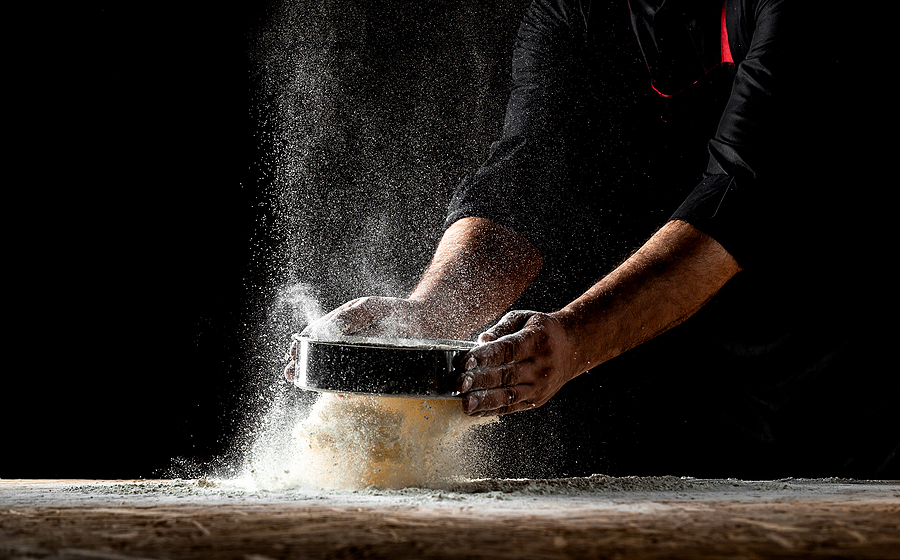
May is the month of flowers. Blooms burst in every color, painting landscapes in bright contrast to April’s gray skies. But here in Minnesota, we’re just as proud of another kind of flour — the kind that helped build an industry and shape a city.

In celebration of the season, we’re looking back at the history of flour milling — from its ancient roots to its peak in the Twin Cities, and where the industry stands today.

First Tools, First Grains

Humans started making tools nearly 250,000 years ago, but those early creations were mostly for hunting and survival. It wasn’t until around 10,000 to 15,000 years ago that we turned our focus to agriculture.

Grain, unlike meat or produce, was easier to store and transport. That made it perfect for trade — and perfect for early cities.

The trick was in the milling.

To make grain digestible, early societies learned to grind it using stones. Even 6,700 years ago, people were milling wheat between stones to remove the bran and germ, leaving the endosperm to become flour.

Early Innovations in Milling

  • Ancient Egyptians used saddle stones
  • Greeks developed hopper-fed “hourglass mills”
  • Romans introduced water power around 100 B.C.

Through the centuries, mills improved by harnessing new sources of energy — from humans and animals to windmills and waterwheels. Sifting systems became more advanced. By the 19th century, mills were adopting gears, belts, and roller systems to move grain faster and produce purer flour.

One key figure in this shift was American inventor Oliver Evans, who designed the first continuous milling system. His work introduced bucket elevators, screw conveyors, and sifters into a single seamless process — the first real automation of its kind.

Milling Moves to the Midwest

As the U.S. expanded westward, so did its agricultural and industrial base. With new rail lines, barge access, and cheap land for growing wheat, the center of U.S. flour production migrated west.

By the late 1800s, Minneapolis had all the ingredients to become the new flour capital:

  • Proximity to wheat-growing regions
  • Reliable river power
  • Rapid rail expansion
  • A workforce hungry for opportunity

At the same time, a “New Process” of milling was changing the game. It used Canadian hard wheat, milled slowly between wider-spaced stones, to produce better flour more efficiently.

Edmund La Croix and the Minnesota Advantage

One of the biggest breakthroughs in modern milling came from Minnesotan Edmund La Croix, who invented the middlings purifier in 1865.

His innovation separated the finest parts of the wheat more effectively, dramatically improving flour quality. It helped Minneapolis mills produce flour that could compete with — and beat — European brands in quality.

By 1870, the average mill could extract 72% flour from grain, compared to just 28% in millfeed. Milling had officially become one of the first fully automated industries.

The Rise of the “Mill City”

By 1880, Minneapolis had overtaken St. Louis as the nation’s top flour producer. In that year alone, the city produced 2 million barrels. By 1910, that number had climbed to 15.4 million barrels, earning Minneapolis the title “Flour-Milling Capital of the World.”

World War I drove even more demand. In 1916, Minneapolis mills produced 18.5 million barrels, more than 20% of all U.S. flour.

Three companies dominated:

  • Washburn-Crosby (Gold Medal Flour)
  • Pillsbury
  • Northwestern Consolidated Milling

Pillsbury’s “A” Mill was the largest in the world, producing 12,000 barrels per day.

By 1928, Washburn-Crosby had become General Mills, and in 2001, it acquired Pillsbury — uniting Minnesota’s two biggest flour producers under one roof.

Flour Today: Global Competition, Local Legacy

While Minneapolis is no longer the flour capital, its influence remains. The ruins of the original Washburn Mill, destroyed in an explosion in 1878, still stand today near the Mill City Museum, complete with the iconic Gold Medal Flour sign.

Globally, countries like China, India, and Russia now lead wheat production. The U.S. ranks fourth in milled flour exports, behind Turkey, Kazakhstan, and Germany.

Want More?

If this article gave you something to chew on, check out our post on how fireworks are made. Or watch this video to see modern flour production in action.

Got a question about how something is made? Send it to the FlexTrades Writing Team and we’ll cover it in a future blog. 

In our house, May the 4th isn’t just another day — it’s an unofficial holiday. We celebrate it every year with full enthusiasm, and if you’re a Star Wars fan, you probably do too.

Whether you lean Jedi or Sith, we hope you take a moment today to suit up in something galactic — a well-worn tee, a cozy Chewbacca robe, some Leia buns, or maybe even a full-on Jar Jar Binks mask (if you dare).

The Force runs strong with us — and so do the lessons from a galaxy far, far away.

Workplace Wisdom from the Star Wars Universe

Believe it or not, the Star Wars saga isn’t just about lightsabers and droids. It’s packed with wisdom that feels surprisingly relevant to our everyday work here at FlexTrades.

Here are a few of our favorite quotes and how they show up on the job:

“The greatest teacher, failure is.” – Yoda
Even when a project doesn’t go as planned, there’s always something to learn. That’s how great technicians grow.

“You’re going to find that many of the truths we cling to depend greatly on our own point of view.” – Obi-Wan Kenobi
Perspective matters. On the road or in the shop, staying open to different ideas often leads to the best outcomes.

“Remember, concentrate on the moment. Feel – don’t think. Use your instincts.” – Qui-Gon Jinn
Good tradespeople trust their training and stay present. That instinct — backed by experience — often makes the difference.

“Compassion, which I would define as unconditional love, is essential to a Jedi’s life. So, you might say that we are encouraged to love.” – Anakin Skywalker
Caring about your work, your coworkers, and your community isn’t weakness. It’s strength.

Share Your Star Wars Spirit

We want to see how you’re celebrating May the 4th Be With You! Whether you’re repping the light side or the dark side, show us your look.

Post your pictures on our Facebook page and tag us. Bonus points for matching family outfits, themed snacks, or a solid Wookiee impression.

And Until Next Time…

Whether you’re flying solo or working as a team, May the Force be with you —  today and every day.

April is the month of showers — we all know they bring May flowers. But have you ever thought about the showers that keep us smelling fresh all year round?

Roughly two out of three Americans shower every day. But it hasn’t always been that way.

The history of the modern shower is long, winding, and surprisingly global. From waterfalls to water heaters, here’s how we got here.

From Rivers to Rome: The Origins of Showering

Early humans cleaned themselves in streams, waterfalls, rain, and any natural water source they could find. As communities formed, the systems evolved.

  • The ancient Egyptians created ceramic jugs to mimic the feel of cascading water
  • The Greeks developed piping systems to move water where it was needed
  • The Romans brought the concept of hygiene to the masses, building public bathhouses across their empire

When Rome fell, the infrastructure crumbled with it. Medieval Europe lost access to Roman engineering, and the public bathhouse culture disappeared in many places.

Despite popular belief, hygiene didn’t vanish during the Dark Ages — but the systems that supported it did.

The Invention of the Shower

Fast forward to the 18th century, when interest in personal hygiene came back into focus. In 1767, William Feetham, a London stove maker, patented what is recognized as the first modern shower.

It wasn’t perfect.

  • It pumped cold water to a basin overhead
  • It dumped reused water on the user’s head
  • It wasn’t exactly refreshing

But it was a start.

By 1810, inventors added heated water. By 1850, modern plumbing was back in action — solving the whole “recycled water” issue and setting the stage for what we now recognize as a real shower.

Showers Gain Popularity

Throughout the 19th and early 20th centuries, showers grew in popularity, especially in England and the U.S. But the bathtub still reigned supreme until the 1980s, when showers took over as the go-to option in most households.

That’s when the customization boom began. Shower heads, body jets, built-in lighting — all became part of a new era in home design. The growth hasn’t stopped since.

The Shower Industry Today

The global market for bath and shower products is now worth nearly $50 billion a year.

It’s driven by more than just hygiene. Today’s consumers care about:

  • Efficiency – modern showerheads use significantly less water than bathtubs
  • Sustainability – water-saving technologies and eco-conscious materials
  • Experience – from rainfall heads to digital temperature control

In fact, a 10-minute shower today can use up to four times less water than a typical bath. That means getting clean doesn’t have to mean wasting water.

Curious for More?

If this kind of thing interests you, check out our post on the history of foundries to see how another everyday process evolved. Or, for something a little more modern, watch this video on how showerheads and hoses are mass-produced today.

And remember, the next time a question hits you in the shower, we’d love to help answer it. Send your ideas to writingteam@flextrades.com and we just might feature it in a future blog. 

FlexTrades works with manufacturers of all kinds — from aerospace and automotive to food production. Some of our clients make frozen pizza. Others make snack cakes, breakfast foods, plant-based proteins, or prepared meals. The point is, we’re all pretty spoiled by the convenience of walking into a grocery store and grabbing whatever we want — frozen, fresh, or refrigerated.

But it wasn’t always like this.

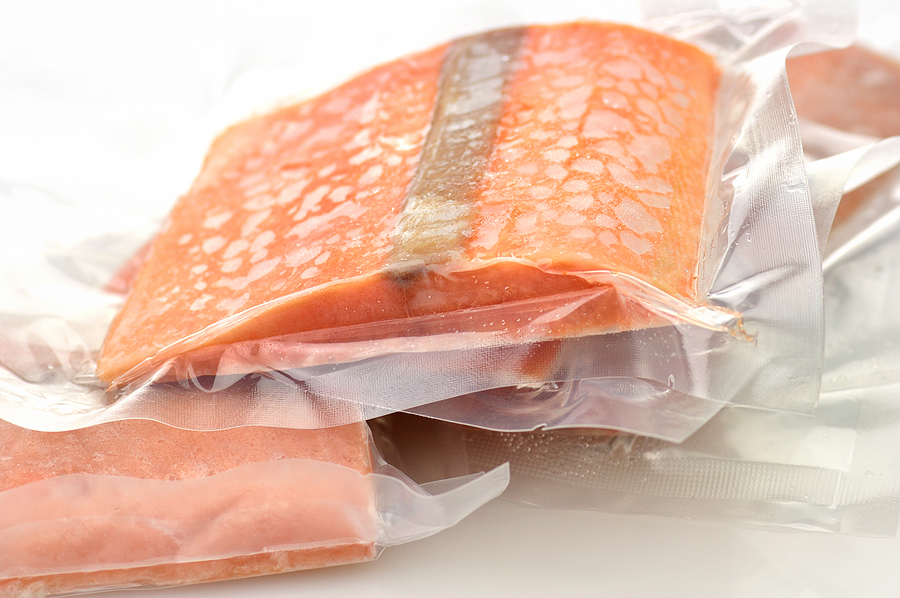
Before the modern freezer, cold food storage meant digging holes in the ground, building underground cellars, or relying on blocks of lake ice stored in ice houses. The result? Slow freezing. That process formed large ice crystals, which caused food to become watery and tasteless once thawed.

Enter: Clarence Birdseye, the man who changed the game.

Clarence Birdseye: The Father of Frozen Foods

Clarence Birdseye got his start not in food, but in fur trading. While working in Canada, he noticed that fish caught by local Inuit froze instantly in the subzero air. Even months later, once thawed, the fish tasted just as fresh.

That moment of observation sparked a theory — fast freezing retains food’s texture and flavor better than slow freezing. Clarence tested his theory and proved it right, not once but twice.

Birdseye’s First Method: Calcium Chloride Brine

In his first innovation, Clarence developed a process using calcium chloride. Here’s how it worked:

  • Packaged food was placed between two metal belts
  • The belts were cooled to between -40°F and -45°F using a calcium chloride solution
  • The food froze almost instantly

This led to his first business — Birdseye Seafood — where he patented his process for freezing and storing fish.

His system included:

  • A refrigerating tank with calcium chloride brine
  • Containers to freeze fish fillets into solid blocks
  • Wax paper packaging for preservation
  • An insulated shipping container, later used in refrigerated railcars and grocery store display cases

Fun fact: Clarence also patented his refrigerated boxcar, laying the groundwork for modern cold-chain logistics.

From Bankruptcy to Breakthrough

Birdseye’s first venture went bankrupt. But he didn’t quit. He sold his and his wife’s life insurance policies and secured investment funding to launch again — this time with General Seafood Corporation in Gloucester, Massachusetts.

There, he developed a second freezing method, and this one stuck.

Birdseye’s Second Method: Ammonia and Innovation

This method used ammonia evaporation instead of calcium chloride. The process:

  • Packaged food was placed between hollow metal plates
  • Ammonia chilled the plates to between -25°F and -40°F
  • Fruits and vegetables froze to 0°F in 30 minutes, meats in 75 to 90 minutes

In 1929, Birdseye sold General Seafood Company — along with his fast-freezing patents — to Postum Cereal Company for $22 million (over $358 million today). Postum changed its name to General Foods Corporation and made Clarence president of its new Birds Eye Frosted Foods division.

Soon after, Birds Eye began rolling out frozen spinach, cherries, meats, and peas. That was just the beginning. Today, Birds Eye makes everything from frozen vegetables and sauced sides to full skillet meals and cauliflower wings.

An Inventor, a Naturalist, and a Relentless Innovator

Birdseye’s story began in Brooklyn in 1886. At age 10, he started his first business by trapping muskrats and selling them to a British lord. At Amherst College, he sold frogs to the Bronx Zoo to pay tuition. When that didn’t work out, he became a fur trader in Labrador and later worked as a naturalist for the U.S. government in the Arctic.

That’s where he got the idea that changed food manufacturing forever.

Through it all, Birdseye remained humble. His words say it best:

“I do not consider myself a remarkable person. I am just a guy with a very large bump of curiosity and a gambling instinct.”

Want to Learn More About Food Manufacturing?

Check out the FlexTrades blog for more How It’s Made stories — including articles on mystery flavored suckers, cheese, plant-based burgers, and even Spam

In manufacturing, people often think that production volume is the top priority. That’s a mistake.

At FlexTrades, we know the truth: safety always comes first. And right behind that is quality — because without quality, production numbers don’t matter.

Critical to achieving consistent, measurable quality is a powerful piece of equipment: the CMM.

Let’s take a closer look at what CMMs are, how they work, and why they matter.

What Is a CMM?

CMM stands for Coordinate Measuring Machine. These machines are used to measure the physical dimensions and geometric characteristics of manufactured parts.

Yes, those same measurements can be done with precision hand tools. But manual inspection leaves room for error. People get tired. Vision blurs. Mistakes happen.

CMMs eliminate that guesswork by automating the inspection process. At a basic level, a CMM includes:

  • A stable platform or table to position the part
  • A probe that performs the measurements
  • A computer program that guides and controls the probe’s path

But as simple as that sounds, there’s more going on under the hood.

CMM Programming: Where Precision Begins

CMMs are only as smart as the code that runs them.

CMM programming is a specialized form of machine instruction. Programmers create sequential sets of directions that tell the probe where to move, what to measure, and how to measure it.

Some parts only require a few basic measurements. Others have hundreds of features that must meet tight tolerances. Regardless of complexity, the program must be flawless — because CMMs can’t measure anything they haven’t been told to inspect.

CMM programming is done using software specifically designed for this task. If you’re not a programmer, it might look like a foreign language. But to a trained CMM programmer, it’s a tool for perfection.

What Does a CMM Programmer Do?

A CMM Programmer writes the detailed code required to inspect parts accurately and efficiently.

That includes:

  • Mapping the inspection path
  • Defining each feature and tolerance
  • Ensuring alignment between design specifications and machine behavior

As machined parts become more complex — with intricate geometries and tighter tolerances — the job only gets harder. CMM programmers play a key role in maintaining quality and reducing waste across the entire production cycle.

Interested in Becoming a CMM Programmer?

If you’re looking to break into this field, start by exploring programs in Quality and Manufacturing Technologies. Many trade schools and technical colleges offer degrees or certificates in these areas.

Once you’ve got the education, hands-on experience is next. Common starting points include:

  • CMM Operator
  • Quality Inspector
  • Machine Operator with inspection responsibilities

If you’re already in manufacturing, let your interest be known. Many CMM programmers start out on the floor and transition into programming roles through on-the-job training.

Already a CMM Programmer or Operator?

FlexTrades is hiring skilled professionals like you. Join our team and get access to:

  • National travel opportunities
  • Advanced technology and equipment
  • Flexible schedules
  • Industry-leading manufacturers

Apply here and take the next step in your career. 

The art of metal casting — melting metal, pouring it into molds, and shaping it into usable forms — is as old as civilization itself. Archeologists have uncovered metal casting relics from as early as 300 BC, possibly even older, depending on who you ask.

Most of the oldest artifacts come from Mesopotamia, where early craftspeople used clay molds and fire pits to cast copper, gold, and silver. It was here that the first alloy — bronze, a mix of copper and tin — was born. That single innovation sparked a new era of metal tools, weapons, and technology.

But like every great invention, metal casting has evolved. And the reasons are as much about human progress as they are about science.

Why Metal Casting Changed Over Time

Two major shifts drove the evolution of foundries:

  • Humans stopped migrating and started settling, giving rise to cities, economies, and steady production
  • Mining technology improved, giving us access to more raw material in less time

The result? Foundries got bigger, smarter, and more influential — shaping everything from warfare to water systems.

Foundry Highlights from the 19th Century

By the 1800s, metal casting was more than craft. It was an industry. The 19th century brought several major advancements:

  • Open-hearth furnaces for higher-quality steel
  • Sandblasting to clean castings faster and more effectively
  • Gear-tilted ladles to pour molten metal more safely

This era helped drive the industrialization of the United States, with foundries fueling the construction of railroad tracks, ironclad warships, and even America’s first submarine, launched in 1881.

Breakthroughs in the 20th Century

The 1900s ushered in a wave of innovation:

  • The coreless electric induction furnace changed how we melt metal
  • Low-carbon stainless steel opened up new use cases
  • Foundries began serving defense, aerospace, HVAC, and automotive sectors

This century saw foundries expand rapidly across North America. They became central to U.S. manufacturing.

Fun Fact:
The American Foundry Society (AFS) first met in 1896, but its first student chapter wasn’t launched until 1907 — in Minnesota. That same year, a patent was issued for high-pressure die casting machinery, a technology still used today.

The Foundry Industry Today

Metal casting remains a cornerstone of manufacturing — just more advanced than ever.

Today, the U.S. foundry industry is worth over $33 billion, with close to 1,900 active foundries and nearly 200,000 workers. Metal castings are found in 90% of durable goods, from clean water systems and farm equipment to energy infrastructure and transportation components.

And the modern foundry? It’s high-tech.

Many now use:

  • CAD software for design
  • 3D printing for mold creation
  • Robotics and automation for efficiency
  • Casting analysis to improve quality and reduce waste

Foundries have never been more precise — or more important.

See It for Yourself

Want a closer look? Revisit our article on how steel is made and check out this factory tour of the St. Paul Foundry. You’ll see molten metal in action and the incredible technology that brings modern castings to life.

After that, look around. From the water pipes beneath your feet to the machine parts running your factory — metal castings are everywhere