Manufacturing as an industry has taken some hits over the years, but it’s always proven to be very resilient. Even with the pandemic, the threat of a recession, a retiring (and limited) workforce, as well as supply chain issues, manufacturing came out stronger on the other side of it all. In fact, Deloitte forecasted a 2.5% growth in GDP for 2023. How about that for resilience?

Listed below are four ways manufacturing will stay strong and come out ahead in 2023… and beyond.

Technology:

5G networks, cyber security, cloud adoption, IOT (the Internet of Things), AI (Artificial Intelligence), AR (Augmented Reality), and VR (Virtual Reality) are all investments that manufacturers are finding value in. The implementation of this technology enhances efficiency and effectiveness across the production floor.

Supply Chain Review:

The pandemic really brought out flaws in supply chain management as it relates to manufacturers. As a result, companies are reassessing their supply chain and looking toward ways to become more supply chain resilient. By diversifying vendors and vendor locations, manufacturers will still experience disruptions but not at the levels witnessed in 2020.

Smart Factories:

Manufacturers are seeing that implementing smart technology in their production process reduces operating costs while also improving efficiency. And rather than implement it piece-by-piece, manufacturers are adopting the technology system-wide, wherever possible.

Data & Analytics:

Manufacturers are focused on collecting data. Data, when combined with analytics and technology, provides manufacturers with an opportunity to understand their operations more accurately than ever before. This allows them to see actionable insights in real time without high costs and long waits. In fact, this market is forecasted to grow by 16.5% CAGR (compound annual growth rate) between 2019 and 2026.

What It All Means:

So, what does this mean?

In short, it means that skilled trade work isn’t going away. It means skilled trades workers will still be needed because manufacturing will continue to prove its resiliency and, as a result, continue to grow.

Join the FlexTrades team today to experience top notch pay, the opportunity to travel, and the ability to work and learn new skills with some of the greatest manufacturers in the United States. If you’re new(er) to manufacturing, don’t worry – we have that covered too. Join our ReTool team for the opportunity to upskill and train for the dream job you desire. And if you’re a manufacturer yourself, consider FlexTrades as a labor solutions provider.

When COVID-19 hit, consumers and manufacturers alike quickly learned just how fragile the global supply chain was. They also learned just how important supply chain resilience is. Let’s talk about both now.

What is Supply Chain Resilience?

Supply chain resilience is the ability to withstand and minimize the effects of supply chain disruptions. It is planning and preparing for possible disruptions; the goal of which being fast response and recovery when those disruptions occur. It is not being invincible to interruptions but rather being able to overcome them without a big impact to operations and / or customer deadlines. But how is supply chain resilience accomplished? That’s a great question. Supply chain resilience is going to require big changes by manufactures in three key areas… technology, processes, and people.

Technology:

Supply Chain Technology

Reviewing old technology, adopting new technology, and always looking for emerging technologies is critical. Technologies that help overcome supply disruptions include:

  • Real-time analytical tools
  • ERPs (Enterprise Resource Planning software that manages the entire business from finance, human resources, manufacturing, supply chain, procurement, and more).
  • Artificial Intelligence (AI)
  • Robotics or Automated Systems
  • Digital Manufacturing Systems
  • Cryptocurrency like the blockchain
  • Integration of systems and software across the supply chain including those from suppliers, warehouse systems, stores/customers, etc…

Processes:

Supply Chain Process

New Forecasting Techniques:

  • Oftentimes, company forecasts focus on their own needs as it relates to demand. If demand is this, we need to do this. But companies need to dig deeper than that. Dig into what the supply chain looks like for suppliers, the demands and risks suppliers could be facing and how those demands and risks will affect operations.
  • Note: It’s very important to truly understand the products and goods that bring the most value to an organization. Build a commodity management strategy for these products which essentially allows for the management and coordination of all items related to these key products, including procurement, production, and distribution. This can be helpful when facing an inevitable disruption to the supply chain.

Build In Inventory Buffers:

  • Yes, it can be costly to no longer operate in a just-in-time fashion, but what’s even more costly is missed deliveries and lost customers when there’s no inventory.
  • Supplier Diversification: This could mean asking existing partners to supply parts from a wider variety of manufacturing locations, or it could mean adding in new suppliers with locations and processes different than that of current suppliers.
  • Note: To implement multi-sourcing, calculate the revenue impact of the disruptive event (i.e., natural disaster, global or localized pandemic) that occurred.

Nearshoring or Reshoring:

  • Upon first thought, nearshoring seems to be the opposite of supplier diversification. Many believe supplier diversification means offshore suppliers, but a diversified supply chain is one that focuses on companies locally, regionally, domestically, and globally. The local and regional level can be more expensive, but it also shortens both cycle and delivery times.

People:

Supply Chain People

  • Build relationships with 3PLs and contract manufacturers. Diversifying partnerships with 3PLs is vital to the distribution of product, and contracting other manufacturers for the production of a product is important, too.
  • Upskilling: A manufacturer’s workforce is critical to surviving supply chain disruptions. A cross-trained workforce lessens the need to be reactive in hiring and eases challenges caused by supply chain issues.
  • Create a commodity management team and a supplier management team. These two teams understand supply chain to its fullest, its pricing (particularly as it relates to demand), and the general manufacturing market while also building great relationships with suppliers for mutual benefit in the future.

Enacting these tools takes time, attention and money in the short term, and it’s hard to commit to spending more money now for a potential risk in the future but the risk is ultimately worth the investment.

What do you think? Do you have any question? Feel free to reach me anytime at kmooney@flextrades.com.

On February 24, 2022, Russia launched a military invasion in Ukraine. The unrest continues today. 

As a defense partner and military ally to Ukraine, (the United States established diplomatic relations with Ukraine in 1991 following Ukraine’s independence from the Soviet Union), companies like ours have committed time, energy and resources by providing aid, financial assistance and delivering humanitarian support in Ukraine.

In fact, on February 28, 2023, Ukrainian President, Volodymyr Zelenskyy, addressed American businesses during the National Association of Manufacturers (NAM) board meeting. NAM CEO, Jay Timmons, stated “Manufacturers in America will continue to stand with Ukraine.”  

Here are a few examples of American manufacturers supporting Ukraine during this war.  

  1. In Manitowoc, Wisconsin, the Wisconsin Aluminum Foundry Co. (WAFCO) drastically increased their production efforts to build 3,000 medical sterilizers for UNICEF. UNICEF has been buying sterilizers from this company since the 1970s. 
  2. MSA Safety Incorporate is a leader in the development and manufacturing of safety solutions and products to protect people and infrastructure. Core products include self-contained breathing apparatuses, gas and flame detection systems, and fire and rescue helmets. To support the war on Ukraine, MSA Safety Incorporate donated over $400,000 worth of safety equipment to Ukrainian firefighters.  
  3. Schweitzer Engineering Laboratories (SEL) is a leading American company specializing in digital products and systems that protect, control, and automate power systems with the goal of preventing blackouts and improving power system reliability. With their expertise in hand, SEL manufactured equipment to help monitor and manage substation equipment in Ukraine.  
  4. In the small town of Lima, Ohio, there is a big production facility (25-acres large) doing big things. In this building, owned by the Army and operated by General Dynamics, you can find about 800 skilled trades personnel disassembling Abrams tanks down to the hull and rebuilding them until they’re good as new again.  
  5. AeroVironment out of Arlington, Virginia, generously donated unmanned aircraft systems and drones in addition to ramping up production to meet contract requirements with The Defense Department. This isn’t surprising considering their support after 9/11 led them to become the world leader in small, unmanned aircraft systems (UAS).  
  6. General Electric’s Gas Power division has partnered with the U.S. Agency for International Development (USAID) to manufacture for and supply Ukraine a mobile gas turbine power plant. By doing so, this piece of equipment could supply at least 100,000 homes with electricity as well as hospitals, schools, and other critical infrastructure.  
  7. In addition to all of these, MANY manufacturers have committed hundreds of thousands, even millions, of dollars to Ukraine to support efforts in defense, rebuilding, emergency and medical services. Check out this list of manufacturers who have already donated and pledged to continue to donate until the war is over.  

Of course, this isn’t all the companies in the U.S. supporting Ukraine. Even if we tried to list them all, we wouldn’t be able to. Manufacturing is a complex and interwoven industry supplying anything and everything during war and peacetime.   

If you’re looking to support Ukraine, a great place to start is here. 

In general, there are two types of job markets, a candidate-driven jobs market and an employer-driven jobs market. As it stands today, the United States is in a candidate-driven jobs market, but what is that and what does it mean?

What is a Candidate-Driven Jobs Market?

A candidate-driven jobs market happens when candidates have the upper hand. What this means is that jobs are abundant and employees (candidates) call the shots.

What Does a Candidate-Driven Jobs Market Mean for Employers?

  • It’s time to rethink compensation. Where can improvements be made? Is company-wide compensation equal or better than the competition?
  • Candidates are prepared to negotiate pay, perks, and benefits. Companies should be willing to negotiate and also willing to concede, if necessary.
  • Reconsider the years of experience required. This invites those with fewer years of experience to apply and, oftentimes, it’s those applicants who are most eager to do the job.
  • Make sure that there is room for advancement. Having an upskilling path and a plan for the advancement of every employee is critical to retaining employees.
  • Think again about the critical skills needed in a role. Are there any “must-haves” that aren’t really “must-haves?” Make those skills a “nice-to-have,” and watch the applications roll in.
  • Not everyone is actively looking for a new job. Targeting passive candidates who aren’t seeking new jobs may be interested in what else is available.

Recruiting Top Talent is Hard

In this market, it can be hard to recruit (and retain) top talent. That’s where FlexTrades comes in. With our technical knowledge and team of skilled technicians located nationwide, we can help you and your company find the people you need to continue thriving. Contact FlexTrades today to learn how we can help your company bridge the gap between where you are now and where you want to be as a manufacturer.

Spanning the course of history and all around the world, innovative women have changed lives with their ideas and inventions. To celebrate and honor them this month (National Women Inventors Month), we’re sharing the stories behind seven female inventors who changed the course of history. 

Margaret E. Knight (1838 – 1914)

 

Margaret “Mattie” Knight, born in York, Maine is said to have invented over 100 different machines and patented at least 20, including the first machine to cut, fold and glue paper into flat-bottomed paper bags. In 1867, Mattie began working at the Columbia Paper Bag Company in Springfield, MA where bags were cut, folded, and glued by hand. This got Mattie thinking there had to be a better way. Just one short year later, she invented and built a fully functional machine for cutting, folding, and gluing paper bags. It’s said this machine replaced the work of thirty people. I believe it’s likely saved many from irritating papercuts too!  

Josephine Cochrane (1839 – 1913)

Josephine Cochrane 

Josephine Cochrane was a 19th century socialite who realized a need for her invention after noticing her heirloom dishes were left chipped from washings. However, her idea was just that – an idea, until she was suddenly left widowed and in debt. Realizing she needed to do something grand, she pursued the dishwasher idea, received a patent for it in 1886, and an award at the 1893 Chicago World’s Fair. She went on to start up Cochrane’s Crescent Washing Machine Company, which sold dishwashers commercially. Upon her death, the company was purchased by KitchenAid, a Whirlpool Corporation.   

Hedy Lamarr (1914 – 2000)

Hedy Lamarr 

Hedy Lamarr (full name Hedwig Eva Maria Kiesler) was born in Vienna, Austria. She had a successful film career in Czechoslovakia, and after meeting an MGM studio head in Paris, emigrated to the United States. She went on to star in many successful films from 1930 to 1960. It was during this time (and World War II) that Hedy read about enemy interference with the guidance system of radio-controlled torpedoes. With this information in hand, Hedy raised the idea that a frequency-hopping signal might prevent the interference. In 1942, Hedy received the patent for her technology. It was adopted by the U.S. Navy in 1960 and is the basis of the principles behind Bluetooth and GPS technology.   

Bette Nesmith Graham (1924 – 1980)

Bette Nesmith Graham 

Have you ever made a mistake and wished you could erase it? As a typist, Bette Nesmith Graham made plenty of mistakes but found the process to correct them difficult with the technology of typewriters at the time. Bette’s inspiration came after noticing painters were correcting their mistakes by simply covering it up with more paint. As a result, Bette decided she’d use a tempera, water-based paint (matched to the color of her stationery) to correct her typing mistakes. Over time, she saw her actions go unnoticed by her boss. Soon after she started using her corrective tool, a colleague requested her own bottle which Bette shared and labeled with “Mistake Out.”  With a little more refining (in her kitchen laboratory), and assistance from a paint company employee and a chemistry teacher at a local school, Bette finally started her company and continued production from her kitchen. With patent in hand (and a new name – Liquid Paper), Bette moved from the kitchen to her backyard, and eventually to a house, where she began selling Liquid Paper. By 1967, it was a million-dollar business. 12 short years later, Bette sold the company to Gillette for $47.5 million dollars!   

Dr. Temple Grandin (1947)

Dr. Temple Grandin 

Dr. Temple Grandin has a Ph.D. in animal science and is a world-renowned speaker and teacher.  She invented animal handling and restraint systems, including the center track restraining system, used to handle nearly half of all cattle in North America during the slaughtering process. What’s even more amazing about Dr. Grandin is she’s done great things with what some may consider a limitation. You see, after failing to speak for the first few years of her life, Dr. Grandin was diagnosed with “brain damage” at the age of two. Misbelieving this diagnoses, Grandin’s mother continued to pursue other explanations through connections with therapists, neurologists, and researchers. Without an understanding of Grandin’s medical needs, school and relationships were hard for her.  It was while Grandin was in her mid-teens, her mother came upon a checklist for autism symptoms and determined that Grandin must be autistic. Grandin went on to receive a formal diagnosis as an adult. To this day, she is an author, expert, and spokeswoman for autism.   

Stephanie Kwolek (1923 – 2014) 

Stephanie Kwolek 

What is lightweight and durable while also cut-resistant and heat-resistant? Kevlar. And, thanks to Stephanie Kwolek, as well as a coincidence or two, we have it. Stephanie began her early life pining for the medical field, and even after graduating with a B.A. in chemistry from Carnegie Mellon University, it was still her intent. But a chance opportunity to take a job at Dupont (a chemical company) led Stephanie down a very different path. Stephanie began working at Dupont with the goal of making enough money to continue her education. However, she found polymer-chemistry very interesting and ended up staying with Dupont for 40 years. During this time, not only did she invent Kevlar, but she also contributed to other products like Spandex (Lycra) and Nomex and successfully secured 28 total patents. Today, we see Kevlar in more than 200 applications including body armor, PPE, aircraft composites, automotive components, conveyor belts for industrial applications, work gloves, ropes, and cables.   

Ruth Wakefield (1903 – 1977)

Ruth Wakefield

When we think of inventions, we don’t always think of food, but foods can be an invention, too. Ruth Wakefield was a dietician and lecturer during a time when most women were considered homemakers, so food was always on her mind. After purchasing a tourist lodge in Massachusetts with her husband, which they named the Toll House Inn, Ruth took on the task of creating and preparing recipes and meals for the guests. One such recipe was for a thin, butterscotch, nut cookie that was served with ice cream. Everyone loved it, but Ruth wanted something else. She decided she’d add Baker’s chocolate (unsweetened, no milk or flavoring) to the butterscotch batter, but soon found out she had none. She turned to a Nestle, semisweet candy bar which she broke into pieces with an ice pick expecting that the chocolate would melt into the dough. However, it didn’t, and she now had what we call chocolate chip cookies. Ruth called these new cookies Toll House Crunch Cookies and word spread. NESTLÉ® sales went up and product changes were made, eventually turning bars of chocolate into chips of chocolate. Soon enough, NESTLÉ® approached Wakefield (some say Wakefield approached NESTLÉ®) and a partnership was formed. Wakefield’s recipe would be printed on the back of all chocolate chip packaging, she’d receive a $1 payment for the rights, a lifetime supply of chocolate, and the opportunity to consult with NESTLÉ® on other recipes. Find the NESTLÉ®  Toll House Original Chocolate Chip Cookie recipe here.  

The second full week of February is recognized as National Secondhand Wardrobe Week. The intent of this observance is dedicated to encouraging people to shop secondhand and donate, or sell, old clothing rather than throw it away. The reasons behind this initiative are to support local thrift stores while helping people reduce the estimated 92 MILLION tons of textiles that end up in landfills every year. These are worthy goals by themselves, but I’d like to encourage you to observe this week for a different reason. I’m hoping you’ll clean out your closets for National Secondhand Wardrobe Week 2023 to help support the future of skilled trades.

Why Support the Skilled Trades

The skilled trades have opportunities for everybody in America. Regardless of your skills or experience, we have a professional home just waiting for you somewhere in construction, agriculture, or manufacturing. But these careers can go hand in hand with real barriers to entry. We’re most familiar hearing about these barriers when people talk about the skills gap that exists in our worldwide workforce today. However, things much simpler than skills can often prevent a person from pursuing work in the skilled trades. Most commonly, these areas include tools, boots, or specialty clothing required for employment.

Where to Donate

There are many groups and organizations that will collect donated clothing for specific purposes like cold weather (Salvation Army Coat Drives) or job interviews (Dress for Success). These are fantastic programs that do a lot of good, but they rarely focus on, or benefit, people in and around the trades. A number of programs are operating with a focus on shoes (Soles4Souls) and other footwear, (Samaritan’s Feet) while other organizations will provide new work boots (Charitable Union) to qualified applicants. Unfortunately, none of these options put a true emphasis on used work clothing or footwear aimed at people trying to get into the trades.

How You Can Help

By now you’re saying, “This is all great to know, but how can I help support the trades with my used work boots and clothes?” I’m so glad you asked because I have a solution!

I’d like you to consider the example of Darnel Royal and Work Boot Ministry. Darnel had an opportunity to give away a pair of work boots and went to social media to make it happen. In doing so, he uncovered a huge need and a mission. In about 4 years, Royal and his colleagues have donated 567 pairs of boots to support 567 different trades careers.

You can do the same thing, and you don’t have to be a local social media influencer like Darnel! My challenge to you is simple and can be accomplished in four easy steps.

  • Go through your closet and find any old clothes, boots, gloves, hats, outerwear, or specialty items that are fit for trades work (and still in good enough condition to donate).
  • Do a mental inventory of your network. Who do you know that’s connected to training programs, technical schools, shelters, workforce development centers, relevant employers, etc. (Hint: if the answer is nobody, a quick Google search and a phone call or two will change that quickly!)
  • Schedule a drop off and let them take things from there.
  • Repeat annually.

Pro-tip: If you’re willing to put up a post on social media and handle follow-up / delivery yourself, you can cut these four steps down to three.

Make a Difference In Your Community

Here at FlexTrades, it’s our intention to make a difference every day, in every way that we can. This is reflected in every one of our core values. It’s my sincere hope that this article inspires you to try to make a difference in your own community today while making it a little easier for you to do so too.

Would you like to read about other ways we try to make a difference? Check out our blog page today! Do you have ideas on how we can help? Send them to our Writing Team, and you might be reading about your idea in our next blog article.

Robots Aren’t Coming for Your Jobs

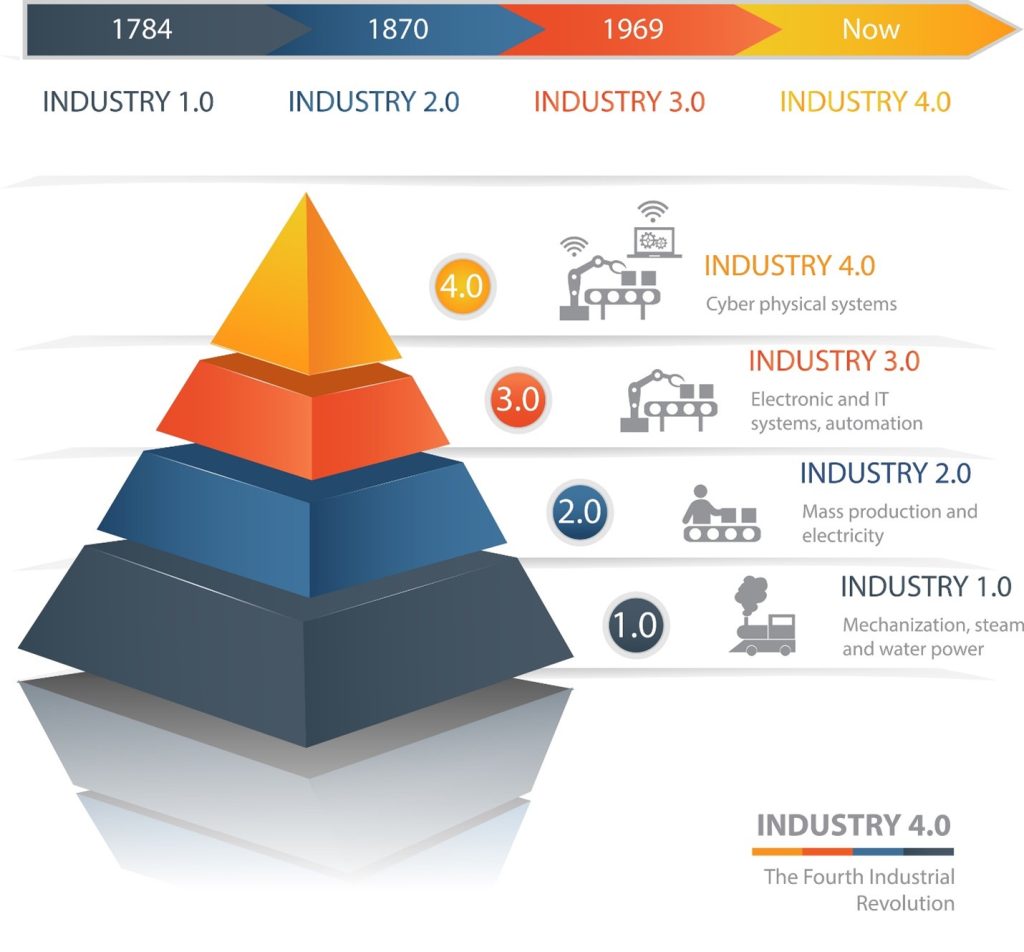
Have you heard about Industry 4.0? It’s the fourth industrial revolution. The first was about mechanization and happened in the 18th century. The second occurred during the 19th century and centered around electrification. The 20th century saw the third, which was all about computers. Now we’re in the 21st century and smack dab in the middle of the fourth industrial revolution. This revolution is about what are called cyber-physical systems – the convergence of machine and computer. Industry 4.0 is evidenced by automation, robotics, the Industrial Internet of Things (IIoT), and the ongoing move towards “lights out” manufacturing.

Most of you have heard about Industry 4.0, you just don’t realize it. This is because most of what you’ve heard has been misrepresented. In general, talk about the fourth industrial revolution starts with, “The robots are coming to take our jobs!” Does that ring a bell? I’m here to tell you, that isn’t going to happen.

Industry 4.0

133 million Jobs Expected to be Created

We expect technology (like robots and larger automation processes) to eliminate a lot of jobs around the world. According to a oft-cited study conducted jointly by Hays and Oxford Economics, it can be expected that technology will “cull” 75 million jobs globally by the end of this decade. That’s an undeniably huge number, so why am I saying that the worries about robots taking jobs are being misrepresented? Because an even larger number mentioned in that same study never seems to get the same amount of attention. That number is 133 million, and it’s mentioned in reference to the number of jobs we expect to be CREATED by technology during that same time frame. That’s an almost 2:1 ratio and means that robots and technology are expected to create 100% more jobs than they eliminate worldwide!

Why People are Worried

Why, then, is everybody so worried about robots? In my opinion, it’s mostly because people inherently dislike change. Technology’s biggest benefit to industry (whether manufacturing, finance, retail, etc.) is to move the variable (in most cases, that’s the human element – you) further and further from where machine (mill, lathe, pen, phone call, point of sale, etc.) and material (metal, wood, receipt, service, etc.) meet. This is because that intersection is where errors, inefficiencies, and injuries happen most often. By moving that wild card (you), technology can help deliver better results while simultaneously making jobs safer.

Technology will Change Today’s Jobs

There’s a silver lining – technology is making our human jobs easier, safer, and more secure every day. So, what’s the bad news? It’s that technology will cause those same jobs to change continuously and consistently throughout a career. And that’s not going to change. This is also why a skills gap exists today. We have the jobs. We have the people to fill them. But those people don’t currently possess the skills needed to fill those jobs. The skills gap has led to a hiring shortfall of over 2 million people in American manufacturing alone!

Opportunities for Employers

What does this mean for you? If you’re an employer, it means that your workforce headaches aren’t going away anytime soon. FlexTrades can help with that, if needed. Visit our website to learn more about our manufacturing solutions.

Opportunities for Employees

If you’re an employee, this means that the robots are making more employment opportunities for you than ever before. McKinsey expects somewhere between 75 million and 375 million workers will eventually be “displaced” by technology. The sheer scale of opportunity for career advancement for workers worldwide is mind boggling when you think about it. You just need to keep growing your knowledge and skills, along with the technological advances of your industry, to ensure that you can benefit.

Already in manufacturing or the skilled trades? We could be a good employment option for you! Browse our jobs and bookmark our blog page.

Do you have a topic you’d like to learn more about? Send it to our Writing Team and we’ll try to cover it in a future blog.

We’re kicking off the New Year with a new challenge in hopes of inspiring you to get moving, at your own pace, with a team around you to support your success. 

Your mission, should you choose to accept it, is to walk / run the Pan-American Highway together. 

The Pan-American Highway is a network of roads that stretch from North America to South America. It spans 14 countries in total. As one of the longest roads in the world, we’ll be walking almost 19,000 miles; starting in Prudhoe Bay, Alaska, before heading towards Ushuaia, Argentina. 

Each Monday, until we collectively reach our destination, we are hoping that you will share your weekly steps / mileage with our Human Resources team. There is a shared document internal employees can access, and Technicians are welcome to email their steps to techbenefits@flextrades.com. We will then add all of the entries together each week to determine how far we’ve traveled while exploring some of the key places that we’ve seen along the way. 

For the fun and spirit of a little friendly competition, I’d like to propose a race: Corporate FlexTrades’ Employees vs. FlexTrades Technicians who are actively out on assignment. With this, our corporate employees will be walking / running side by side against our Technicians to see who can get to our destination faster. In the end, participants from either team who cross the finish line first will be entered into a drawing for some truly incredible prizes. 

Get your walking sneakers ready… our journey has begun! This means that you will submit your first week’s mileage / steps on Monday, January 9th. Do you have any questions? Let me know, and I will be more than happy to help. 

Are you looking for your next career at an organization that cares about its culture and employees’ wellbeing? Browse our jobs board online, and see if FlexTrades could be a good fit for you!

Manufacturing Associations That Make a Difference

By now, you’re likely well aware that FlexTrades is committed to manufacturing. But we’re not the only ones. There are many other industry leaders, promoters, nonprofits, and for profits that are committed to ensuring the manufacturing industry is the best it can be and gets the credit it deserves. Below is a short list of some of these leaders.

National Association of Manufacturers (NAM)

NAM has been supporting manufacturing since 1895! They’ve done everything from advocate for the creation of the U.S. Department of Commerce to developing the National Manufacturing Institute.

The Manufacturing Institute (MI)

The MI is all about changing antiquated ideas of manufacturing careers, providing various support initiatives for American manufacturing workers, and acting as an adviser to U.S. manufacturers.

American National Standards Institute (ANSI)

ANSI has been a private, non-profit organization since 1918 and always with the same goal in mind – identify and develop standards for manufacturing on a national and global scale.

The Association for Manufacturing Excellence (AME)

AME is a not-for-profit of 4,000+ members consisting of anyone from middle management to executive status who are focused on productivity, performance, and continuous education.

The Association for Manufacturing Technology (AMT)

The name says it all. AMT is all about technology in manufacturing, a hot topic right now due to Industry 4.0.

Fabricators & Manufacturers Association, International (FMA)

FMA is all about Metal Fabrication – advancements, training, the future – and it has been for over 50 years.

Manufacturers Alliance/MAPI

The main goal of MAPI is diversity in the manufacturing industry. This includes diversity in skills, experiences, people, and voices.

National Council for Advanced Manufacturing (NAFCAM)

NAFCAM is focused on manufacturing in Washington, DC – how to revitalize and maintain the United States manufacturing sector at a policy level with Congress and the Executive Branch (among many other things).

SME

This nonprofit is one of the biggest promoters of the manufacturing industry with a mission to promote manufacturing technology. It also focuses on developing a workforce of skilled professionals ready to advance manufacturing into the future.

Want more cool insights about manufacturing? Check out our FabTech 2022 Highlights Recap for more information about automation, safety, 3D Printing, and more!

FABTECH is the North American metal fabricating industry’s premier event every year. It is run in partnership by some of the biggest trade associations in the sector. The intent of the show is to bring buyers and sellers into a convenient venue to conduct business, make connections, share ideas, AND learn. The event occurs annually in the US rotating between Chicago, Atlanta, and Las Vegas. An identical event takes place in Mexico annually on a rotation between Monterrey and Mexico City. FABTECH Canada is a biennial event exclusive to Toronto. You can learn more about FABTECH at your convenience. FlexTrades was in Atlanta for the entire event last week. We wanted to share some of our biggest takeaways with you. 


Automation 

Lead times were such a giant part of so many conversations at FABTECH 2022 that they almost got their own place on this list. The concern with how to deal with long lead times from suppliers and reduce lead times for customers is one of many primary drivers for the prevalence of automation at FABTECH this year. From reducing injuries to improving workflows to increasing efficiency, it seems most exhibitors and attendees consider a robot or cobot to be at least a partial solution for their problems. Automation of every kind was on abundant display. This great highlight video does a fantastic job of showing you as many of them as possible in 90 seconds! 


Sustainability 

It’s no secret that consumer taste is changing. No longer is it enough to deliver the best product or the best price. The market has evolved. Manufacturers still need to deliver on quality and price point, but people buy for the story now too. At least part of that story has become focused on sustainability. Mainly, end users want to know how you’re improving the environment of your facility for employees and how you’re maintaining the environment for your communities and consumers. FABTECH 2022 taught us that producers who don’t already have a focus on sustainability need to develop one quickly or they’ll be left behind. Meanwhile, companies who have been early adopters of processes with an ESG and sustainability focus are already reaping the benefits. 


Safety 

We’ve been saying for years that today’s facilities are no longer our fathers factories. The image of the dark, dirty, dangerous facility that news reels from the 50s and 60s accustomed us to are just no longer accurate. That doesn’t mean our current workforce doesn’t want manufacturers to continue to move the line forward regarding safety. Filtration systems to improve air quality, lighting advances to improve visibility, lift assist systems of all kinds, and even drones to inspect confined spaces were evident in displays or conversations at FABTECH this year. This prevalence indicates that an improved safety focus is something that all generations currently represented in the workforce agree upon. COVID protocols and practices brought safety front of mind for all of us (finally), and that’s here to stay. 


3D Printing 

Recent studies tell us that a full third of manufacturers are putting additive manufacturing on their short lists for investment. FABTECH 2022 echoed these findings in a big way. Additive was everywhere across this year’s expo. There were new powders to create metals, new machines to layer them, and everything in between. This expo made a point of teaching the industry that additive processes are much more than just 3D printing these days. 


Workforce 

The lack of available talent in the skilled trades pipeline to manufacturing was as big a topic as it has been in recent years. That has traditionally been a huge driver for interest in automation. This year, especially among keynote speaker panels, we’ve heard a bigger emphasis placed on the role we play as employers in developing the workforce. These presentations are intended to make deciders across the industry aware that younger employees want the same things previous generations wanted. Millennial and Gen Z jobseekers are just willing to ask for it up front, and they’re capable of doing their own research to know if your competition is offering it. Panelist Will Healy III put it best when he said, “If you’re hiring a welder for $15 base rate and you offer full benefits but McDonalds down the street is hiring people for $15 base rate and full benefits AND a free cheeseburger at lunch – what you’re really competing with is a cheeseburger. You need to think differently and bring more to the table than the competition if you want to win.” 


Next FABTECH 

The next FABTECH happens in Mexico this coming March. But we don’t want you to wait until then to see and learn more! If you found this content interesting and informative, we put out new industry content all the time. Check out our YouTube page for yet to be released interviews we captured in Atlanta. You can always follow FlexTrades on your social media platform of choice or check out our blog page to make sure you don’t miss out. And, of course, if you have other ideas for topics you’d like to know more about, or questions for FlexTrades, just send them to our Writing Team and we’ll be happy to cover them in a future article or video.