

Listen in on what Corey M. has to say about growth, skills, and constantly learning to enhance his potential while working as a CNC Operator at FlexTrades!
Author: Bryan Shaw
I turn manufacturing expertise into compelling content.
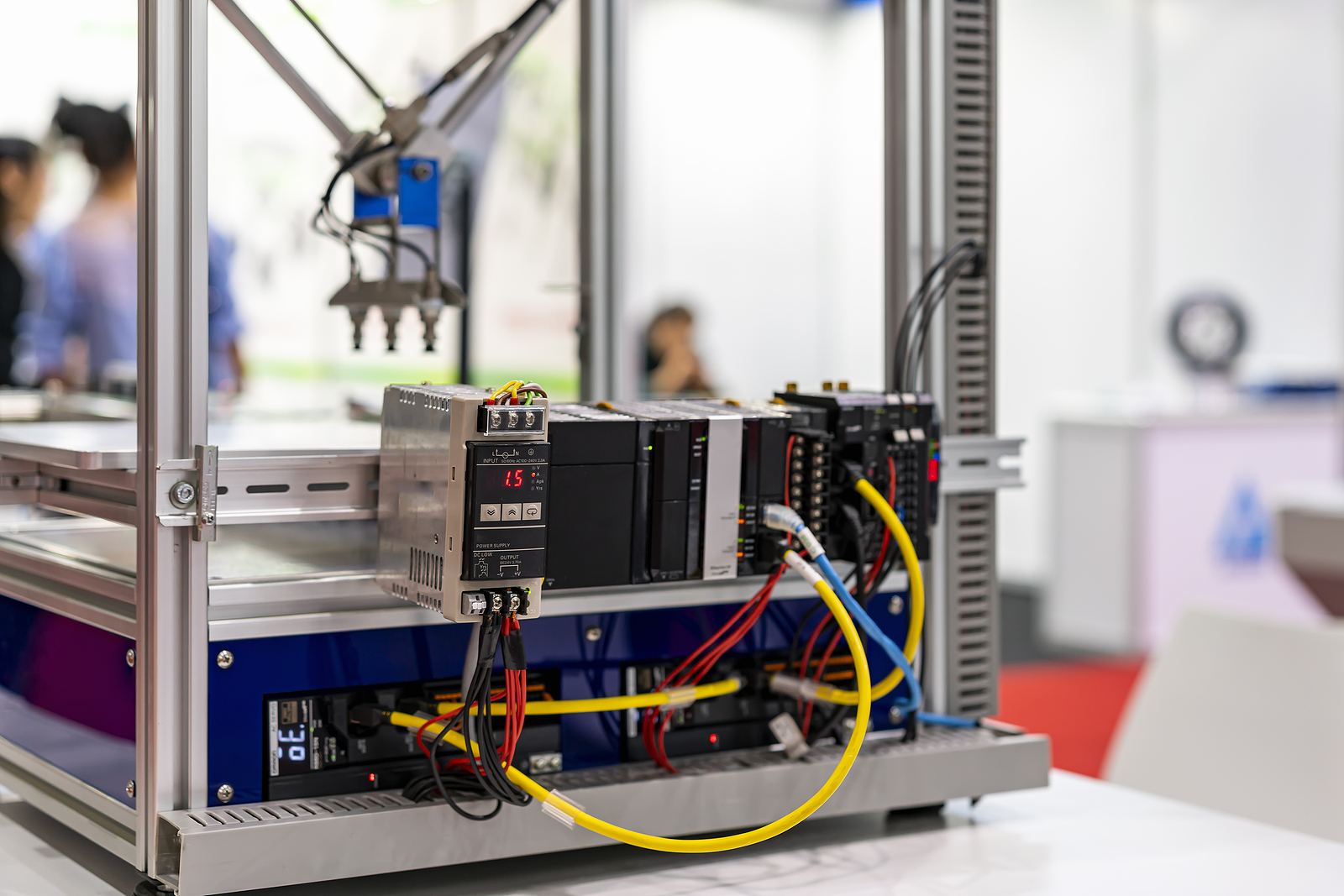
Take a look around. Nearly everything you see — from your kitchen appliances to the car in your driveway — was made in a manufacturing facility. These facilities blend human craftsmanship with mechanical precision to deliver products we rely on every day.
But when demand increases and consistency becomes critical, manufacturers need more than manpower. They need automation. And at the core of most automated systems is something called a PLC.
Let’s break it down.
What Is a PLC?
PLC stands for Programmable Logic Controller. It’s a rugged industrial computer that controls and monitors machinery in real time.
Here’s how it works:
- The PLC scans input devices like sensors, switches, or thermometers
- It processes those inputs based on pre-programmed logic
- It sends a command to output devices like fans, pumps, valves, or alarms
It’s a closed loop system — always scanning, always reacting, always optimizing.
A Simple PLC Example
Imagine flipping a light switch. The switch is the input. The light turning on is the output. A PLC acts like the middleman, receiving the signal from the switch and sending power to the bulb.
Now imagine a machine on the production line is running too hot. A temperature sensor (input) alerts the PLC, which then sends a signal to activate a cooling fan (output). Problem solved — automatically.
That’s the power of a PLC.
What Else Does a PLC Do?
Beyond scanning inputs and triggering outputs, PLCs also perform routine housekeeping tasks like:
- Monitoring internal diagnostics
- Verifying communication with devices
- Logging performance data
And this process doesn’t stop. PLCs operate in continuous scan cycles, checking and responding to data in fractions of a second.
PLC Programming: It’s More Complex Than It Looks
While the logic behind PLCs sounds simple — “if this happens, then do that” — the actual programming is anything but.
To write a functional PLC program, you need a deep understanding of:
- Mechanical, electrical, hydraulic, and pneumatic systems
- Machine sequences and operator workflows
- Safety protocols
- Every possible input and desired output
That logic is translated into code that the PLC runs continuously. The result? Machines that work more efficiently, consistently, and safely.
Who Programs PLCs?
That’s the job of a PLC Programmer or Controls Engineer.
These professionals don’t just write code. They also:
- Create schematics
- Assist with hardware installation
- Test the PLC and its programming
- Troubleshoot errors and optimize performance
It’s a technical role that blends engineering and real-world problem solving.
How to Become a PLC Programmer
Most employers look for candidates with:
- A master’s degree in electrical engineering or computer science
- Or a bachelor’s degree combined with hands-on experience in manufacturing
But not all careers start in the classroom. Plenty of talented programmers begin as technicians on the shop floor and grow into the role through on-the-job training.
If you’re already in manufacturing and want to make the leap, say so. Express interest. Get exposure. Ask questions. That initiative goes a long way.
Already a PLC Programmer?
FlexTrades is looking for skilled programmers to join our national team. You’ll travel, solve real problems, learn new techniques, and work alongside some of the best manufacturers in the country.
Apply here and see where your skills can take you.