
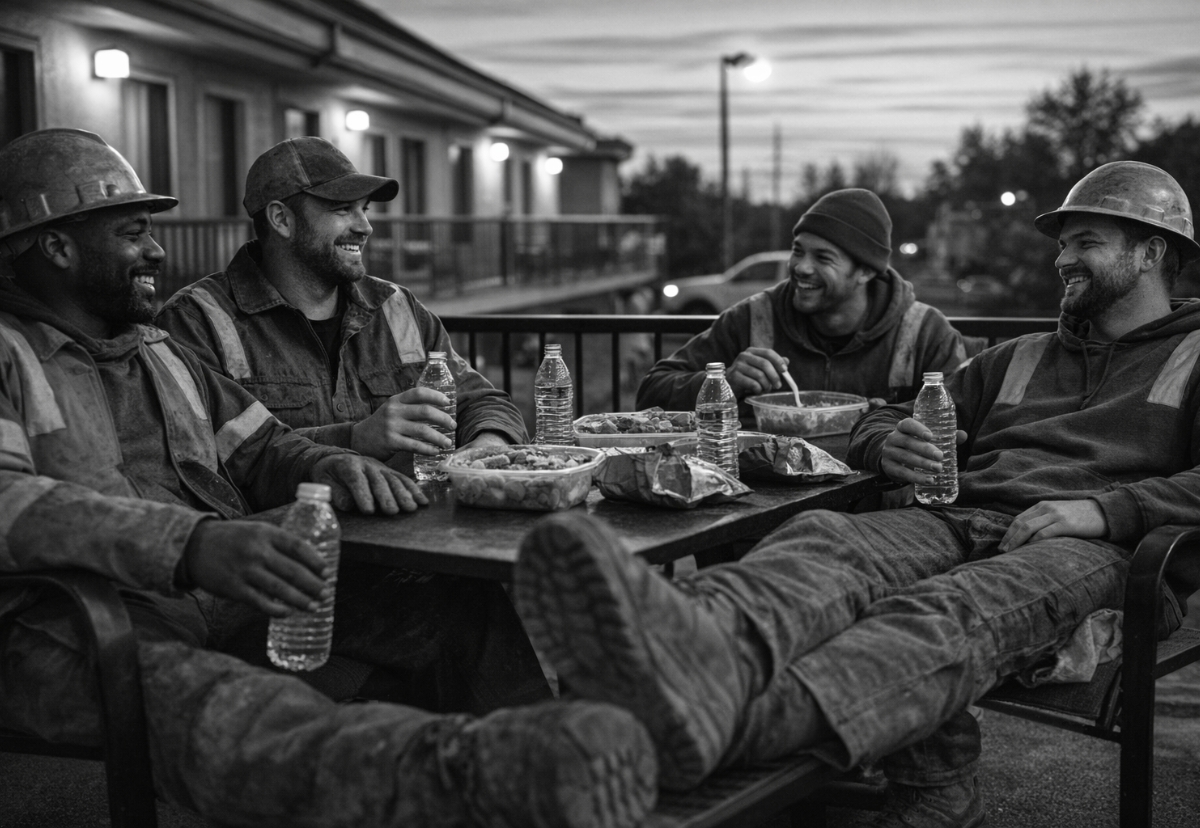
Traveling for work offers many opportunities, like strong pay, gaining professional experience, and seeing new places all over the country. But life on assignment also comes with the unique challenge of being far from home.
When you’re working hundreds, or even thousands, of miles away from family and friends, the sense of community you build on the road becomes incredibly important. The people you meet along the way often become the ones you share meals with, celebrate holidays with, and lean on when you’re navigating a new place.
I spoke with one of our experienced technicians, “John” (name changed at his request), about how he approaches life on assignment. As an introvert, he’s naturally a quiet person, but over time, he has learned that building connections with other technicians makes life on the road far more rewarding. What often starts as a quick conversation can grow into friendships that last long after an assignment ends.
Here are a few simple ways John builds community while traveling for work.
Pay Attention to Your Routine
One of the easiest ways to connect with people is simply by paying attention to the routines around you.
When you’re leaving for work in the morning or coming back at the end of the day, take note of who else might be doing the same thing. Someone carrying a lunchbox or still wearing PPE might be working nearby. They may even be with FlexTrades.
Creating a few routines outside of work can also help. Running errands, going for a walk, or visiting the gym at the same time each day helps you start recognizing familiar faces. Over time, those small interactions can turn into casual conversations and eventually friendships.
Start with Simple Conversations
Breaking the ice doesn’t have to be complicated.
If you think someone might be in the trades, John says one of the easiest questions to ask is simply, “Are you with FlexTrades?” Sometimes the answer is confusion. Sometimes it’s a surprised, “How’d you know?” Either way, the conversation has started.
If they’re with FlexTrades, you can also ask who their recruiter is as an easy follow-up. Shared connections instantly create common ground.
Even if they’re not in the trades, being new to an area gives you plenty to talk about. Asking where the best grocery store is or what restaurants they recommend can quickly lead to a good conversation.
Listen More Than You Talk
As the saying goes, “We have two ears and one mouth so that we can listen twice as much as we speak.”
For John, being an introvert actually became an advantage when it comes to meeting people. Instead of feeling pressure to do all the talking, he focuses on listening. Asking a few questions and showing genuine interest encourages others to share more about themselves.
When you’re a good listener, you don’t need to be the most outgoing person to make meaningful connections.
Pets Can Help Break the Ice
If you’re able to bring a dog with you on assignment, it can naturally create opportunities to meet people.
Walking a dog helps establish a routine and often leads to casual conversations with others in the area. People tend to ask about the dog, which makes starting a conversation feel easy and natural.
John also mentioned that having a dog around can help take the pressure off during those quiet moments in a conversation. If things pause for a moment, attention can shift to the dog rather than the silence.
Of course, bringing a pet isn’t always possible for some people. But when it is, it can be a great way to break the ice.
Turn Conversations into Shared Activities
Once you’ve broken the ice, the next step is building the relationship.
John likes to look for simple opportunities to spend time together. If the hotel has a grill, he might invite a few people over for a casual BBQ after work. Around holidays, he’s found small ways to celebrate, like hanging candy on people’s doors during Halloween.
Shared hobbies are another great way to build connections. Watching football on Sundays, finding a local fishing spot, or exploring the area together can turn acquaintances into real friendships.
Just like relationships back home, connections on the road grow through shared experiences.
Staying Connected After the Assignment
Eventually, every assignment comes to an end. Technicians head home or move on to the next project. But the relationships built along the way don’t have to end there.
John keeps in touch with many of the people he’s met while traveling. Some have invited him to weddings. Others exchange messages during the holidays. He’s hosted friends in his hometown and visited others when passing through their city.
For some technicians, the community built on assignment becomes one of the most rewarding parts of the traveling lifestyle.
Community Makes the Road Feel Smaller
Working on the road can feel isolating at first, especially when you first arrive somewhere new.
But as John has learned, building connections with new people can quickly change that experience. A conversation in the parking lot, a shared meal after work, or a weekend activity together can turn a temporary assignment into a place where you feel welcome.
Over time, those relationships often stretch far beyond a single job site. They become a community stretching across the country. Friends you can visit, call, or reconnect with years down the road.
And in a career built around travel, that sense of community can make the road feel a lot more like home.