On February 21, 2026, the FlexTrades team gathered at the Polar Plunge event site in Prior Lake, Minnesota, for our ninth consecutive year supporting Special Olympics Minnesota.

And this year, we made our biggest splash yet.

  • 35 fundraisers registered, an all-time high
  • 30 participants took the physical plunge, another record
  • $11,244.00 raised, our second-highest single-year total ever

Since our first plunge as Team FlexTrades in 2018, we’ve now raised $54,749.23 to support Special Olympics athletes across Minnesota. That total brings our yearly fundraising average to more than $6,000.

The numbers are exciting. But the real story is the impact behind them.

Making a Difference That Matters

The Polar Plunge isn’t just a winter tradition. It’s one of the largest fundraising efforts supporting Special Olympics programs across the country and the biggest for Special Olympics Minnesota. Funds raised provide year-round sports training, competitions, equipment, and inclusive opportunities for thousands of athletes with intellectual disabilities statewide, all at no cost to them or their families.

At every plunge event, athletes and their delegations are present. They’re cheering, high-fiving, and smiling while encouraging plungers. If you’ve ever locked eyes with an athlete on the shoreline before jumping or running into freezing water, you understand quickly: this isn’t about the cold.

It’s about community. It’s about inclusion and belonging. It’s about creating opportunities.

The difference this organization makes in local communities is bigger than most people realize. Being even a small part of an impact like that is something we’re proud of, so proud that we’ve made it part of our corporate Core Values.

A Core Value in Action: Give Back

At FlexTrades, one of our Core Values is Give Back.

Our Give Back Committee exists to empower our employees to make a difference in the communities where we live and work. The committee takes that mission seriously and works diligently to create meaningful opportunities for our team to live that value beyond words. The FlexTrades Polar Plunge Team has become one of our most visible and consistent expressions of that commitment.

From six plungers in 2018 to 30 this year, participation has grown because our people believe in what we’re doing. Employees, friends, and family members show up year after year not because they have to, but because they want to.

Nine consecutive years of participation says something about culture. It says we don’t treat community involvement as a one-time event. It says we’re willing to get uncomfortable for a cause that matters. It says our Core Values guide action, not just conversation.

This year’s record-setting participation is proof of that.

Perfect Conditions. Record Energy.

This year, Prior Lake delivered perfect plunge conditions. It was warm, a balmy 10 degrees Fahrenheit, and windless enough to comfortably gather on the shoreline for a team picture and to watch other plunge teams. Luckily, despite a recent warm streak, we still had “good ice” for the plunge itself. That always means less time spent in freezing water and spares plungers from having to run through cold water to a buoy before returning the same way to the beach and heated changing tents.

We were the final group to enter the water that afternoon. The energy was high. The anticipation was real. And for our many first-time plungers, both kids and adults, the nerves were noticeable.

But afterward, the reviews were unanimous: “It wasn’t even close to as bad as I expected.”

Experienced plungers know that the anticipation is always worse than the plunge itself. They also know that the camaraderie, the laughter, and the athletes’ encouragement are what keep people coming back.

Several first-timers have already committed to returning next year. That’s how traditions become culture. And that’s why FlexTrades will always Give Back.

Why We Keep Showing Up

I’ve had the privilege of serving as team captain for all nine FlexTrades Polar Plunge teams and have personally plunged nearly 20 times over the years. Every plunge is special. Every year makes a difference.

But this one stood out. From the athletes to the volunteers to our growing group of plungers, everything aligned this year. And then there was one more layer that made it uniquely meaningful.

“Do It Anyway”

This year, our bright yellow plunge shirts carried a simple message on the back:

Do it anyway.

Those words came from a former member of our Marketing Team who worked with us for over six years and was a devoted member of all our previous plunge teams. She was known for being kind, helpful, and quietly impactful in the way she supported others. Her name was Emily, and she had a tattoo on her arm that read, “Do it anyway.”

After Emily passed away unexpectedly in December 2025, we knew we wanted to honor her in a way that reflected her positive, determined, and encouraging spirit. How? By plunging with her memory and her motto in support of something bigger than all of us.

Four members of her family, two aunts and two cousins, joined our team as plungers this year, three for their first plunge. Afterward, they shared that they could feel her spirit with us and were grateful to experience something that meant so much to her.

When the emcee announced that we were “Plunging for Emily” and proudly embracing the message to “Do it anyway,” it didn’t feel mournful. It felt strong, cathartic, and focused on the good.

It felt exactly like what Emily would have wanted.

Looking Ahead to Year 10

Nine consecutive years.

Nearly $55,000 raised.

Record participation in 2026.

What started small has grown into something that reflects who we are as a company.

To everyone who fundraised, donated, plunged, cheered, or supported from a distance, thank you. The impact extends far beyond a single event at a frozen beach on a winter afternoon.

And if you’ve ever considered joining us, Year 10 is coming. The water will be cold, but the cause will be worth it.

And we’ll do it anyway.

“Job-ready on day one.”

It’s a phrase that sounds simple. But in manufacturing, simple phrases can carry complicated expectations. Let’s clarify what job-ready really means for American manufacturers, in-house hires, and skilled trades staffing partners alike.

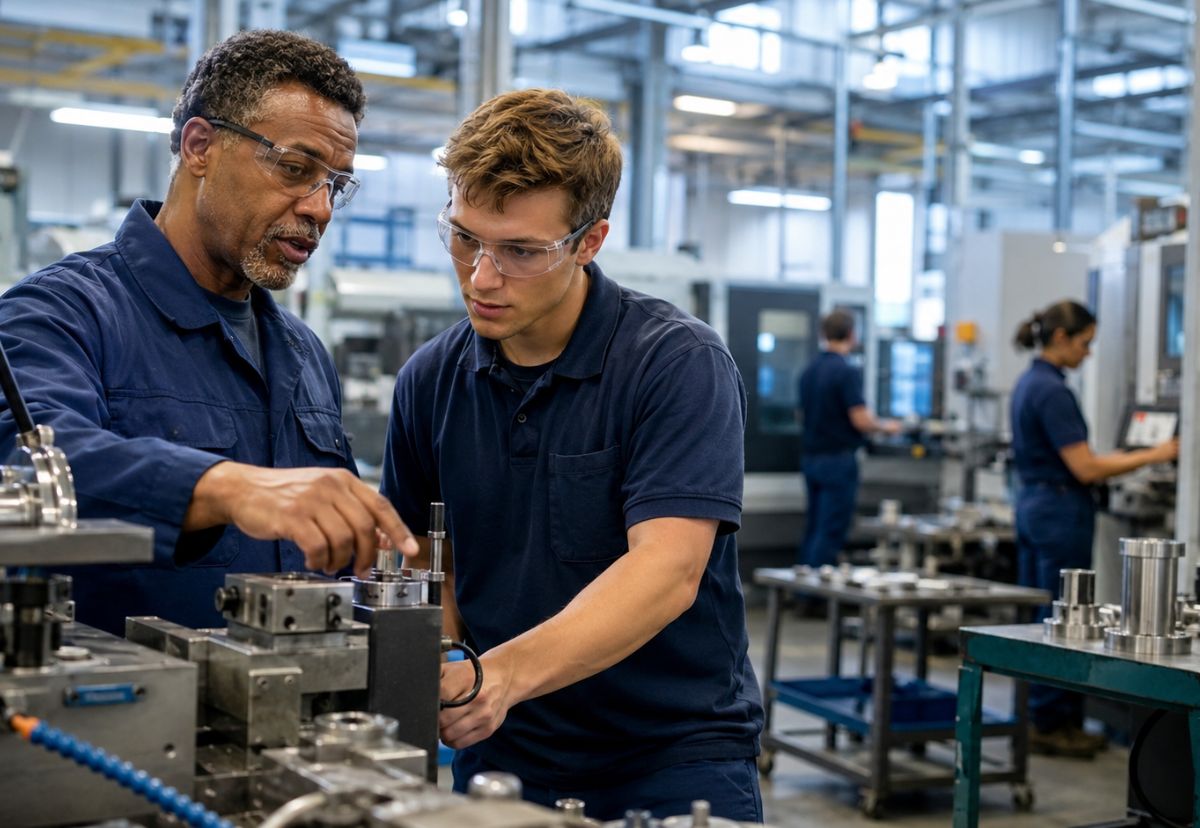
When we tell clients our technicians will arrive job-ready on day one, we’re not saying they’ll walk into a brand new facility and operate independently within the first hour on-site. That wouldn’t be realistic, and unrealistic expectations don’t serve anyone.

Every manufacturing environment is different. Your processes are unique. Your equipment is configured your way. Your quality systems, ERP workflows, and internal communication rhythms are yours alone. Even the most experienced technician still needs orientation to your operation.

That’s not a weakness. That’s manufacturing reality.

Job-Ready Means Skilled, Experienced, and Prepared

When we say job-ready, we mean a technician arrives with:

  • The skills and experience required for success in the role
  • Hands-on familiarity with relevant tools, equipment, and systems
  • The ability to read prints, schematics, and technical documentation
  • A strong safety foundation and understanding of PPE expectations
  • Professionalism and the ability to integrate into an existing team

They are not learning their trade on your floor. They are applying a trade they already know.

That’s a meaningful difference.

What Job-Ready Does Not Mean

Job-ready does not mean zero ramp-up required.

No skilled trades professional, regardless of background, can skip site-specific onboarding. Your workflows, approval processes, quality checks, and internal standards still need to be learned.

The goal isn’t to eliminate ramp-up. The goal is to shorten it. And that’s the expectation we set clearly with our clients.

The Real Expectation: Rapid Ramp-Up

What we communicate, and what we see consistently play out, is this:

Our technicians ramp up rapidly, generally within a week or two for most technicians on most projects. That timeline isn’t about guarantees. It’s about patterns.

When someone already has the technical depth, industry exposure, and professional maturity required, they don’t need months to become productive. They need context.

Once they understand your environment, they execute.

Some of our clients are deeply aware of how unique their operations are compared to the “typical manufacturer”. They know no outside technician will be fully autonomous on day one. What they value is bringing in professionals who are capable of accelerating quickly, much faster than other gap-bridging options.

That’s where the difference shows.

Why This Clarity Matters

When expectations are vague, frustration builds.

If “job-ready” is interpreted as “independent immediately,” supervisors can feel disappointed. Technicians can feel pressure that isn’t safe or realistic. Projects can stall unnecessarily.

When expectations are aligned, something different happens:

  • Supervisors provide focused, site-specific onboarding.
  • Technicians absorb information efficiently.
  • Teams collaborate during that first critical week.
  • Productivity builds steadily instead of stalling.

A short ramp period, when handled intentionally, protects safety and quality while still meeting production goals.

The Difference Between Headcount and Capability

Manufacturers don’t need extra bodies. They need capable professionals who can step in, understand the assignment, and contribute quickly.

Job-ready on day one means:

  • You’re not teaching trade fundamentals.
  • You’re not correcting basic technical gaps.
  • You’re not absorbing avoidable safety risk.

You’re onboarding an experienced professional and skilled technician who understands manufacturing environments and can adapt to yours.

That adaptability is what drives rapid ramp-up.

Why It Matters Right Now

Production timelines are tight. Skilled labor is limited. Projects don’t wait.

But rushing someone into full independence before they understand your systems isn’t efficient, it’s risky.

The strongest partnerships are built on balanced expectations:

  • We send technicians ready to work.
  • You provide the site-specific onboarding that every company requires.
  • Together, we support a rapid ramp-up – typically within a week or two for most technicians on most projects.

That alignment protects productivity without compromising safety or quality.

The Bottom Line

Job-ready on day one doesn’t mean independent on day one.

It means skilled. Prepared. Professional. And capable of ramping up rapidly in a new environment.

Every manufacturing operation is different. We respect that. Our role isn’t to pretend onboarding isn’t necessary. Our role is to provide technicians who can move through that onboarding efficiently and reach full productivity quickly, safely, and successfully.

That’s what job-ready really means. Not instant. Accelerated.

For manufacturers, PPE compliance is not just about avoiding citations. It is about operational stability.

Safety Is a Shared Responsibility

When you partner with a workforce solutions company or staffing firm, you do not outsource safety. OSHA makes that clear. The host employer is responsible for identifying workplace hazards and communicating site-specific PPE requirements. The staffing firm is responsible for ensuring workers are properly trained and prepared. Understanding this division of responsibility is critical because alignment upfront prevents confusion once work begins.

Clear Expectations Reduce Risk and Cost

Inconsistent PPE policies create gray areas. Gray areas create injuries. Injuries create downtime, claims, and potential liability. Clarity is essential to maintaining a safe and productive partnership.

Clear, documented PPE requirements:

  • Reduce recordable incidents
  • Limit workers’ compensation exposure
  • Help protect your Experience Modification Rate (EMR)
  • Strengthen audit readiness

Strong Safety Partnerships Drive Productivity

The safest facilities are often the most efficient. When expectations are clear and consistently enforced, work moves faster because people trust the systems around them.

Job-ready on day one is not just about skill. It is about being properly equipped.

Why PPE Matters to Skilled Trades Professionals

For technicians, especially those entering a new facility, PPE provides immediate protection in an unfamiliar environment.

Contract and temporary workers can face higher risk because they are:

  • New to the site
  • Less familiar with specific hazards
  • Operating within compressed onboarding timelines

Proper PPE:

  • Reduces exposure during that critical first shift
  • Reinforces that safety is a priority
  • Encourages awareness and proactive hazard reporting

When a technician sees that both their employer and the host facility take PPE seriously, it builds trust. Trust leads to stronger performance.

The Most Overlooked Factor: Communication

From a safety professional’s perspective, most PPE failures do not happen because someone lacks safety glasses. They happen because expectations were not aligned from the beginning.

Successful PPE programs depend on three things:

  • Clear Hazard Identification: Clients must define site-specific risks before a technician arrives.
  • Pre-Assignment Communication: Staffing partners need detailed PPE requirements in advance, beyond “steel-toe boots required.”
  • Consistent Enforcement Onsite: If rules are not consistently enforced, compliance erodes quickly.

When these three elements align, PPE functions as intended.

PPE Is Culture, Not Just Equipment

Anyone can purchase gloves or face shields. Not every organization builds a culture where they are consistently worn and respected.

A strong PPE culture includes:

  • Supervisors modeling compliance
  • Immediate correction of unsafe behavior
  • Open reporting of hazards
  • Continuous review of changing job risks

It also requires partnership.

Workforce partners rely on clients to provide accurate hazard assessments and enforce site rules. Clients rely on staffing firms to prepare skilled trades professionals before arrival and reinforce expectations throughout the assignment. When both sides communicate openly and act quickly on concerns, everyone benefits.

The Bottom Line

PPE works best when it is treated as essential, not optional.

It protects technicians stepping into new environments. It protects manufacturers from costly incidents and compliance gaps. It protects partnerships built on trust.

Manufacturing is demanding. Skilled trades work is hands-on, high-impact, and often high-risk. The right PPE, clearly communicated and consistently enforced, is one of the simplest and most effective ways to protect the people who keep production moving.

Safety is not just a staffing issue. It is not just a client issue. It is a shared responsibility.

And when PPE is done right together, everyone benefits.

Engineering is the discipline of making things work. From the skyscrapers shaping city skylines to the microchips powering smartphones, engineering touches nearly every part of modern life. While the profession is grounded in universal principles such as applying scientific and mathematical concepts to solve real problems, each sector applies those principles differently. One of the most diverse and essential branches of engineering operates within manufacturing.

What Unites Engineers Across Industries?

Despite their differences, engineers share a common purpose… to innovate, optimize, and solve problems. Across industries, they improve efficiency, ensure quality, and drive technological advancement. Key similarities include:

  • Problem Solving: Engineers analyze complex challenges and develop practical, scalable solutions.
  • Systems Thinking: They evaluate how individual components function within larger systems.
  • Optimization: Efficiency, safety, reliability, and performance remain top priorities.
  • Use of Technology: Modern engineering relies on advanced software, simulation tools, automation platforms, and data analytics.
  • Quality and Safety Compliance: Engineers must follow strict regulatory, safety, and industry standards.

What Makes Engineering in Manufacturing Unique?

While manufacturing engineering follows the same foundational principles as other disciplines, the environment presents distinct challenges.

Speed and Efficiency as Priorities

Civil or aerospace projects may take years to complete. Manufacturing operates on compressed timelines. Engineers must support rapid production cycles while minimizing downtime and maintaining consistent quality.

Continuous Improvement and Iteration

Unlike one-time design projects such as bridges or medical devices, manufacturing engineers operate in a constant state of refinement. They improve processes over time using structured methodologies such as Lean manufacturing and Six Sigma, both widely used in industrial operations to reduce waste and variation.

Integration of Automation and Robotics

Manufacturing environments depend heavily on automation. Engineers design, implement, and maintain robotic systems, programmable logic controllers, sensors, and smart equipment that improve productivity and reduce variability.

Material Selection and Process Engineering

Material selection in manufacturing must account for cost, availability, durability, regulatory requirements, and manufacturability at scale. Engineers evaluate tradeoffs between performance and production feasibility.

Workforce and Equipment Coordination

Manufacturing engineers balance human labor, robotics, and heavy machinery within complex production environments. They ensure workflows are synchronized and resources are allocated effectively.

Cost Driven Decision Making

Cost efficiency is central to manufacturing. Engineers must continuously identify ways to reduce scrap, shorten cycle times, improve yield, and control operating expenses without sacrificing safety or quality.

Types of Engineers in Manufacturing

Modern manufacturing relies on specialized engineering roles, including:

  • Manufacturing Engineer. Improves and standardizes production processes.
  • Design Engineer. Develops products optimized for manufacturability and performance.
  • Mechanical Engineer. Designs and maintains mechanical systems and equipment.
  • Electrical Engineer. Develops and supports electrical infrastructure and control systems.
  • Process Engineer. Optimizes workflows and production methods.
  • Industrial Engineer. Improves plant layouts, labor efficiency, and operational systems.
  • Production Engineer. Oversees daily manufacturing execution and output.
  • Quality Engineer. Implements quality systems aligned with industry standards.
  • Controls Engineer. Designs and programs automated control systems.
  • Test Engineer. Validates product reliability, safety, and performance.
  • Tooling Engineer. Designs custom tooling, fixtures, and production aids.
  • Applications Engineer. Works with clients to implement technical solutions for specific needs.
  • Materials Engineer. Selects and tests materials for strength, durability, and cost efficiency.
  • Robotics Engineer. Designs and integrates robotic systems.
  • Automation Engineer. Implements smart manufacturing technologies and connected systems.
  • Mechatronics Engineer. Combines mechanical, electrical, and software systems to build intelligent machinery.

The Future of Manufacturing Engineering

Manufacturing continues to evolve as technology advances.

  • Smart Factories and Industry 4.0: Connected manufacturing environments leverage industrial IoT, AI, and real-time data analytics to improve visibility, predictive maintenance, and decision making.
  • Sustainable Manufacturing: Engineers are developing energy efficient processes, waste reduction strategies, and environmentally responsible material alternatives.
  • Advanced Robotics and AI Integration: Autonomous systems are becoming more adaptive and data driven, improving flexibility across high mix, low volume production.
  • Space Manufacturing: With increased commercial investment in space, research is exploring manufacturing in microgravity environments, including additive manufacturing and material behavior beyond Earth conditions.

Looking for Engineering Solutions?

At FlexTrades, engineering is more than a discipline. It is the backbone of modern manufacturing performance. Whether you are a company seeking experienced engineers to strengthen production or an engineer looking for your next challenge, FlexTrades connects talent with opportunity.

Are you an engineer ready for a new assignment? Explore opportunities that let you apply your expertise across industries and projects nationwide.

Need engineering support for your manufacturing operations? Contact FlexTrades to access skilled engineering professionals who can improve efficiency, strengthen quality systems, and support production stability.

Let’s build the future of manufacturing together. Connect with FlexTrades today.

Every plant manager, operations leader, and HR executive we talk to in American manufacturing tells a variation of the same story: “We can’t find the skilled workers we need right here where we are.”

It’s not a seasonal blip. It’s structural.

The Manufacturing Skills Gap Isn’t Just Local. It’s National

Skilled trades shortages are more than just a recruiting headache. They’re a strategic challenge for American manufacturers. From CNC machinists and industrial electricians to maintenance techs and welders, demand is outpacing supply significantly. For example, aggregate data shows that American industries face millions of unfilled skilled trade openings annually, with an estimated 1.7 million-worker shortfall between job openings and qualified graduates every year.

That gap isn’t a local anomaly. It’s a national trend that affects manufacturing hubs and rural regions alike. Whether you’re in a highly populated metro area or a smaller community with a proud manufacturing tradition, the math is the same: there just aren’t enough qualified workers locally to meet current demand.

Why Local Labor Pools Alone Don’t Cut It

Here’s the hard reality:

  • Skilled trades programs and vocational pipelines have not kept pace with employer demand.
  • Many regions, especially outside major cities, lack the training infrastructure to produce workers with advanced, manufacturing-ready skills.
  • Even where local talent exists, retirements are outpacing new entrants into the workforce. Skilled trades workers in some fields are aging rapidly, and the inflow of new talent is insufficient to replace them.

This has real consequences. In some sectors, companies turn down work or delay projects because they simply cannot staff them even when demand is there and capacity exists.

The National Talent Advantage: Why Broader Labor Pools Matter

So, what’s the alternative? For innovative manufacturing leaders, the answer is clear. Don’t limit your talent strategy to the ZIP code your plant happens to be in.

A nationwide workforce model, like the one FlexTrades has built, unlocks access to talent that’s:

  • Pre-vetted and travel-ready, so assignments begin quickly
  • Diverse in skill and geography, reducing regional talent bottlenecks
  • Experienced across industries, bringing best practices and adaptability

In contrast to a purely local recruiting strategy, this approach allows manufacturers to tap into labor pools that aren’t constrained by geography or community demographics. This is vital when the local labor force can’t meet demand.

Real Business Impact: FlexTrades’ Nationwide Difference

We see this in action every day:

  • A facility in a rural Midwest town fills critical maintenance roles they couldn’t staff from local resumes alone.
  • A coastal plant scales up for a major production run by deploying skilled machinists from across multiple states.
  • A manufacturer accelerates uptime by bringing in welders and technicians from regions with stronger workforce pipelines, without draining local talent.

In each case, it’s not that the skills didn’t exist in the country. It’s that they weren’t accessible locally. A broader labor network solves that problem.

A Strategic Advantage in a Tight Labor Market

Manufacturing is at a crossroads. Investment in domestic production, from clean energy equipment to advanced electronics, is rising. But talent constraints threaten to slow progress.

Decision-makers need solutions that go beyond traditional recruiting: models that think nationally but act locally, delivering skilled talent where and when it’s needed. That’s how you keep production lines running, reduce downtime, and compete in today’s fast-moving global economy.

Because at the end of the day, not all labor pools are created equal, but the right one can make all the difference.

For decades, Just-In-Time (JIT) manufacturing has been the gold standard for efficiency. By keeping inventory lean and production tightly aligned with demand, JIT has helped manufacturers control costs, improve quality, and stay competitive in fast-moving markets. But, as the last few years have shown us, even the most finely tuned JIT systems can hit a wall when disruptions occur. Supply chain delays, demand spikes, and labor shortages have forced manufacturers to rethink what resilience really looks like. That’s where Just-In-Case (JIC) thinking comes in.

At FlexTrades, we help manufacturers maintain the efficiency of JIT operations while building the flexibility and readiness of JIC. Because when unexpected challenges arise, being ready “just in case” shouldn’t mean sacrificing everything that makes your production model successful.

Why JIT Works and Where It Breaks

When it’s operating smoothly, JIT is a thing of beauty. It minimizes waste, reduces storage costs, and helps ensure quality through continuous improvement. But JIT also assumes everything goes according to plan. Materials arrive on time. Machines keep running. Your workforce stays at full strength. Unfortunately, the real world doesn’t always cooperate.

Even minor disruptions such as a supplier delay, sudden order surge, or a few key employees out sick can ripple across your production. That’s when your efficient, finely tuned system can quickly turn into a backlog. Manufacturers worldwide are learning the hard way that “lean” can’t mean “fragile.”

The Rise of Just-In-Case Thinking

A Just-In-Case mindset doesn’t replace JIT, it reinforces it. JIC is about building agility and redundancy into systems and processes wherever it matters most, without losing the precision and efficiency your business depends on.

For many manufacturers, this shift includes diversifying suppliers, investing in smarter forecasting, or keeping a modest inventory buffer. But the most overlooked, and often the most critical, factor is your workforce. If you don’t have the right people in place when demand changes or disruptions hit, every other JIC measure becomes a stopgap. That’s where FlexTrades comes in.

Your Workforce: The Ultimate Just-In-Case Strategy

At FlexTrades, we provide workforce flexibility that allows JIT manufacturers to operate confidently, even when conditions are unpredictable.

Here’s How

Rapid Deployment: Our highly skilled tradespeople and extremely experienced technicians can be mobilized nationwide in a matter of days, not weeks or months. That means when production needs to ramp up quickly, or recover from downtime, help is already on the way.

Precision Skill Matching: From machinists and welders to maintenance techs and engineers, we deploy the exact skill sets your operation needs to ensure consistent quality and minimal onboarding time.

Built-In Flexibility: Whether you need 5 people or 50, for a few months or several years, our model adapts to your demand curve. That flexibility helps you maintain throughput during spikes without carrying excess labor cost during slow periods.

Continuity Without Compromise: Because our technicians are employed, managed, and supported by FlexTrades, you don’t sacrifice productivity for preparedness. You get seasoned professionals ready to plug into your systems and processes right away.

From Reactive to Resilient

We’ve seen the difference this makes.

One manufacturer we supported faced a backlog of parts awaiting inspection due to a serious shortage of skilled quality inspectors locally. When our FlexTrades team deployed this client estimated their backlog to be at least three YEARS long. Our team cleared that backlog in just three MONTHS, which also gave their permanent workforce breathing room to focus on recruiting local talent without the looming pressure of a growing backlog.

That’s what Just-In-Case looks like in action: the ability to react quickly without losing efficiency or control.

Building Resilience Together

Manufacturers don’t have to choose between lean or ready. The smartest operations are blending both, running Just-In-Time but prepared for Just-In-Case.

At FlexTrades, we make that possible. Our workforce solutions help American manufacturers plan ahead for the unpredictable, giving them the confidence to say “yes” to opportunity – even when conditions aren’t perfect.

If you’re ready to make your JIT operation more resilient, let’s talk about how FlexTrades can help your business prepare for Just-In-Case.

When manufacturing operations hit turbulence, whether from labor shortages, unexpected production backlogs, or urgent deadlines, FlexTrades delivers certainty. Our clients consistently face complex business challenges, but time and again, our highly skilled tradespeople and on-demand workforce solutions have helped them overcome these hurdles with speed, precision, and reliability. Guided by our mission “to make a difference by redefining what’s possible in workforce solutions, enabling our clients to solve business challenges with certainty while providing life-changing career opportunities for our technicians,” every engagement is built on one promise: your obstacles become success stories through our solutions.

Overcoming Labor Shortages

For many of our partners, the first challenge is the same: labor shortages. One U.S. primary metal manufacturer recently shared how impactful the right technician can be when the stakes are high. When FlexTrades deployed Kelvin, a seasoned tradesperson, he quickly mastered the role and demonstrated professionalism under pressure. “Kelvin was a great help. He learned the job quickly, handled issues like a professional, and would be welcome to return when we have further needs,” their leadership told us. That kind of immediate impact is what separates FlexTrades from quick fixes or temporary stopgaps. We don’t send warm bodies. We deliver expertise.

Clearing Backlogs Faster Than Expected

Sometimes the need is more time-sensitive than others. One aerospace parts manufacturer faced a $3 million backlog that could have taken months to resolve. With FlexTrades machinists on site, the backlog was eliminated in just seven weeks. Another client, buried under three years of inspection work, saw the entire backlog eliminated in only three months thanks to one of our experienced quality inspectors. We also helped an agricultural equipment manufacturer close a critical production gap through the rapid deployment of skilled welders and assemblers. FlexTrades’ traveling skilled trades professionals worked seamlessly alongside client teams to clear hundreds of backlogged units in weeks, not months.

Supporting Transitions and Growth

Not every challenge comes neatly packaged as a backlog. In some cases, clients need to keep production running during unique circumstances such as facility relocations, expansions, or system rollouts. A plastics manufacturer moving a facility recently relied on FlexTrades to provide the skilled technicians they needed to meet customer demand. Their plant manager later said, “The technicians assigned to our business were professional, hardworking, and highly skilled. FlexTrades was an essential part of our strategy to meet the increased demand of our customers.” Across industries, this same story repeats itself: whether the obstacle is sudden downtime, surging orders, or a critical deadline, our people step in and operations stay on track.

What Makes FlexTrades Different

What makes this consistency possible is the way we approach workforce solutions. FlexTrades maintains a nationwide network of highly skilled machinists, welders, programmers, inspectors, engineers, and other technicians who are fully vetted and ready to contribute from day one. Every deployment is tailored to the client’s specific needs, whether that means a handful of technicians on a specialized project or hundreds deployed across multiple sites. Because our model is flexible and project-based, clients avoid unnecessary overhead or risk. They scale their workforce up or down with flexibility and certainty, confident they will always have the right people in place when needed.

A Partnership Built on Reliability

This reliability extends beyond skill and speed. Safety, communication, and professionalism are central to how we operate. As one client summed it up: “All employees that you have selected and sent to us have been exceptional… the communication between our staff and the FlexTrades staff has been phenomenal.” That is not just an endorsement of individual performance. It is a testament to the partnership we build with every client we serve.

Delivering Workforce Solutions That Make a Difference

FlexTrades is not just solving labor challenges. We are enabling American manufacturers to keep promises to their customers, protect their reputations, and grow their businesses with confidence. Whether clearing backlogs in weeks instead of months, keeping relocation projects on schedule, or deploying skilled professionals who elevate teams from day one, FlexTrades delivers certainty to our clients. And because our work is rooted in people and purpose, we also provide opportunities that make a difference in the lives of our technicians, creating a cycle of trust, empowerment, and performance that benefits everyone involved.

So, if your business is navigating talent shortages, battling production bottlenecks, or preparing for the next big challenge, FlexTrades is ready to help. Our workforce solutions are not just about filling roles. They are about solving problems, protecting productivity, and delivering measurable results. With FlexTrades, you do not just get workers. You gain a partner who turns disruption into progress every single time.

A leading agricultural and construction equipment manufacturer was struggling to maintain adequate staffing levels for their second shift. High turnover rates and a limited local talent pool had created a significant bottleneck in their production. Despite exhausting traditional staffing channels, the company was unable to find the skilled welders they needed. To address this pressing issue, the company turned to FlexTrades for assistance. We rapidly deployed six experienced welders, including Brooklyn. 

Within just one month, Brooklyn and the other welders were able to make significant progress in clearing the company’s 600-unit backlog. Their expertise and efficiency were instrumental in accelerating production and overcoming the staffing challenges. By partnering with FlexTrades, the company was not only able to address the immediate production issue but also gained the time and resources needed to recruit for their in-house workforce. This strategic approach allowed the company to build a sustainable solution for future staffing needs while maintaining production efficiency. 

Key Benefits 

  • Rapid Deployment: FlexTrades’ ability to quickly mobilize skilled tradespeople ensured that the client’s production needs were met promptly. 
  • Enhanced Efficiency: The team of welders demonstrated exceptional productivity and efficiency, helping to clear the backlog. 
  • Sustainable Solution: By addressing the immediate staffing challenge and providing time for in-house recruitment, FlexTrades helped the company build a sustainable solution for future needs. 

Conclusion 

The case study demonstrates the value of partnering with a production solutions provider like FlexTrades. By leveraging the expertise of Brooklyn and the other welders, the agricultural and construction equipment manufacturer was able to overcome production challenges, improve efficiency, and build a sustainable solution for future workforce needs. 

Struggling with staffing shortages and production bottlenecks? FlexTrades delivers skilled tradespeople when and where you need them. Let us help you boost efficiency, reduce backlogs, and build a sustainable workforce. Contact us today to get started

As the year winds down, many American manufacturing companies find themselves grappling with mounting pressure to meet year-end production targets. Tight deadlines, labor shortages, and increased customer demands can turn the final quarter into a stressful sprint. But what if year-end stress could be transformed into success?

At FlexTrades, we specialize in workforce solutions designed to help manufacturers meet critical deadlines, scale production, and drive efficiency, even when time is running out. Here’s how you can maximize efficiency, meet your year-end targets, and enter the new year with confidence.

Assess and Prioritize Critical Projects

Take a hard look at your year-end goals. Which projects are mission-critical? Prioritize these tasks based on deadlines, customer commitments, and financial impact. Streamline less urgent tasks to free up resources and focus on what matters most.

Tip: Consider conducting a quick production audit to identify bottlenecks and potential delays.

Leverage Technology and Automation

Investing in technology might seem like a long-term strategy, but even small improvements can make a big difference. Consider implementing process automation, real-time tracking systems, or production monitoring tools to enhance operational efficiency.

Pro Tip: Collaborate with experienced and tech-savvy partners, like FlexTrades technicians, who can optimize and maintain your equipment.

Strengthen Your Supply Chain Partnerships

Last-minute disruptions in your supply chain can derail production goals. Strengthen relationships with key suppliers by maintaining open communication, sharing forecasts, and collaborating on contingency plans.

Action Step: Consider working with vendors that offer expedited shipping or just-in-time delivery.

Create a Year-End Action Plan

Success doesn’t happen by chance. It requires a well-defined action plan. Develop a clear, step-by-step roadmap that includes:

  • Key deadlines and milestones
  • Assigned roles and responsibilities
  • Contingency plans for potential risks

Bonus Tip: Conduct weekly reviews to track progress and adjust plans as needed.

Expand Capacity with Flexible Workforce Solutions

Labor shortages are a common challenge in the manufacturing industry, especially during peak production periods. FlexTrades can help with that! We deploy our highly skilled manufacturing professionals on a project basis, allowing you to ramp up production when you need it and where you need it, without the long-term commitment of hiring full-time staff.

Key Benefits:

  • Access to experienced skilled trades technicians and operators
  • Reduced onboarding and training time and costs
  • Scalable workforce tailored to your specific needs

Why Partner with FlexTrades?

When time is tight and stakes are high, FlexTrades can be your trusted workforce partner. Our traveling skilled trades professionals hit the ground running, helping you meet deadlines while maintaining product quality and operational efficiency.

Ready to Turn Stress into Success? Don’t let year-end pressure disrupt your goals. Partner with FlexTrades and gain the workforce staffing solutions you need to succeed. Contact us today to learn how we can help your manufacturing business finish this year strong and position you for continued growth in the new year too.

Turn year-end stress into year-end success… with FlexTrades by your side. 

The end of the year is a pivotal time for American manufacturing companies. Production ramps up, holidays impact schedules, and stretch goals loom large. Balancing these demands without overloading your team is no small feat. To navigate these challenges effectively, consider combining internal strategies, workforce engagement, and expert solutions like those from FlexTrades, a leader in workforce production solutions for manufacturers across the United States.

What Your Business Can Do Internally

  1. Reprioritize and Refocus
    Distinguish between “must-dos” and “nice-to-dos.” By narrowing your focus to the tasks that directly impact your goals, you can allocate resources more effectively. For example, if a project isn’t urgent, consider pushing it to Q1.
  2. Streamline Operations
    Evaluate workflows and processes. Are your employees spending time on non-essential tasks? Consider reallocating those duties or simplifying them. Tools like workflow automation and project management software can be game changers.
  3. Leverage Technology
    Automation can bridge productivity gaps, especially during periods of increased demand. Consider implementing technology like predictive maintenance tools or robotic process automation for repetitive tasks.
  4. Communicate Goals Clearly
    Break down ambitious goals into smaller, attainable milestones. Share progress through visual dashboards or shop floor monitors. This approach not only makes large goals feel manageable but also keeps everyone aligned.
  5. Collaborate with Customers
    Open a dialogue with your customers to confirm that production targets align with their current needs. If priorities have shifted, adjust accordingly to avoid overproduction.

How to Engage and Support Your Existing Workforce

  1. Know Your Team’s Workload
    Some employees may be doing more than necessary due to perfectionism, while others might be under-challenged. Regular check-ins and task assessments can help balance workloads and boost efficiency.
  2. Offer Flexibility and Incentives
    Set a baseline for required overtime and offer incentives for additional hours. Recognize the value of intrinsic motivators (like purpose and mastery) and extrinsic ones (like bonuses or time off).
  3. Involve Leadership
    When salaried employees pitch in on the floor, it demonstrates respect and camaraderie. Simple gestures, like bringing lunch for the team or helping with tasks, can energize employees and foster goodwill.
  4. Celebrate Milestones
    Acknowledge team achievements, no matter how small. A quick celebration of hitting a production target can boost morale and momentum.
  5. Survey for Insights
    Your team often has the best insights into process improvements. Ask what tools, adjustments, or changes would make their work easier and more efficient.

How FlexTrades Can Help You Meet Goals

When internal efforts fall short, external expertise can make all the difference. Here’s how FlexTrades can help:

  1. On-Demand Skilled Workforce
    FlexTrades provides access to a nationwide pool of skilled tradespeople, from CNC machinists to quality inspectors, who are ready to step in immediately. Whether you’re filling holiday absences or addressing a skills gap, these professionals are fully vetted and prepared to make an impact from day one.
  2. Flexibility and Cost Savings
    Hiring full-time staff for short-term needs can strain budgets. FlexTrades allows you to scale your workforce as needed, avoiding the long-term costs of permanent hires while meeting immediate demands.
  3. Support for Specialized Roles
    As manufacturing technologies evolve, specialized skills are essential. FlexTrades connects you with workers experienced in both traditional and advanced manufacturing techniques, ensuring you stay competitive.
  4. Reduced Downtime
    Don’t let staff shortages or skill gaps stall production. FlexTrades technicians help minimize downtime, ensuring you meet tight deadlines and year-end goals without compromising quality.
  5. Tailored Solutions
    Every manufacturing operation is unique. FlexTrades works closely with clients to understand their challenges and customize solutions, whether you need temporary help for entry-level roles or specialized expertise.

Your Path to Success

Meeting stretch goals doesn’t have to stretch your workforce to its limits. By focusing on internal efficiency, engaging your team, and leveraging outside support, you can achieve year-end success while preserving morale and productivity. Partner with FlexTrades today to solve your staffing challenges and hit your goals without compromise. Learn more about how we can help at FlexTrades. With the right balance of strategy, teamwork, and expert support, you’ll be ready to close the year strong and start the next one even stronger.