

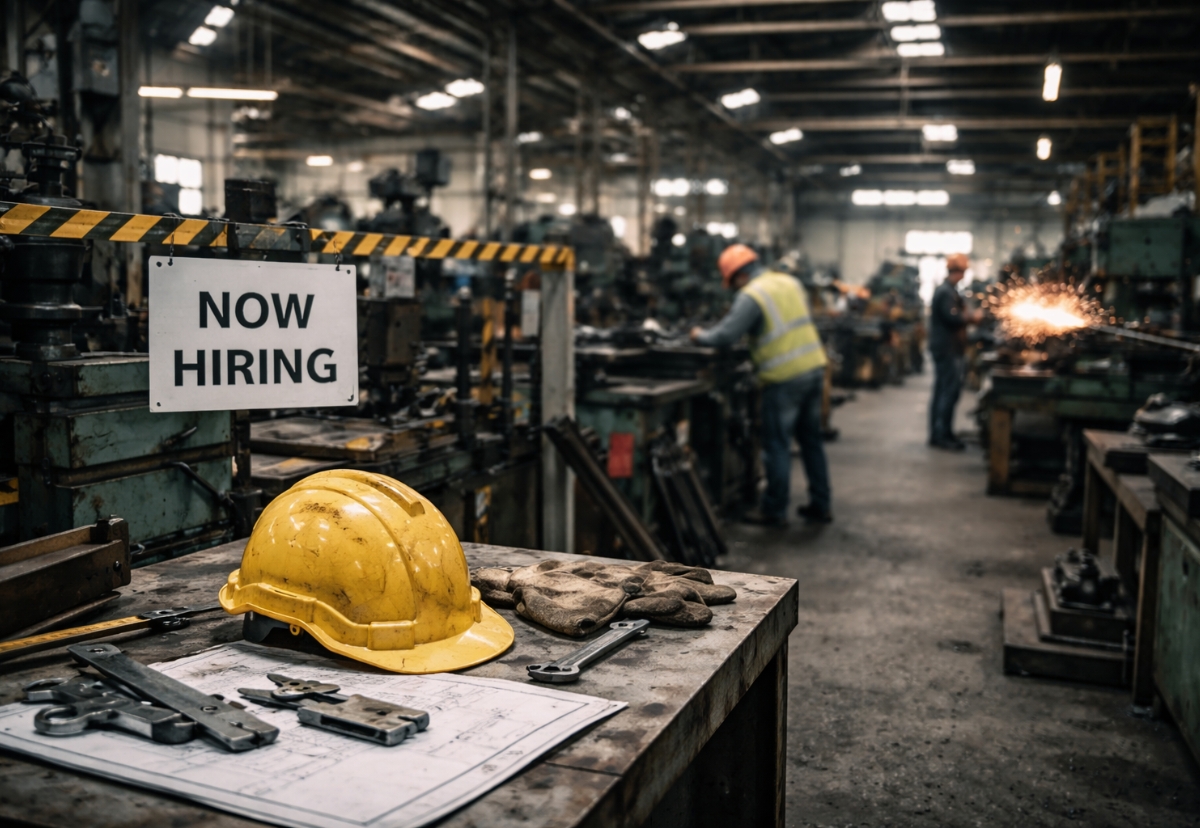

Every plant manager, operations leader, and HR executive we talk to in American manufacturing tells a variation of the same story: “We can’t find the skilled workers we need right here where we are.”
It’s not a seasonal blip. It’s structural.
The Manufacturing Skills Gap Isn’t Just Local. It’s National
Skilled trades shortages are more than just a recruiting headache. They’re a strategic challenge for American manufacturers. From CNC machinists and industrial electricians to maintenance techs and welders, demand is outpacing supply significantly. For example, aggregate data shows that American industries face millions of unfilled skilled trade openings annually, with an estimated 1.7 million-worker shortfall between job openings and qualified graduates every year.
That gap isn’t a local anomaly. It’s a national trend that affects manufacturing hubs and rural regions alike. Whether you’re in a highly populated metro area or a smaller community with a proud manufacturing tradition, the math is the same: there just aren’t enough qualified workers locally to meet current demand.
Why Local Labor Pools Alone Don’t Cut It
Here’s the hard reality:
- Skilled trades programs and vocational pipelines have not kept pace with employer demand.
- Many regions, especially outside major cities, lack the training infrastructure to produce workers with advanced, manufacturing-ready skills.
- Even where local talent exists, retirements are outpacing new entrants into the workforce. Skilled trades workers in some fields are aging rapidly, and the inflow of new talent is insufficient to replace them.
This has real consequences. In some sectors, companies turn down work or delay projects because they simply cannot staff them even when demand is there and capacity exists.
The National Talent Advantage: Why Broader Labor Pools Matter
So, what’s the alternative? For innovative manufacturing leaders, the answer is clear. Don’t limit your talent strategy to the ZIP code your plant happens to be in.
A nationwide workforce model, like the one FlexTrades has built, unlocks access to talent that’s:
- Pre-vetted and travel-ready, so assignments begin quickly
- Diverse in skill and geography, reducing regional talent bottlenecks
- Experienced across industries, bringing best practices and adaptability
In contrast to a purely local recruiting strategy, this approach allows manufacturers to tap into labor pools that aren’t constrained by geography or community demographics. This is vital when the local labor force can’t meet demand.
Real Business Impact: FlexTrades’ Nationwide Difference
We see this in action every day:
- A facility in a rural Midwest town fills critical maintenance roles they couldn’t staff from local resumes alone.
- A coastal plant scales up for a major production run by deploying skilled machinists from across multiple states.
- A manufacturer accelerates uptime by bringing in welders and technicians from regions with stronger workforce pipelines, without draining local talent.
In each case, it’s not that the skills didn’t exist in the country. It’s that they weren’t accessible locally. A broader labor network solves that problem.
A Strategic Advantage in a Tight Labor Market
Manufacturing is at a crossroads. Investment in domestic production, from clean energy equipment to advanced electronics, is rising. But talent constraints threaten to slow progress.
Decision-makers need solutions that go beyond traditional recruiting: models that think nationally but act locally, delivering skilled talent where and when it’s needed. That’s how you keep production lines running, reduce downtime, and compete in today’s fast-moving global economy.
Because at the end of the day, not all labor pools are created equal, but the right one can make all the difference.