
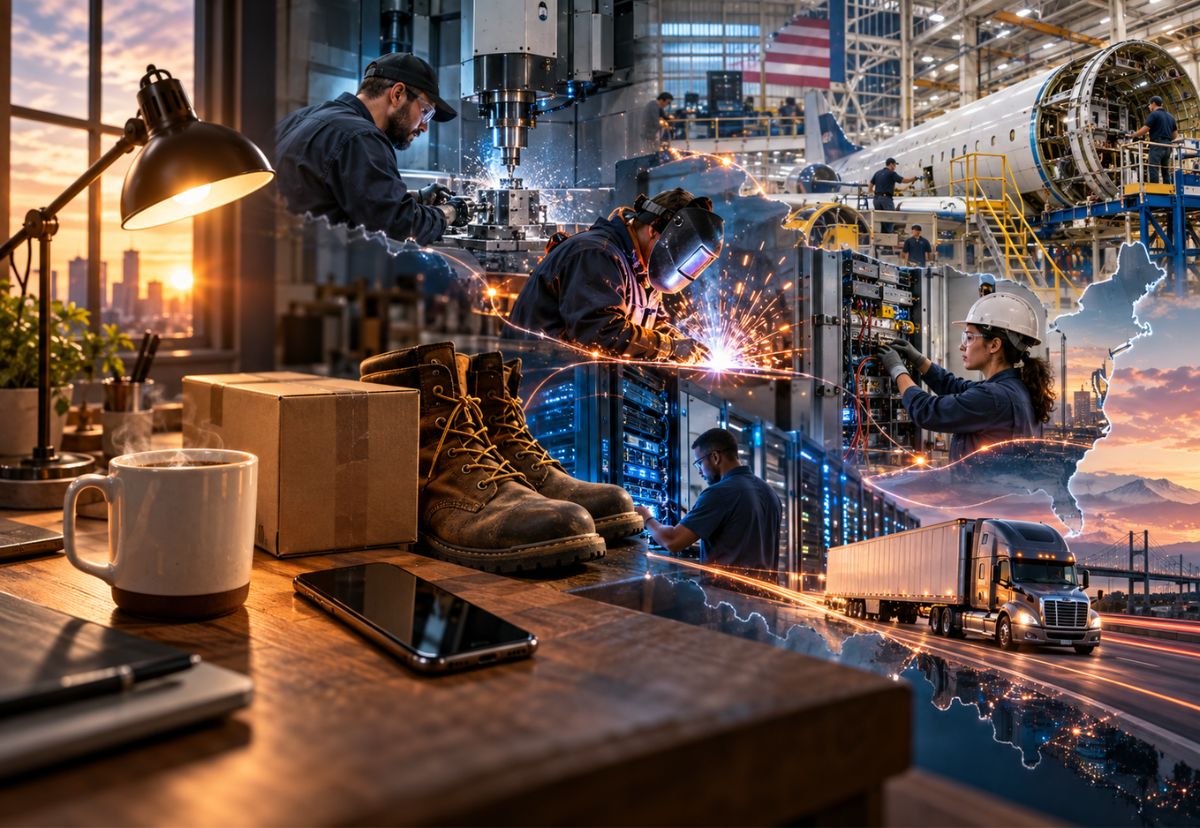

Manufacturing Day came and went.
Maybe you noticed. Maybe you didn’t.
Either way, take a look around wherever you are right now.
Your phone. Your desk. Your coffee cup. Your shoes. The lights above you. The chair you’re sitting in.
Now try to find something manufacturing didn’t touch.
I’ll wait.
It sounds easy until you actually start thinking about it.
Take the coffee cup.
Someone manufactured the cup. That part is obvious.
But someone also manufactured the equipment used to make it. The packaging it came in. The machinery that moved it through production. The truck that hauled it to a distribution center. The shelving it sat on before you bought it.
Go far enough down the line and one ordinary coffee cup turns into a massive network of machines, materials, parts, people and processes.
The same thing happens with almost everything around us.
Your phone is packed with manufactured components. Your office chair is built from fabricated metal, molded plastic, foam, fasteners and hardware. The building you’re sitting in depends on electrical systems, HVAC equipment, structural steel, wiring, piping, fixtures, tools and countless other products that had to be made somewhere.
Even the things we rarely associate with manufacturing depend on it.
Hospitals need medical equipment. Airlines need aircraft. Data centers need servers, cooling systems and electrical infrastructure. Farms need machinery. Restaurants need ovens, refrigeration systems and food processing equipment.
Manufacturing is everywhere.
Most of the time, we just don’t notice it.
That may be one of the more interesting things about the industry. The finished product gets the attention. The work behind it usually doesn’t.
We see the airplane. We don’t see the machinists who produced critical components.
We see the building. We don’t see the people who fabricated the steel, assembled the electrical systems or built the equipment used to construct it.
We see the package arrive at our front door. We rarely think about the machines, conveyors, trucks, tools and technology required to get it there.
And behind all of those things are people.
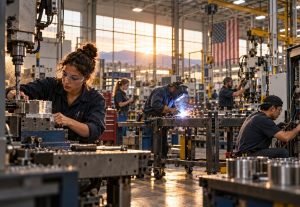
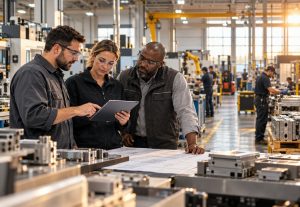
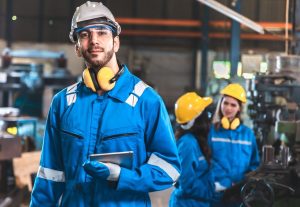
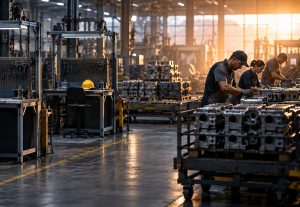
Machinists. Welders. Electricians. Technicians. Mechanics. Assemblers. Engineers. Quality professionals. Maintenance teams.
People who know how to build things, fix things, inspect things and keep production moving.
That part matters.
Technology continues to change manufacturing. Automation is getting smarter. Equipment is becoming more advanced. Production environments are more connected than ever.
But none of that eliminates the need for skilled people.
It makes them more important.
Manufacturing Day was created, in part, to help people see this industry differently. To look beyond outdated ideas about what manufacturing is and understand what it has become.
The day itself may have passed.
The point of it shouldn’t.
So take another look around.
Your phone. Your coffee cup. Your desk. The lights above you. The building around you.
Manufacturing helped put all of it there.
Maybe the most remarkable thing about manufacturing is how easy it is to forget just how much of our world depends on it.