

September has always been associated with going back to school.
For some people, that means buying school supplies, packing lunches, and getting the kids back into a routine. For others, it brings back memories of classrooms, homework, tests, and counting down the days until summer.
But for skilled trades professionals, going back to school doesn’t have to happen in September. In fact, if you’re serious about building your career, you may never really stop learning.
You might not be sitting in a classroom. There may not be a textbook, a test, or a teacher standing at the front of the room. But every new machine, process, facility, and challenge can teach you something. And those experiences add up.
Because when it comes to building a career, experience isn’t just measured in years. It’s also measured in exposure.
What equipment have you worked on? What problems have you solved? What industries have you seen? How many different ways have you seen the job done?
Those experiences can be just as important as the number of years listed next to your job title.
Your Career Is Still Your Classroom
Most skilled trades professionals understand that learning doesn’t stop when formal education ends. You can go to technical school, earn certifications, or attend training programs. All of those things can help build a foundation for your career.
But eventually, somebody has to put you in front of the machine. They have to hand you the tools. They have to give you a problem that doesn’t come with step-by-step instructions.
That’s where another kind of education begins.
A machinist may start by learning to operate a machine before moving into setups, programming, tooling, troubleshooting, or more complex equipment.
A maintenance technician might begin with mechanical work before gaining experience with electrical systems, PLCs, robotics, or automation.
A welder, brazer, or fabricator may discover that the techniques they learned on one job don’t necessarily prepare them for every material, application, or process they’ll encounter throughout their career.
Every new challenge adds something to your toolbox.
Sometimes that growth happens through formal training. Just as often, it happens because someone gives you an opportunity to work on something you’ve never worked on before. And, after you’ve done it once, you know a little more than you did before.
Do that enough times, and you start to build something that can’t always be measured simply by counting the years you’ve been on the job.
Ten Years of Experience Can Mean Different Things
Two technicians can both have 10 years of experience and have had very different careers.
One may have spent 10 years becoming an expert on a specific machine, process, or production environment. They know that operation inside and out, and there is tremendous value in that kind of expertise.
Another technician may have spent those same 10 years working with different equipment, in different facilities, with different teams, and across multiple industries. Along the way, they’ve encountered a wider variety of challenges and learned to solve problems in different environments.
Neither path is automatically better. But they are different. And that’s why years of experience don’t always tell the whole story. Exposure matters too.
The more you see, the more opportunities you have to learn. The more problems you encounter, the more problems you may be prepared to solve in the future.
The more equipment, processes, and environments you experience, the more tools you can add to your professional toolbox.
That’s one of the reasons it can be valuable to occasionally step outside of what you already know.
Sometimes a New Environment Is the Best Place to Learn
Starting somewhere new can be uncomfortable.
Even when you know your trade, a new facility can come with a learning curve. The equipment may be different. The processes may be different. The terminology may be different. The way one company approaches maintenance, quality, production, or troubleshooting may be completely different from what you’re used to.
But that’s also where the opportunity is. Every time you walk into a new environment, you’re exposed to another way of doing things.
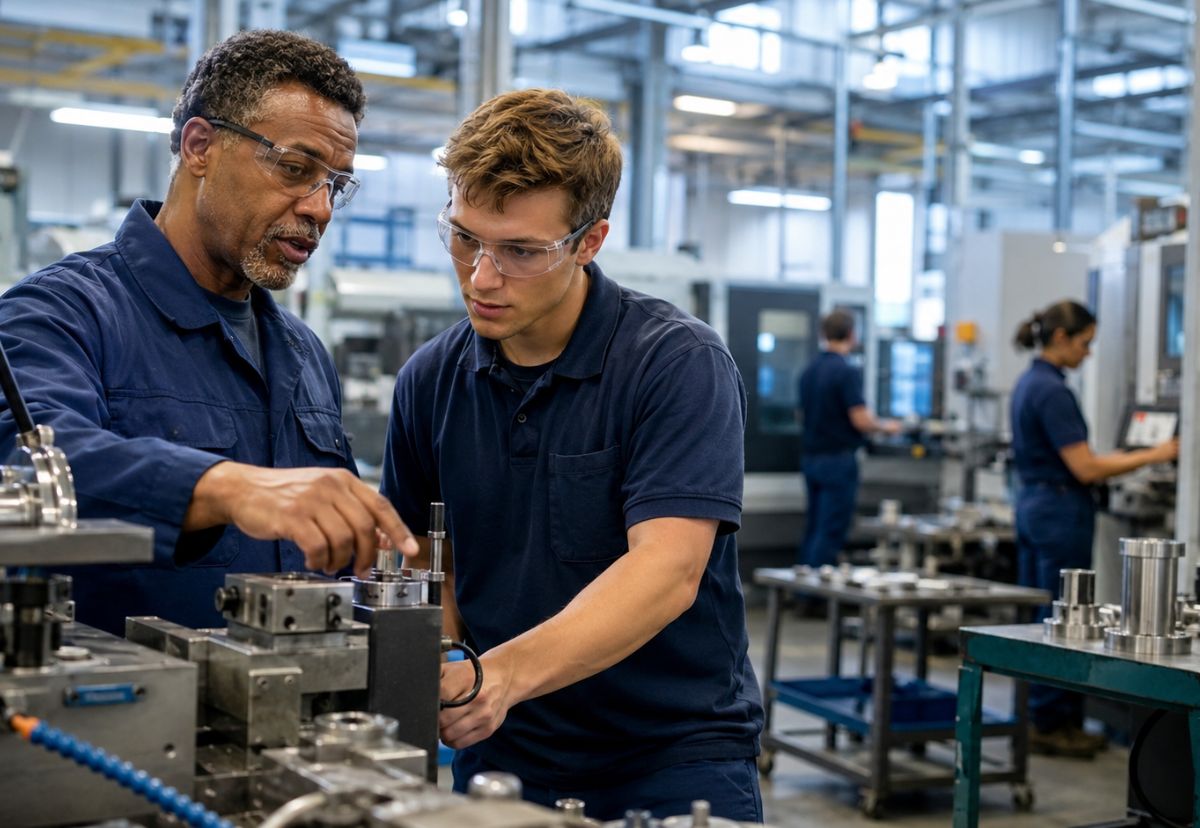
Maybe you’ll learn a better process. Maybe you’ll discover a different approach to troubleshooting. Maybe you’ll work alongside someone with years of experience on equipment you’ve never touched before.
Or maybe you’ll be the experienced one. The person who has seen something similar somewhere else and knows how to approach the problem. That’s the value of exposure.
You don’t just learn from the jobs that go perfectly. You learn from the unfamiliar ones, the difficult ones, and the situations where you have to figure something out. Those experiences stay with you. And you can take them into the next opportunity.
Traveling Can Accelerate That Exposure
There are a lot of ways to build experience throughout a career. You can grow within one company. You can cross-train, take classes, earn certifications, and learn from experienced coworkers.
And for some technicians, traveling can be another way to accelerate that growth. Working in different facilities can expose you to different equipment, processes, industries, and ways of solving problems.
Traveling isn’t automatically the right career path for everyone. Some people find exactly what they’re looking for with one great employer and build an incredible career there.
But if you’re someone who enjoys new challenges, there is value in putting yourself in environments where you have something new to learn.
When you move from one assignment to another, you aren’t just adding another company name to your resume. You’re adding experiences.
Maybe you worked on equipment you hadn’t seen before. Maybe you learned a new control system. Maybe you gained experience in an industry that wasn’t previously on your resume. Maybe you worked alongside technicians who taught you something you can use for the rest of your career.
Those experiences compound over time. Eventually, your resume begins to tell a story that goes beyond job titles and years of experience. It tells people what you’ve actually done.
Don’t Let Your Career Development Happen by Accident
One of the best things you can do for your career is occasionally stop and ask yourself:
What do I want to learn next?
Maybe there’s a machine you’ve always wanted experience with. Maybe you want to become stronger in electrical troubleshooting. Maybe you want to learn PLCs, robotics, programming, or automation. Maybe there’s an experienced technician around you who knows something you don’t.
Or maybe you’re simply ready to step into an environment that will challenge you in a new way. The important thing is to take some ownership over your own development. Don’t assume that experience automatically equals growth.
You can spend years doing the same thing without necessarily expanding what you’re capable of doing. On the other hand, a single opportunity that pushes you outside your comfort zone can sometimes teach you more than months of doing what you’ve already mastered.
That doesn’t mean you should chase every new opportunity just because it’s new. It means you should be intentional about the experiences you collect along the way.
Build More Than Years. Build Experience.
The next time you think about your career, don’t just ask yourself how long you’ve been doing what you do. Ask yourself what you’ve been exposed to.
What equipment have you worked on?
What skills have you developed?
What types of problems have you learned to solve?
What industries have you experienced?
What can you do today that you couldn’t do a year ago?
Those answers may tell you more about where your career is headed than the number of years you’ve spent in a particular role. The good news is that learning doesn’t always require going back to a classroom.
Sometimes your next lesson is waiting on the next machine.
Sometimes it’s sitting across the shop floor.
Sometimes it’s the technician working beside you.
And sometimes, it’s waiting on an opportunity that takes you somewhere you’ve never been before.
So, What’s Next on Your Curriculum?
September may be back-to-school season, but your career doesn’t have to follow an academic calendar. You don’t have to wait until January to decide you want to learn something new. You don’t have to wait until you’re unhappy in your current role to think about where your career is going.
And you don’t have to have your entire future mapped out before taking the next step. Just keep learning.
Learn the next machine. Take on the next challenge. Ask questions. Learn from the people around you.
Look for opportunities that expand your experience. Because your career isn’t just built one year at a time. It’s built one experience at a time.
And while the number of years you’ve spent in your trade will always matter, experience isn’t just measured in years. It’s also measured in exposure.
At FlexTrades, we’ve seen how new environments and new challenges can help technicians build skills and experiences that stay with them throughout their careers. Traveling isn’t the only way to grow, and it isn’t the right path for everyone.
But for technicians who want to see more, learn more, and continue adding to their professional toolbox, every new assignment can be more than just another job.
It can be another opportunity to learn. And, when it comes to building a career, that’s an education that doesn’t have to end.