

Engineering is the discipline of making things work. From the skyscrapers shaping city skylines to the microchips powering smartphones, engineering touches nearly every part of modern life. While the profession is grounded in universal principles such as applying scientific and mathematical concepts to solve real problems, each sector applies those principles differently. One of the most diverse and essential branches of engineering operates within manufacturing.
What Unites Engineers Across Industries?
Despite their differences, engineers share a common purpose… to innovate, optimize, and solve problems. Across industries, they improve efficiency, ensure quality, and drive technological advancement. Key similarities include:
- Problem Solving: Engineers analyze complex challenges and develop practical, scalable solutions.
- Systems Thinking: They evaluate how individual components function within larger systems.
- Optimization: Efficiency, safety, reliability, and performance remain top priorities.
- Use of Technology: Modern engineering relies on advanced software, simulation tools, automation platforms, and data analytics.
- Quality and Safety Compliance: Engineers must follow strict regulatory, safety, and industry standards.
What Makes Engineering in Manufacturing Unique?
While manufacturing engineering follows the same foundational principles as other disciplines, the environment presents distinct challenges.
Speed and Efficiency as Priorities
Civil or aerospace projects may take years to complete. Manufacturing operates on compressed timelines. Engineers must support rapid production cycles while minimizing downtime and maintaining consistent quality.
Continuous Improvement and Iteration
Unlike one-time design projects such as bridges or medical devices, manufacturing engineers operate in a constant state of refinement. They improve processes over time using structured methodologies such as Lean manufacturing and Six Sigma, both widely used in industrial operations to reduce waste and variation.
Integration of Automation and Robotics
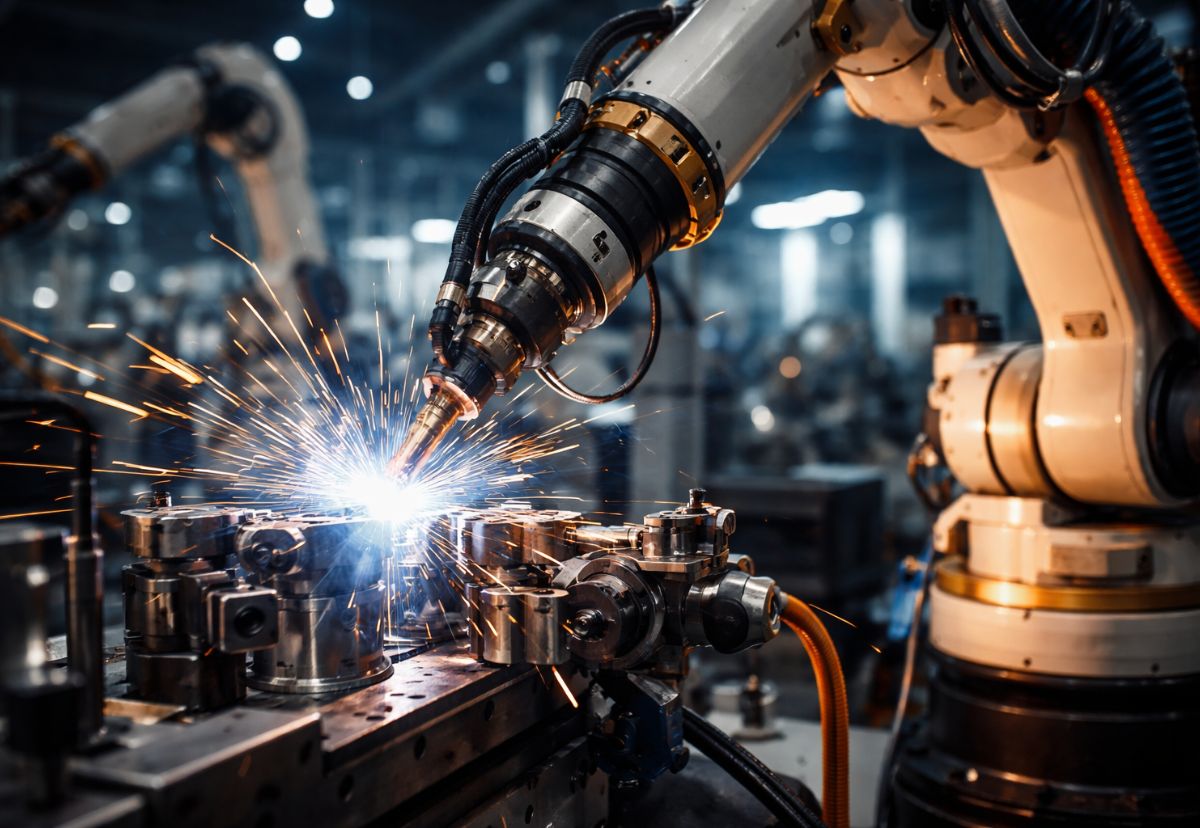
Manufacturing environments depend heavily on automation. Engineers design, implement, and maintain robotic systems, programmable logic controllers, sensors, and smart equipment that improve productivity and reduce variability.
Material Selection and Process Engineering
Material selection in manufacturing must account for cost, availability, durability, regulatory requirements, and manufacturability at scale. Engineers evaluate tradeoffs between performance and production feasibility.
Workforce and Equipment Coordination
Manufacturing engineers balance human labor, robotics, and heavy machinery within complex production environments. They ensure workflows are synchronized and resources are allocated effectively.
Cost Driven Decision Making
Cost efficiency is central to manufacturing. Engineers must continuously identify ways to reduce scrap, shorten cycle times, improve yield, and control operating expenses without sacrificing safety or quality.
Types of Engineers in Manufacturing
Modern manufacturing relies on specialized engineering roles, including:
- Manufacturing Engineer. Improves and standardizes production processes.
- Design Engineer. Develops products optimized for manufacturability and performance.
- Mechanical Engineer. Designs and maintains mechanical systems and equipment.
- Electrical Engineer. Develops and supports electrical infrastructure and control systems.
- Process Engineer. Optimizes workflows and production methods.
- Industrial Engineer. Improves plant layouts, labor efficiency, and operational systems.
- Production Engineer. Oversees daily manufacturing execution and output.
- Quality Engineer. Implements quality systems aligned with industry standards.
- Controls Engineer. Designs and programs automated control systems.
- Test Engineer. Validates product reliability, safety, and performance.
- Tooling Engineer. Designs custom tooling, fixtures, and production aids.
- Applications Engineer. Works with clients to implement technical solutions for specific needs.
- Materials Engineer. Selects and tests materials for strength, durability, and cost efficiency.
- Robotics Engineer. Designs and integrates robotic systems.
- Automation Engineer. Implements smart manufacturing technologies and connected systems.
- Mechatronics Engineer. Combines mechanical, electrical, and software systems to build intelligent machinery.
The Future of Manufacturing Engineering
Manufacturing continues to evolve as technology advances.
- Smart Factories and Industry 4.0: Connected manufacturing environments leverage industrial IoT, AI, and real-time data analytics to improve visibility, predictive maintenance, and decision making.
- Sustainable Manufacturing: Engineers are developing energy efficient processes, waste reduction strategies, and environmentally responsible material alternatives.
- Advanced Robotics and AI Integration: Autonomous systems are becoming more adaptive and data driven, improving flexibility across high mix, low volume production.
- Space Manufacturing: With increased commercial investment in space, research is exploring manufacturing in microgravity environments, including additive manufacturing and material behavior beyond Earth conditions.
Looking for Engineering Solutions?
At FlexTrades, engineering is more than a discipline. It is the backbone of modern manufacturing performance. Whether you are a company seeking experienced engineers to strengthen production or an engineer looking for your next challenge, FlexTrades connects talent with opportunity.
Are you an engineer ready for a new assignment? Explore opportunities that let you apply your expertise across industries and projects nationwide.
Need engineering support for your manufacturing operations? Contact FlexTrades to access skilled engineering professionals who can improve efficiency, strengthen quality systems, and support production stability.
Let’s build the future of manufacturing together. Connect with FlexTrades today.